MARKET INSIGHTS
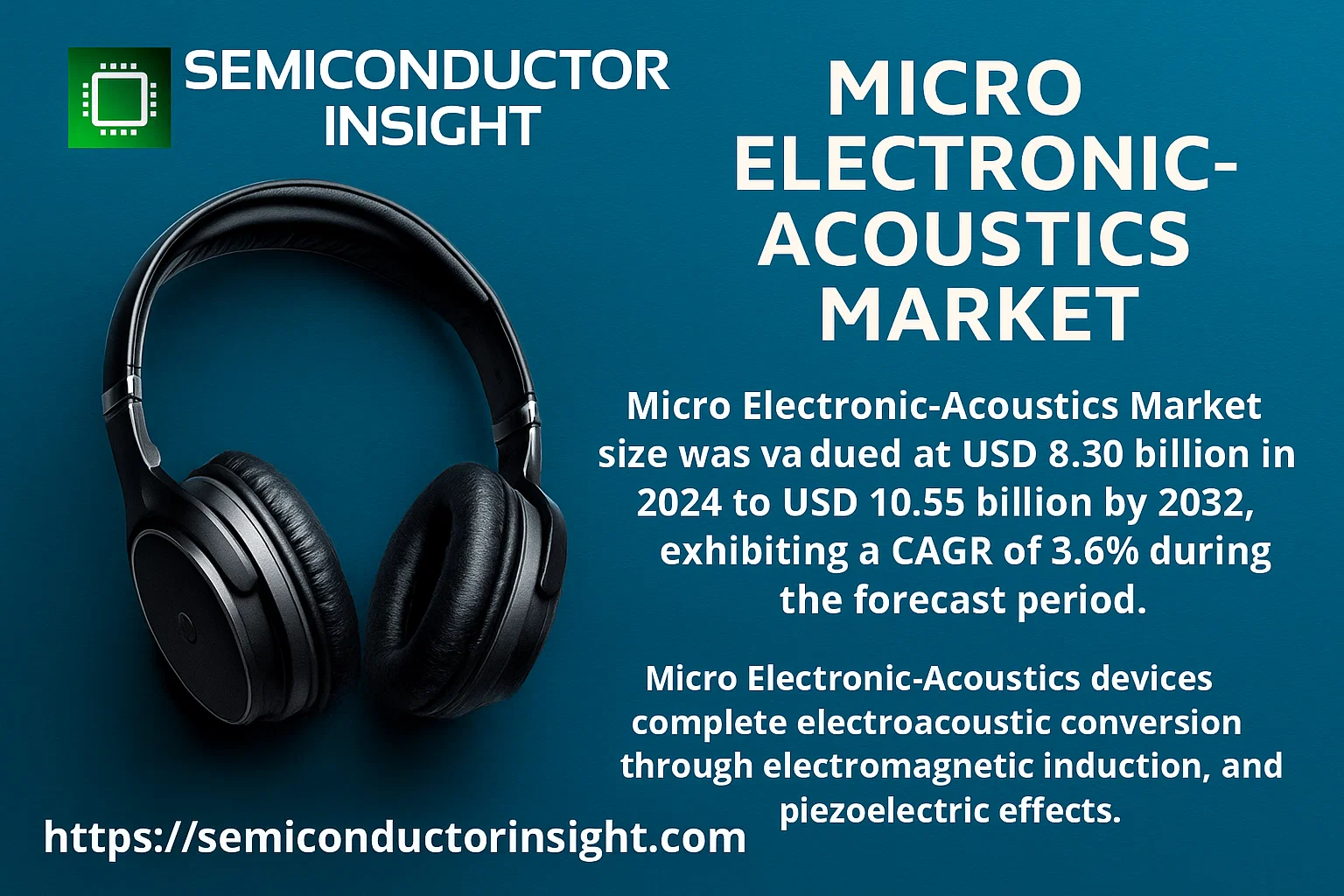
Global Micro Electronic-Acoustics Market size was valued at USD 8.30 billion in 2024 to USD 10.55 billion by 2032, exhibiting a CAGR of 3.6% during the forecast period.
Micro Electronic-Acoustics devices complete electroacoustic conversion through electromagnetic induction, electrostatic induction, and piezoelectric effects. These components are primarily installed in mobile phones, laptops, and other portable electronic devices, encompassing receivers, speakers, and microphones.
The market is experiencing steady growth driven by several factors, including increasing smartphone penetration globally and rising demand for audio-enabled IoT devices. Furthermore, the growing adoption of voice assistant technologies and enhanced audio requirements in consumer electronics are contributing to market expansion. Initiatives by key industry players are also expected to fuel market growth; for instance, leading manufacturers continue to innovate with smaller form factors while improving acoustic performance. GoerTek, Foster Electric, and AAC Technologies dominate the competitive landscape with approximately 48% combined market share. China represents the largest consumption region with nearly 33.52% of global market share.
MARKET DRIVERS
Proliferation of Smart Devices and Voice User Interfaces
The exponential growth in adoption of smartphones, smart speakers, wearables, and in-car infotainment systems is a primary driver for the micro electronic-acoustics market. These devices rely heavily on microphones and speakers for core functionalities like voice commands, hands-free communication, and audio playback. The integration of advanced voice assistants such as Siri, Google Assistant, and Alexa has made high-quality acoustic components a standard requirement, driving demand for smaller, more efficient, and more reliable micro electro-acoustic devices.
Demand for High-Fidelity Audio and Noise Cancellation
Consumer expectations for premium audio experiences continue to rise, pushing manufacturers to incorporate superior acoustic components. There is a strong market pull for features like Active Noise Cancellation (ANC) in headphones and earbuds, which requires sophisticated microphone arrays and signal processing chips. This trend is further amplified by the growth of the gaming industry and the rising consumption of high-definition audio and video content.
➤ The global market for MEMS microphones, a key segment, is projected to grow at a CAGR of over 9% in the coming years, driven by their use in IoT and automotive applications.
Advancements in medical technology also contribute to market growth, with an increasing use of micro acoustic sensors in hearing aids, medical diagnostic equipment, and patient monitoring systems, where precision and reliability are paramount.
MARKET CHALLENGES
Intense Price Pressure and Miniaturization Hurdles
The micro electronic-acoustics market is highly competitive, leading to significant price pressures, particularly in consumer electronics. Manufacturers must continually innovate to reduce costs while improving performance. Simultaneously, the relentless drive for device miniaturization presents significant engineering challenges in maintaining or enhancing acoustic performance, power efficiency, and durability within ever-shrinking form factors.
Other Challenges
Complex Supply Chain and Component Shortages
The industry relies on a complex global supply chain for raw materials like rare-earth elements and semiconductors. Disruptions, as seen in recent chip shortages, can lead to production delays and increased costs, posing a significant challenge to stable market growth.
Technical Complexity of System Integration
Integrating multiple microphones for beamforming or ANC into a single device requires sophisticated audio algorithms and seamless hardware-software integration. Achieving this without compromising on power consumption or generating acoustic interference remains a persistent technical challenge for designers.
MARKET RESTRAINTS
Market Saturation in Key Consumer Segments
Growth in the smartphone market, a major consumer of micro acoustic components, has slowed considerably, reaching a point of saturation in many developed regions. This maturity limits the volume-driven growth that previously fueled the market, forcing companies to seek new application areas to maintain momentum.
Stringent Performance and Regulatory Standards
Components used in automotive, medical, and industrial applications must meet rigorous performance, reliability, and safety standards. Compliance with regulations from bodies like the FDA or automotive safety standards increases development time and cost, acting as a restraint for entry and innovation, particularly for smaller players.
MARKET OPPORTUNITIES
Expansion in Automotive Acoustic Systems
The automotive industry presents a significant growth frontier. The rise of electric vehicles (EVs) and autonomous driving is creating demand for advanced in-cabin acoustic solutions. This includes systems for in-car communication, emergency call (eCall) systems, engine noise cancellation, and pedestrian warning systems, all requiring robust micro electro-acoustic components.
Growth of the Internet of Things (IoT) and AR/VR
The proliferation of IoT devices, from smart home sensors to industrial monitors, offers vast opportunities for micro acoustic components to enable voice control and audio feedback. Furthermore, the emerging Augmented and Virtual Reality (AR/VR) market demands high-performance, spatially-aware audio systems, creating a new, high-value application segment for advanced acoustic technology.
Micro Electronic-Acoustics Market Trends
Sustained Growth Driven by Mobile and Automotive Electronics
The global Micro Electronic-Acoustics market is on a steady growth trajectory, with its value projected to increase from US$8,298 million in 2024 to US$10,550 million by 2032, representing a compound annual growth rate (CAGR) of 3.6%. This sustained expansion is primarily fueled by the increasing integration of multiple microphones and speakers in smartphones, the proliferation of portable computing devices like laptops, and the growing demand for in-car infotainment and communication systems in the automotive sector. These devices, which convert electrical signals into sound and vice versa using electromagnetic induction, electrostatic induction, or the piezoelectric effect, are fundamental components in modern consumer electronics.
Other Trends
Market Concentration and Regional Consumption
The market is characterized by a high level of concentration, with the top three players—GoerTek, Foster, and AAC—collectively holding approximately 48% of the global market share. This concentration underscores the significant barriers to entry, including technological expertise and economies of scale. Geographically, China stands out as the largest consumption region, accounting for nearly 33.52% of the market, driven by its massive electronics manufacturing base and consumer market.
Segmentation and Application Diversification
The market is segmented by product type into microphones, speakers, and receivers. By application, the market is diversifying beyond its traditional stronghold in mobile communications. While mobile phones remain a dominant application, there is significant growth potential in areas such as laptops, automotive electronics, and specialized audio equipment like headsets and hearing aids. This diversification points to the broadening use cases for micro electro-acoustic components, creating new growth avenues for manufacturers and suppliers in the industry. The competitive landscape remains dynamic, with established players and emerging companies vying for market share across different application segments.
COMPETITIVE LANDSCAPE
Key Industry Players
Market Dominance Concentrated Among Top Three Producers
The global Micro Electronic-Acoustics market is characterized by a high degree of consolidation, with the top three players—GoerTek, Foster, and AAC Technologies—collectively commanding approximately 48% of the market share. These industry leaders have established their dominance through extensive manufacturing capabilities, significant investment in research and development for advanced acoustic components, and strong, long-term relationships with major consumer electronics brands. Their product portfolios are comprehensive, covering a wide array of receivers, speakers, and microphones essential for mobile phones, laptops, and other portable devices. The competitive intensity is high, with these top-tier companies competing on technological innovation, product miniaturization, sound quality, and cost efficiency to secure contracts in a rapidly evolving market.
Beyond the dominant players, the market includes several other significant manufacturers that occupy important niches or cater to specific regional demands. Companies like Knowles are renowned for their high-performance micro-electro-mechanical systems (MEMS) microphones used in premium applications. Other key participants, such as Hosiden, Panasonic Electronic Devices, and Cresyn, leverage their established electronics expertise to supply components for automotive electronics, headsets, and various consumer goods. The competitive landscape also features strong Chinese manufacturers like Jiangsu Yucheng Electronic, Shandong Gettop Acoustic, and New Jialian, which benefit from the vast domestic market—China being the largest consumption region with nearly 33.52% market share—and competitive production costs.
List of Key Micro Electronic-Acoustics Companies Profiled
- GoerTek
- Foster
- AAC Technologies
- Knowles
- Bujeon
- Merry
- Cresyn
- BSE
- Jiangsu Yucheng Electronic
- Hosiden
- Panasonic Electronic Devices
- Bluecom
- Shandong Gettop Acoustic
- Fortune Grand Technology
- Star Micronics
- New Jialian
Segment Analysis:
| Segment Category | Sub-Segments | Key Insights |
| By Type |
|
Speaker components are leading the market, driven by the universal integration of audio output in consumer electronics for multimedia consumption. The demand for higher-fidelity sound and immersive audio experiences in devices like smartphones, laptops, and televisions is a primary growth driver. Microphones sustain strong demand due to the proliferation of voice-controlled interfaces and teleconferencing needs, while receivers maintain a stable position as essential components for voice communication. |
| By Application |
|
Mobile Communications is the dominant application segment, anchored by the massive and continuous global production of smartphones which integrate multiple micro electro-acoustic components. The evolution towards bezel-less designs and enhanced audio features for media consumption and gaming creates sustained innovation and demand. Applications in automotive electronics are experiencing significant growth, driven by the integration of advanced infotainment systems and in-car communication, while the headset and audiphone segment benefits from the rising popularity of wireless audio and hearing assistance technologies. |
| By End User |
|
Consumer Electronics OEMs represent the most significant end-user segment, as they are the primary integrators of micro electro-acoustics into high-volume products like smartphones, tablets, and laptops. This segment demands components that balance high performance with miniaturization and cost-effectiveness. Automotive manufacturers are a rapidly growing end-user group, incorporating these components for hands-free systems and premium audio. Healthcare device makers represent a specialized but critical segment, utilizing micro-acoustic components in hearing aids and medical monitoring equipment where reliability and precision are paramount. |
| By Technology |
|
MEMS (Micro-Electro-Mechanical Systems) technology is the leading and most dynamically evolving segment, favored for its exceptional miniaturization capabilities, reliability, and compatibility with semiconductor batch fabrication processes. This makes MEMS ideal for integration into space-constrained modern electronics. While traditional technologies like electromagnetic induction remain vital for certain speaker applications requiring specific acoustic properties, the industry-wide trend is a decisive shift towards MEMS-based microphones and speakers, which support advanced features like active noise cancellation and beamforming with greater efficiency and smaller form factors. |
| By Sales Channel |
|
Direct Sales (OEM/ODM) is the predominant channel, characterized by long-term strategic partnerships between major component manufacturers like GoerTek, Foster, and AAC, and large-scale electronics brands. This channel facilitates collaborative design, ensures supply chain stability for high-volume production, and allows for customization of components to meet specific device requirements. The distributor and reseller channel serves smaller manufacturers and the aftermarket, while online platforms are gaining traction for prototyping and sourcing specialized or low-volume components, though they represent a smaller portion of the overall market flow. |
Regional Analysis: Micro Electronic-Acoustics Market
The region’s core strength lies in its dense manufacturing ecosystem, encompassing everything from raw material processing to the assembly of sophisticated acoustic modules. This vertically integrated network allows for rapid prototyping, cost optimization, and large-scale production, making it the preferred sourcing destination for global electronics brands seeking high-volume, reliable supplies of micro-acoustic components for smartphones, laptops, and IoT devices.
A strong focus on research and development drives continuous advancement in acoustic technologies. Leading companies and academic institutions in countries like Japan and South Korea are at the forefront of developing new MEMS microphone architectures with lower noise floors and smaller footprints. Significant investment is also directed towards ultrasonic audio technology for in-display sound and innovative haptic-audio integration, setting global standards.
Unprecedented demand from the world’s largest consumer electronics market fuels production and innovation. The high adoption rate of premium smartphones featuring multiple advanced microphones for active noise cancellation and voice assistants, along with the booming market for true wireless stereo earbuds, creates a powerful, sustained pull for high-performance micro electronic-acoustics components manufactured within the region.
National policies and substantial government funding aimed at achieving semiconductor and high-tech component self-sufficiency significantly bolster the micro-acoustics sector. Initiatives provide critical support for foundational research, advanced manufacturing capabilities, and the development of indigenous expertise, ensuring the long-term resilience and technological competitiveness of the region’s electronic-acoustics industry on the global stage.
North America
North America represents a major hub for innovation and high-value application development in the micro electronic-acoustics market. The region is characterized by the presence of leading technology firms that drive demand for cutting-edge acoustic components, particularly for premium smartphones, laptops, smart home devices, and professional audio equipment. Silicon Valley and other tech centers are hotbeds for R&D in areas like beamforming microphone arrays for superior voice pickup and ultrasonic sensors for secure biometric authentication. The market is heavily influenced by stringent quality and performance requirements from flagship product manufacturers, pushing suppliers to deliver components with exceptional acoustic clarity, robustness, and miniaturization. A strong focus on applications in automotive acoustics for in-car communication systems and advanced driver-assistance systems (ADAS) also contributes to the region’s sophisticated demand profile.
Europe
Europe maintains a strong position in the micro electronic-acoustics market, distinguished by its leadership in the automotive and industrial sectors. European automotive manufacturers are integrating an increasing number of microphones and advanced speakers for in-car infotainment, hands-free calling, and active noise cancellation, demanding high reliability and performance under harsh conditions. The region also has a robust presence in premium consumer audio brands and professional audio equipment, which rely on high-fidelity micro acoustic components. Significant R&D efforts are concentrated on developing specialized sensors for medical devices, such as ultrasonic flow meters and implantable acoustic monitors. Stricter regulations concerning product quality, safety, and environmental standards shape the market, favoring suppliers with strong technical expertise and a focus on durable, high-performance solutions.
South America
The micro electronic-acoustics market in South America is primarily driven by growing demand from the consumer electronics sector, though it remains a developing landscape compared to other regions. Brazil and Argentina are the key markets, with demand fueled by the increasing penetration of smartphones, audio accessories, and automotive production. The market is characterized by a strong reliance on imports for high-end components, while local assembly of consumer goods provides some opportunities. Economic volatility can impact purchasing power and investment in new technologies, leading to a focus on cost-competitive solutions. However, long-term growth potential exists as digitalization increases and local manufacturing capabilities gradually strengthen, particularly for mid-range electronic products that incorporate standard micro-acoustic components.
Middle East & Africa
The Middle East & Africa region is an emerging market for micro electronic-acoustics, with growth largely tied to the expanding adoption of mobile devices and increasing infrastructure development. The Gulf Cooperation Council (GCC) countries show higher demand for premium consumer electronics, thereby driving the need for advanced acoustic components in smartphones and luxury vehicles. In Africa, the market is more fragmented, with growth concentrated in urban centers and driven by the rising popularity of affordable mobile phones and audio accessories. The region also presents niche opportunities in sectors like security and surveillance, which utilize ultrasonic sensors. While the market is currently smaller and heavily import-dependent, it holds significant future potential as digital transformation initiatives gain momentum across the region.
Report Scope
This market research report provides a comprehensive analysis of the Global Micro Electronic-Acoustics Market, covering the forecast period 2025–2032. It offers detailed insights into market dynamics, technological advancements, competitive landscape, and key trends shaping the industry.
Key focus areas of the report include:
- Market Overview: The report begins with an overview outlining its current market scenario, key growth indicators, and industry transformation drivers. It discusses macroeconomic factors, demand–supply balance, regulatory landscape, and the strategic role of semiconductors in powering advancements across industries such as automotive, telecommunications, consumer electronics, and industrial automation.
- Market Size & Forecast: Historical data and future projections for revenue, unit shipments, and market value across major regions and segments.
- Segmentation Analysis: Detailed breakdown by product type, technology, application, and end-user industry to identify high-growth segments and investment opportunities.
- Regional Insights: Insights into market performance across North America, Europe, Asia-Pacific, Latin America, and the Middle East & Africa, including country-level analysis where relevant.
- Competitive Landscape: Profiles of leading market participants, including their product offerings, R&D focus, manufacturing capacity, pricing strategies, and recent developments such as mergers, acquisitions, and partnerships.
- Technology Trends & Innovation: Assessment of emerging technologies, integration of AI/IoT, semiconductor design trends, fabrication techniques, and evolving industry standards.
- Market Drivers & Restraints: Evaluation of factors driving market growth along with challenges, supply chain constraints, regulatory issues, and market-entry barriers.
- Stakeholder Insights: Insights for component suppliers, OEMs, system integrators, investors, and policymakers regarding the evolving ecosystem and strategic opportunities.
Primary and secondary research methods are employed, including interviews with industry experts, data from verified sources, and real-time market intelligence to ensure the accuracy and reliability of the insights presented.
FREQUENTLY ASKED QUESTIONS:
What is the current market size of Micro Electronic-Acoustics Market?
-> Micro Electronic-Acoustics Market size was valued at USD 8.30 billion in 2024 to USD 10.55 billion by 2032, exhibiting a CAGR of 3.6% during the forecast period.
Which key companies operate in Micro Electronic-Acoustics Market?
-> Key players include GoerTek, Foster, AAC, Knowles, and Bujeon, among others. The top 3 companies, GoerTek, Foster, and AAC, hold approximately 48% of the market share.
What are the key growth drivers?
-> Key growth drivers include increasing demand for mobile electronic products like smartphones and laptops, technological advancements in electroacoustic conversion, and the expansion of the consumer electronics and automotive electronics sectors.
Which region dominates the market?
-> China is the largest consumption region, holding a market share of nearly 33.52%, making Asia the dominant market.
What are the emerging trends?
-> Emerging trends include the integration of micro electro-acoustic components in a wider range of applications such as headsets, audiphones, and automotive systems, alongside continuous miniaturization and performance enhancement driven by innovations in electromagnetic induction, electrostatic induction, and piezoelectric technologies.
Get Sample Report PDF for Exclusive Insights
Report Sample Includes
- Table of Contents
- List of Tables & Figures
- Charts, Research Methodology, and more...
 Download Sample Report PDF