
MARKET INSIGHTS
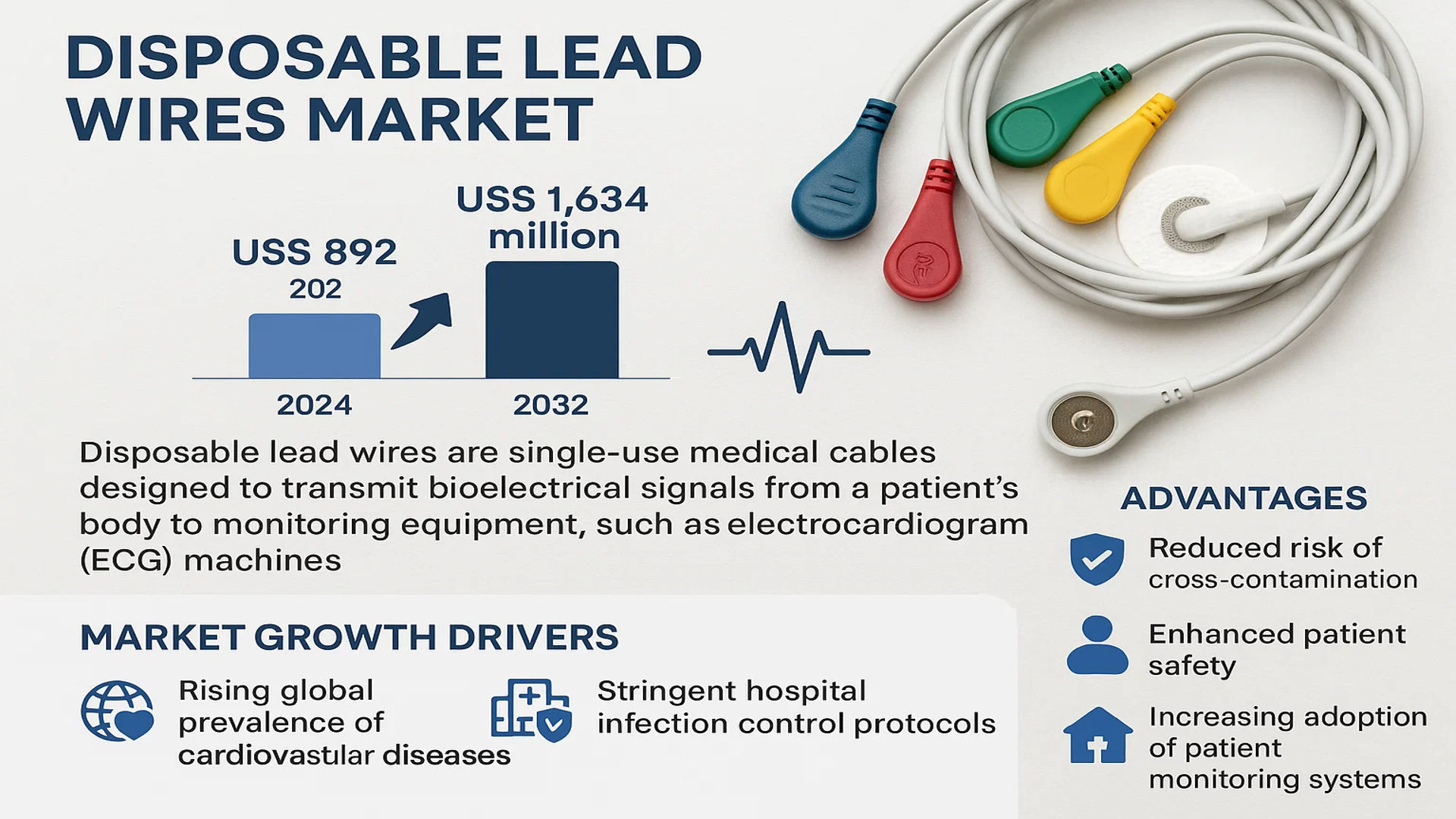
The global Disposable Lead Wires Market size was valued at US$ 892 million in 2024 and is projected to reach US$ 1,634 million by 2032, at a CAGR of 7.9% during the forecast period 2025-2032.
Disposable lead wires are single-use medical cables designed to transmit bioelectrical signals from a patient’s body to monitoring equipment, such as electrocardiogram (ECG) machines. These essential components are crucial for accurate cardiac monitoring and diagnostics, offering advantages like reduced risk of cross-contamination and enhanced patient safety compared to reusable alternatives. They are typically manufactured from materials including TPE, TPU, silicone, and PVC to ensure flexibility, durability, and biocompatibility.
The market growth is primarily driven by the rising global prevalence of cardiovascular diseases, stringent hospital infection control protocols, and the increasing adoption of patient monitoring systems in both hospital and home care settings. Furthermore, the shift towards ambulatory and home care is creating significant demand, as these settings prioritize convenience and sterility. Key market players such as 3M, Medtronic, and BD are continuously innovating their product portfolios to include features like enhanced comfort and compatibility with modern monitoring systems, which is expected to further fuel market expansion.
MARKET DYNAMICS
MARKET DRIVERS
Rising Prevalence of Cardiovascular Diseases to Drive Market Expansion
The increasing global burden of cardiovascular diseases significantly drives demand for disposable lead wires, as they are essential components in electrocardiogram (ECG) monitoring systems used for diagnosis and continuous patient care. Cardiovascular diseases remain the leading cause of mortality worldwide, accounting for approximately 32% of all global deaths according to recent epidemiological data. This high prevalence necessitates extensive cardiac monitoring across healthcare settings, from emergency departments to intensive care units and home-based care. The aging global population further amplifies this demand, as individuals over 65 years old experience higher rates of cardiac conditions requiring monitoring. Healthcare facilities are increasingly adopting disposable lead wires over reusable alternatives because they eliminate cross-contamination risks between patients, reduce hospital-acquired infections, and minimize maintenance costs associated with sterilization processes.
Growing Emphasis on Infection Control Protocols to Accelerate Adoption
Healthcare facilities worldwide are implementing stricter infection prevention protocols, driving the transition from reusable to disposable medical devices. Disposable lead wires offer significant advantages in infection control as they eliminate the risk of pathogen transmission between patients that can occur with improperly sterilized reusable equipment. Studies have demonstrated that reusable lead wires can harbor multidrug-resistant organisms even after cleaning, creating potential infection vectors in clinical environments. The Centers for Disease Control and Prevention guidelines recommend using single-patient-use medical devices whenever possible to prevent healthcare-associated infections, which affect millions of patients annually and generate additional healthcare costs exceeding several billion dollars globally. This increased focus on patient safety standards has prompted many healthcare institutions to mandate disposable lead wire usage as part of their infection control strategies.
Technological Advancements in Patient Monitoring Systems to Fuel Market Growth
Recent technological innovations in patient monitoring equipment are creating new opportunities for disposable lead wire manufacturers. The integration of wireless connectivity, improved signal quality, and enhanced patient comfort features in modern monitoring systems requires compatible disposable lead wires that can maintain signal integrity while ensuring patient mobility. Manufacturers are developing lead wires with advanced materials that reduce motion artifacts, improve durability, and enhance patient comfort during extended monitoring periods. The global shift toward telehealth and remote patient monitoring solutions has further accelerated demand for reliable disposable lead wires that can be used in home care settings without professional assistance. These technological improvements are particularly important in critical care settings where accurate cardiac monitoring can significantly impact patient outcomes.
MARKET RESTRAINTS
Environmental Concerns Regarding Medical Waste to Limit Market Growth
The increasing use of disposable medical devices, including lead wires, generates substantial medical waste that presents environmental challenges. Healthcare facilities produce millions of tons of medical waste annually, with disposable medical equipment contributing significantly to this volume. Environmental regulations governing medical waste disposal are becoming increasingly stringent worldwide, requiring specialized treatment processes that increase operational costs for healthcare providers. The plastic components in disposable lead wires, particularly those made from PVC and other polymers, can persist in landfills for extended periods and may release potentially harmful substances during decomposition. Many healthcare institutions are implementing sustainability initiatives that prioritize reusable products when safe alternatives exist, creating pressure on disposable medical device manufacturers to develop more environmentally friendly solutions.
Price Sensitivity in Emerging Markets to Constrain Adoption Rates
While disposable lead wires offer clinical advantages, their higher per-unit cost compared to reusable alternatives presents adoption challenges in price-sensitive markets, particularly in developing regions. Healthcare budgets in many emerging economies remain constrained, leading facilities to prioritize reusable equipment despite the potential infection control benefits of disposable options. The recurring expense of disposable lead wires can represent a significant operational cost for healthcare facilities that perform high volumes of cardiac monitoring procedures. This financial pressure is particularly acute in public healthcare systems and institutions serving low-income populations, where budget constraints may override ideal infection control practices. Manufacturers face challenges in developing cost-effective disposable solutions that maintain clinical performance while remaining accessible to healthcare providers operating with limited resources.
Supply Chain Vulnerabilities to Impact Market Stability
The disposable lead wire market faces challenges related to supply chain dependencies on raw materials and manufacturing components. Recent global disruptions have highlighted vulnerabilities in medical device supply chains, affecting production consistency and delivery timelines. Many disposable lead wires incorporate specialized materials including conductive elements, shielding components, and specific polymers that may have limited sourcing options or face production constraints. Geopolitical factors, trade restrictions, and logistics challenges can create supply interruptions that affect market availability and pricing stability. These supply chain issues are particularly concerning for emergency healthcare services and critical care facilities that require reliable access to medical monitoring equipment without interruption.
MARKET OPPORTUNITIES
Expansion of Home Healthcare Services to Create New Growth Avenues
The rapidly expanding home healthcare sector presents significant opportunities for disposable lead wire manufacturers. As healthcare systems worldwide shift toward decentralized care models to reduce costs and improve patient accessibility, the demand for medical monitoring devices suitable for home use continues to grow. The global home healthcare market has demonstrated substantial expansion, driven by aging populations, increasing chronic disease prevalence, and technological advancements enabling remote patient monitoring. Disposable lead wires are particularly well-suited for home care applications because they eliminate sterilization requirements and reduce infection risks for patients managing their own care. Manufacturers are developing patient-friendly disposable lead wire systems with simplified connectivity, enhanced comfort, and improved durability for extended home use.
Development of Eco-Friendly Disposable Solutions to Address Sustainability Concerns
Growing environmental awareness creates opportunities for manufacturers to develop sustainable disposable lead wire options that address healthcare waste concerns. Innovations in biodegradable polymers, recyclable materials, and reduced packaging offer potential solutions to the environmental challenges associated with disposable medical devices. Several leading manufacturers are investing in research and development programs focused on creating medical-grade materials that maintain clinical performance while offering improved environmental profiles. Regulatory agencies are increasingly encouraging sustainable medical device development through guidelines and approval processes that consider environmental impact alongside safety and efficacy. These developments present opportunities for companies that can successfully balance infection control requirements with environmental responsibility.
Integration with Digital Health Platforms to Enhance Market Potential
The convergence of disposable medical devices with digital health technologies creates new opportunities for market expansion. Smart disposable lead wires with integrated sensors, connectivity features, and compatibility with mobile health applications represent an emerging product category with significant growth potential. These advanced systems can facilitate remote monitoring, automate data collection, and improve patient engagement while maintaining the infection control benefits of disposable devices. The global digital health market continues to experience robust growth, driven by technological advancements, regulatory support, and increasing consumer acceptance of connected health solutions. Manufacturers that successfully integrate disposable lead wires with digital health platforms can access new market segments and create additional value propositions for healthcare providers and patients.
MARKET CHALLENGES
Product Standardization and Compatibility Issues to Create Implementation Challenges
The disposable lead wire market faces significant challenges related to product standardization and compatibility with existing monitoring equipment. Healthcare facilities utilize monitoring systems from multiple manufacturers, each with proprietary connector designs and specifications. This lack of universal standardization requires disposable lead wire producers to develop multiple product variants to accommodate different monitoring equipment, increasing manufacturing complexity and inventory requirements. The situation is further complicated by the long lifecycle of patient monitoring systems, which may remain in service for many years while connector technologies evolve. Healthcare providers face challenges in ensuring adequate supplies of compatible disposable lead wires, particularly during equipment transitions or emergency situations when specific connector types may be urgently needed.
Other Challenges
Regulatory Compliance Complexity
Navigating diverse international regulatory requirements presents challenges for disposable lead wire manufacturers seeking global market access. Medical device regulations vary significantly across regions, with different approval processes, documentation requirements, and compliance standards. These regulatory differences can delay product launches, increase development costs, and create barriers to market entry. Recent updates to medical device regulations in major markets have introduced additional compliance requirements related to product safety, quality management systems, and post-market surveillance.
Clinical Education and Training Requirements
The effective implementation of disposable lead wire systems requires appropriate clinical education regarding proper usage, connection techniques, and disposal protocols. Inadequate training can lead to improper use, signal quality issues, or unnecessary waste. Healthcare facilities must allocate resources for staff education when transitioning from reusable to disposable systems, creating implementation challenges particularly in environments with high staff turnover or limited training budgets.
DISPOSABLE LEAD WIRES MARKET TRENDS
Rising Demand for Infection Control to Propel Market Growth
The global healthcare sector’s intensified focus on infection prevention is a primary catalyst for the disposable lead wires market. Cross-contamination from reusable medical cables poses significant risks, particularly in settings with immunocompromised patients. This has driven a substantial shift toward single-use alternatives. The market is projected to grow from US$ 892 million in 2024 to US$ 1,634 million by 2032, reflecting a CAGR of 7.9%. This growth is heavily supported by stringent hospital accreditation standards that mandate the use of disposable medical devices to minimize healthcare-associated infections (HAIs), which affect an estimated 7% of patients in developed countries and 15% in developing nations. Furthermore, the COVID-19 pandemic underscored the critical importance of sterile medical equipment, accelerating the adoption of disposables and embedding this practice into standard operational protocols across global healthcare facilities.
Other Trends
Technological Advancements in Material Science
Innovation in polymer science is significantly enhancing product performance and patient comfort. While traditional materials like PVC and silicone remain prevalent, there is a notable shift toward advanced thermoplastics such as TPE (Thermoplastic Elastomer) and TPU (Thermoplastic Polyurethane). These materials offer superior flexibility, hypoallergenic properties, and enhanced signal conductivity. TPU-based lead wires, for instance, are gaining traction because they are lightweight, resistant to body oils and perspiration, and provide excellent noise reduction, which is crucial for obtaining clear electrocardiogram (ECG) readings. This focus on material innovation directly addresses the dual needs of clinical efficacy and improved patient experience during prolonged monitoring.
Expansion of Ambulatory and Home-Based Care
The expanding realm of ambulatory and home-based care represents a major growth vector for the disposable lead wires market. The rising prevalence of chronic cardiac conditions, coupled with an aging global population, is increasing the demand for remote patient monitoring (RPM) solutions. Disposable lead wires are integral to portable ECG and Holter monitors used in these settings. This segment accounted for a significant portion of the market in 2024 and is anticipated to be the fastest-growing application area. The convenience and safety of single-use wires eliminate the burden of sterilization for patients and caregivers at home, ensuring reliable monitoring while upholding hygiene standards. This trend is further amplified by telehealth adoption rates, which saw a permanent increase of over 30% following the pandemic, creating a sustained demand for disposable medical components in decentralized care models.
COMPETITIVE LANDSCAPE
Key Industry Players
Strategic Product Innovation and Geographic Expansion Define Market Competition
The global disposable lead wires market exhibits a semi-consolidated structure, characterized by the presence of multinational corporations, specialized medical device firms, and emerging regional players. This competitive environment is driven by the critical need for reliable patient monitoring solutions, infection control standards, and technological advancements in medical cabling. While large entities leverage their extensive distribution networks and R&D capabilities, smaller companies often compete through niche applications and cost-effective manufacturing.
3M Company stands as a dominant force in this sector, a position fortified by its diversified healthcare portfolio and global brand recognition. The company’s success is largely attributed to its advanced material science expertise, which enables the production of high-quality, hypoallergenic lead wires that meet stringent clinical safety requirements. Furthermore, 3M’s extensive sales and distribution infrastructure ensures product availability across key markets in North America, Europe, and Asia-Pacific.
Similarly, BD (Becton, Dickinson and Company) and Medtronic plc command significant market shares. Their leadership is underpinned by a deep integration within the broader patient monitoring and diagnostic ecosystem. Because these companies manufacture compatible monitoring equipment, they benefit from a captive customer base and the ability to offer integrated system solutions. This creates a strong pull-through effect for their disposable lead wire segments.
Meanwhile, other key players are pursuing aggressive growth strategies to enhance their market positions. Conmed Corporation, for instance, has been actively expanding its patient monitoring portfolio through both organic innovation and targeted acquisitions. The company’s focus on developing lead wires with enhanced durability and patient comfort has resonated well in the ambulatory and home care segments. Likewise, Hillrom (now part of Baxter International Inc.) leverages its strong relationships with long-term care facilities and hospitals to distribute its medical consumables, including a range of disposable lead wires designed for high-volume use.
Looking forward, competition is expected to intensify further as companies invest heavily in research and development to create next-generation products. Key areas of innovation include the development of lead wires with antimicrobial coatings to reduce hospital-acquired infections, as well as designs that minimize motion artifact for more accurate monitoring. Additionally, strategic partnerships with large healthcare providers and group purchasing organizations (GPOs) are becoming increasingly crucial for securing long-term supply contracts and maintaining a competitive edge in this dynamic market.
List of Key Companies Profiled
- 3M Company (U.S.)
- BD (Becton, Dickinson and Company) (U.S.)
- Medtronic plc (Ireland)
- Mindray Medical International Limited (China)
- Carlisle Medical Technologies, Inc. (U.S.)
- Schiller AG (Switzerland)
- Conmed Corporation (U.S.)
- Hillrom Holdings, Inc. (U.S.) (Part of Baxter International Inc.)
- Curbell Medical Products, Inc. (U.S.)
- OSI Systems, Inc. (U.S.)
Segment Analysis:
By Material Type
TPE Segment Commands Significant Market Share Due to Superior Flexibility and Patient Comfort
The market is segmented based on material type into:
- Thermoplastic Elastomer (TPE)
- Thermoplastic Polyurethane (TPU)
- Silicone
- Polyvinyl Chloride (PVC)
By Application
Hospitals Segment Represents the Largest End-User Owing to High Patient Volume and Critical Care Requirements
The market is segmented based on application into:
- Hospitals
- Clinics
- Long Term Care Facilities
- Ambulatory and Home Care
By Connector Type
Snap-Type Connectors Lead the Market Driven by Widespread Compatibility with Standard Monitoring Equipment
The market is segmented based on connector type into:
- Snap-Type Connectors
- Pin-Type Connectors
- Color-Coded Connectors
By Length
Standard Length Wires Dominate Usage Due to Versatility Across Most Clinical Monitoring Scenarios
The market is segmented based on length into:
- Short Length (Up to 60 inches)
- Standard Length (60 to 90 inches)
- Long Length (Above 90 inches)
Regional Analysis: Disposable Lead Wires Market
North America
North America represents the most mature and technologically advanced market for disposable lead wires, driven by stringent healthcare regulations and a strong emphasis on patient safety and infection control. The United States, in particular, is the dominant force, accounting for a significant portion of the region’s estimated market value of over $350 million in 2024. The high adoption rate is fueled by strict guidelines from bodies like the FDA and the CDC, which advocate for single-use medical devices to prevent cross-contamination. Major domestic players, including 3M, BD, and Carlisle Medical Technologies, lead innovation with products featuring advanced materials like high-flexibility TPU and hypoallergenic adhesives. Furthermore, the region’s well-established healthcare infrastructure, with a high density of hospitals and ambulatory surgical centers, ensures consistent demand. However, cost-containment pressures from insurance providers and healthcare networks present a persistent challenge, pushing manufacturers to balance premium features with cost-effectiveness.
Europe
The European market is characterized by its rigorous regulatory framework, primarily governed by the EU Medical Device Regulation (MDR), which mandates high standards for safety, quality, and performance. This environment strongly favors the use of disposable lead wires as a best practice for infection prevention. Countries like Germany, France, and the U.K. are the primary contributors to the region’s growth. The market is driven by an aging population requiring increased cardiac monitoring and a robust network of public and private healthcare facilities. European manufacturers and distributors focus heavily on product certifications and environmental sustainability, with a growing interest in lead wires made from recyclable or bio-based materials. While the market is well-penetrated, price sensitivity within national healthcare systems and the complex regulatory approval process can act as moderating factors on rapid expansion.
Asia-Pacific
The Asia-Pacific region is the fastest-growing market globally, projected to exhibit the highest CAGR during the forecast period. This explosive growth is propelled by massive investments in healthcare infrastructure, rising medical tourism, increasing healthcare expenditure, and a growing awareness of hospital-acquired infections. China and India are the epicenters of this expansion, with their vast patient populations and government initiatives to modernize healthcare. While the market is currently dominated by more cost-effective materials like PVC, there is a clear and accelerating trend toward premium materials such as silicone and TPE, especially in tier-1 hospitals and private clinics. Local manufacturing is also on the rise, helping to reduce costs and improve accessibility. Nevertheless, the market faces challenges related to the vast economic disparities between urban and rural areas and varying levels of regulatory enforcement across different countries.
South America
The South American market for disposable lead wires is in a developing phase, presenting significant untapped potential. Growth is primarily concentrated in larger economies such as Brazil and Argentina, where healthcare modernization efforts are underway. The driving factors include a rising burden of cardiovascular diseases and a gradual shift in hospital protocols toward stricter infection control standards. However, the market’s growth is considerably restrained by economic volatility, currency fluctuations, and budgetary constraints within public healthcare systems. This often leads to a higher reliance on reusable equipment or lower-cost disposable alternatives, delaying the widespread adoption of advanced, premium-priced products. Market penetration is deepest in major urban medical centers, with slower adoption rates in smaller clinics and rural facilities.
Middle East & Africa
The Middle East & Africa region represents an emerging market with a diverse and fragmented landscape. Growth is predominantly led by the Gulf Cooperation Council (GCC) countries, such as Saudi Arabia, the UAE, and Israel, where high per capita healthcare spending, world-class hospital projects, and a focus on medical tourism create a strong demand for high-quality disposable medical supplies. In these nations, the adoption of disposable lead wires is aligned with international standards of care. In contrast, across many parts of Africa, market development is in its early stages, hindered by limited healthcare funding, infrastructure deficits, and a primary focus on combating infectious diseases rather than investing in cardiac monitoring equipment. Consequently, the region overall shows strong long-term potential, but growth is uneven and highly dependent on economic stability and government healthcare investment.
Report Scope
This market research report provides a comprehensive analysis of the global and regional Disposable Lead Wires markets, covering the forecast period 2025–2032. It offers detailed insights into market dynamics, technological advancements, competitive landscape, and key trends shaping the industry.
Key focus areas of the report include:
- Market Size & Forecast: Historical data and future projections for revenue, unit shipments, and market value across major regions and segments.
- Segmentation Analysis: Detailed breakdown by product type, material, application, and end-user industry to identify high-growth segments and investment opportunities.
- Regional Outlook: Insights into market performance across North America, Europe, Asia-Pacific, Latin America, and the Middle East & Africa, including country-level analysis where relevant.
- Competitive Landscape: Profiles of leading market participants, including their product offerings, R&D focus, manufacturing capacity, pricing strategies, and recent developments such as mergers, acquisitions, and partnerships.
- Technology Trends & Innovation: Assessment of emerging technologies, integration of smart monitoring features, material science advancements, and evolving industry standards for patient safety.
- Market Drivers & Restraints: Evaluation of factors driving market growth along with challenges, supply chain constraints, regulatory issues, and market-entry barriers.
- Stakeholder Analysis: Insights for medical device manufacturers, healthcare providers, distributors, investors, and policymakers regarding the evolving ecosystem and strategic opportunities.
Primary and secondary research methods are employed, including interviews with industry experts, data from verified sources, and real-time market intelligence to ensure the accuracy and reliability of the insights presented.
FREQUENTLY ASKED QUESTIONS:
What is the current market size of Global Disposable Lead Wires Market?
-> Disposable Lead Wires Market size was valued at US$ 892 million in 2024 and is projected to reach US$ 1,634 million by 2032, at a CAGR of 7.9% during the forecast period 2025-2032.
Which key companies operate in Global Disposable Lead Wires Market?
-> Key players include 3M, BD and Company, Mindray Medical International, Carlisle Medical Technologies, Schiller, OSI System, Conmed Corporation, Hill-Rom, Curbell Medical Products, and Medtronic, among others.
What are the key growth drivers?
-> Key growth drivers include rising prevalence of cardiovascular diseases, increasing surgical procedures, growing emphasis on infection control, and expansion of home-based healthcare services.
Which region dominates the market?
-> North America holds the largest market share, while Asia-Pacific is expected to be the fastest-growing region during the forecast period.
What are the emerging trends?
-> Emerging trends include development of antimicrobial lead wires, integration of connectivity features for remote monitoring, and sustainable material innovations.

Get Sample Report PDF for Exclusive Insights
Report Sample Includes
- Table of Contents
- List of Tables & Figures
- Charts, Research Methodology, and more...
 Download Sample Report PDF