MARKET INSIGHTS
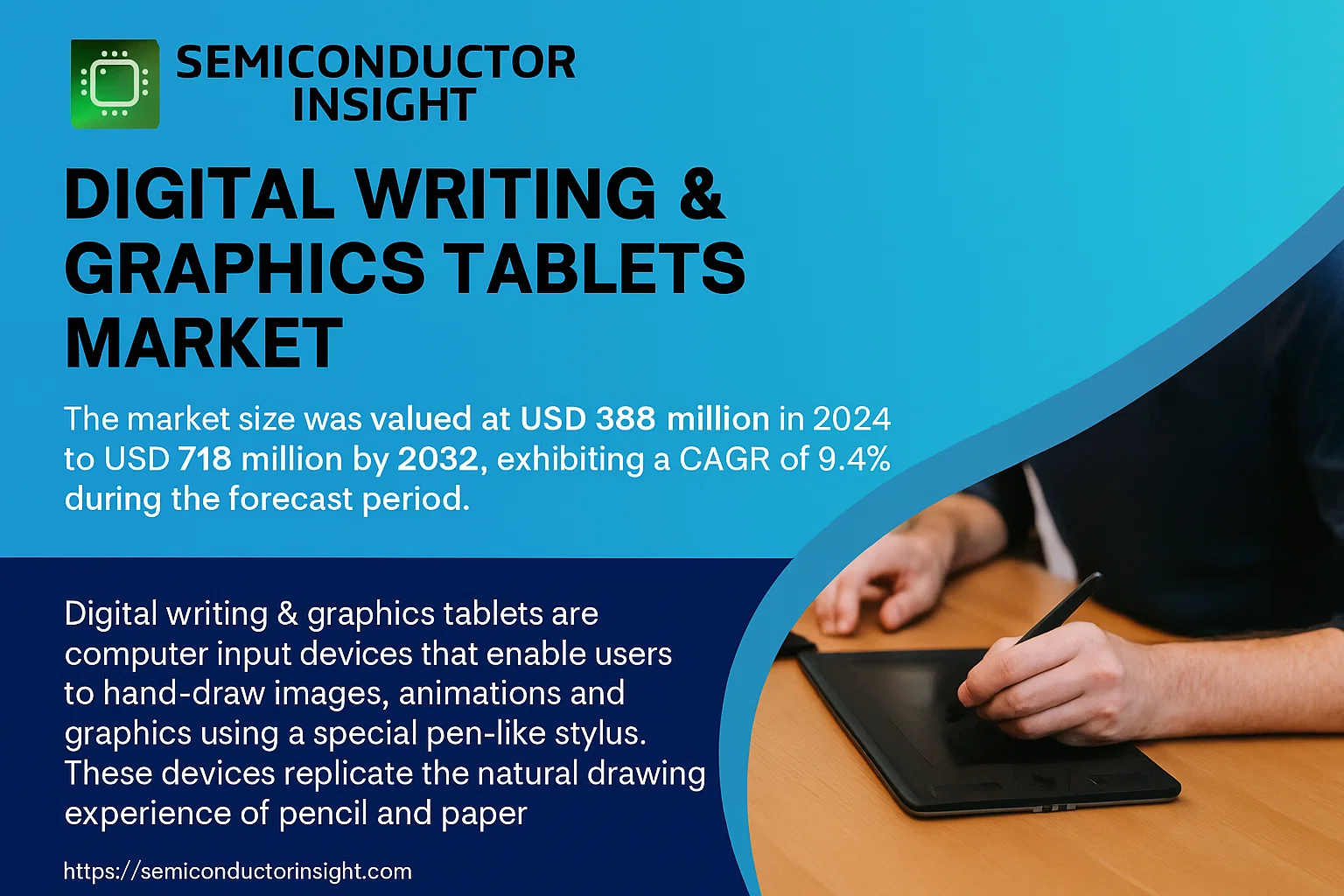
Global Digital Writing & Graphics Tablets Market size was valued at USD 388 million in 2024 to USD 718 million by 2032, exhibiting a CAGR of 9.4% during the forecast period.
Digital writing & graphics tablets are computer input devices that enable users to hand-draw images, animations and graphics using a special pen-like stylus. These devices replicate the natural drawing experience of pencil and paper while capturing digital data. The technology includes various pressure sensitivity levels such as 1024 Level, 2048 Level, and higher precision options that determine the accuracy and responsiveness of the drawing experience.
The market is experiencing steady growth due to several factors, including increased adoption in creative industries, rising demand for digital content creation tools, and growing remote work environments requiring efficient digital collaboration solutions. Additionally, advancements in display technology with integrated LCD screens are contributing to market expansion by providing more intuitive user experiences. Initiatives by key players in the market are also expected to fuel growth through product innovation and expanded applications across education and professional sectors. For instance, Wacom continues to introduce new tablet models with enhanced pressure sensitivity and wireless connectivity features. Wacom, Huion, and UGEE are some of the key players that operate in the market with diverse product portfolios catering to different user segments from beginners to professional artists.
MARKET DRIVERS
Proliferation of Digital Content Creation
Global surge in digital content creation for social media, streaming, and online education is a primary force propelling the Digital Writing & Graphics Tablets Market. Professionals and amateurs alike require precise tools for digital art, photo editing, and design, driving demand for devices that offer pressure sensitivity and a natural drawing experience. The expansion of the creator economy has made these tools essential for a growing segment of the workforce.
Remote Work and Hybrid Learning Models
The shift to remote and hybrid work and learning environments has significantly increased the need for effective digital collaboration tools. Graphics tablets are widely used for presentations, annotations, and interactive teaching, making them indispensable in sectors like education, design, and corporate training. This trend has expanded the user base beyond traditional artists to include a broader professional audience.
Furthermore, continuous technological advancements, including improved screen resolutions, reduced latency, and better battery life for portable models, are compelling users to replace older devices. The market is witnessing a steady demand for both entry-level tablets for beginners and high-end models for professional studios, ensuring growth across multiple price segments.
MARKET CHALLENGES
High Cost of Advanced Products
A significant challenge facing the market is the high upfront cost of premium graphics tablets, particularly those with integrated displays. This price barrier can limit adoption among students, hobbyists, and professionals in developing regions, potentially restricting market growth. Manufacturers must balance feature sophistication with affordability to capture a wider audience.
Another challenge is the increasing competition from advanced touchscreen devices like iPads and Microsoft Surface Pros, which offer versatile functionality beyond dedicated graphics tablets. Consumers often weigh the benefits of a multi-purpose device against a specialized tool, posing a threat to market share for traditional tablet manufacturers.
Other Challenges
Software and Hardware Compatibility
Ensuring seamless compatibility with a wide range of operating systems and creative software applications is an ongoing technical challenge. Drivers and software updates must be meticulously managed to provide a smooth user experience, and failures in this area can lead to customer dissatisfaction.
Consumer Awareness and Skill Gap
There remains a knowledge gap among potential users about the advantages of dedicated graphics tablets over mouse-based input. Educating the market and providing accessible learning resources are necessary to convert interested individuals into active customers, which requires significant investment in marketing and support.
MARKET RESTRAINTS
Market Maturation in Developed Regions
The Digital Writing & Graphics Tablets Market in North America and Western Europe is reaching a stage of maturity, where replacement cycles are the primary driver of sales rather than new customer acquisition. This saturation can lead to slower overall market growth rates as the initial wave of mass adoption levels off.
Supply Chain Vulnerabilities
Global supply chain disruptions, affecting the availability of critical components like high-resolution displays and specialized chips, can constrain production and lead to increased costs and longer lead times. These uncertainties pose a significant restraint on the market’s ability to meet demand consistently and maintain stable pricing.
Additionally, economic downturns and fluctuations in disposable income can cause both individual consumers and businesses to delay purchases of non-essential hardware. The discretionary nature of many graphics tablet purchases makes the market sensitive to broader economic conditions.
MARKET OPPORTUNITIES
Expansion in Emerging Economies
There is substantial untapped potential in emerging economies across Asia-Pacific, Latin America, and the Middle East. Rising disposable incomes, growing digital literacy, and expanding creative industries in these regions present a significant growth opportunity for manufacturers who can develop and market cost-effective products tailored to local needs.
Integration with Emerging Technologies
The integration of digital tablets with Augmented Reality (AR) and Virtual Reality (VR) for immersive design and prototyping represents a forward-looking opportunity. Developing tablets that serve as intuitive input devices for 3D modeling and virtual environments could open up new applications in architecture, engineering, and game development.
Furthermore, the growing emphasis on digital note-taking and annotation in corporate and educational settings provides an opportunity to market writing tablets to a broader professional audience. Products that effectively blend drawing capabilities with efficient document markup features can capture value in adjacent markets beyond traditional graphic arts.
Digital Writing & Graphics Tablets Market Trends
Sustained Market Expansion and Growth Trajectory
Global Digital Writing & Graphics Tablets market is demonstrating a robust and sustained growth trend. The market, valued at USD 388 million in 2024, is projected to expand significantly, reaching USD 718 million by 2032. This represents a compound annual growth rate (CAGR) of 9.4% throughout the forecast period. This consistent upward trajectory is underpinned by the increasing digitization of creative workflows across multiple industries. The demand is being driven by professionals and hobbyists in fields such as industrial design, animation, film, and advertising, who rely on the precise input capabilities of these devices for digital artistry and design work.
Other Trends
Technological Evolution and Feature Integration
A dominant trend is the technological evolution of the tablets themselves. While traditional tablets without screens remain popular, there is a clear market shift towards models that incorporate LCD screens, offering a more natural and intuitive drawing experience by allowing artists to draw directly onto the display. Furthermore, pressure sensitivity levels continue to increase, with products commonly featuring 1024 and 2048 levels of pressure, providing greater control and nuanced expression for digital artists.
Consolidated Competitive Landscape
The competitive environment is highly consolidated, with a few key players dominating the market. Wacom, Huion, and UGEE collectively hold approximately 85% of the global market share. This concentration suggests a market where brand reputation, technological innovation, and extensive distribution networks are critical success factors. The dominance of these top players influences pricing, feature sets, and the pace of innovation across the entire industry.
Geographic Market Dynamics
Regionally, the Asia-Pacific region, led by China, is the largest market for Digital Writing & Graphics Tablets, accounting for nearly 30% of the global share. This is followed by significant markets in North America and Europe. The strong market presence in Asia is attributed to a large base of manufacturers, a growing number of digital content creators, and a thriving animation and design industry. The regional analysis indicates varied growth potential, with emerging economies presenting significant opportunities for market expansion in the coming years.
COMPETITIVE LANDSCAPE
Key Industry Players
Market Dominated by Established Leaders with High Concentration
Global Digital Writing & Graphics Tablets market is characterized by a high degree of concentration, with the top three players—Wacom, Huion, and UGEE—collectively commanding approximately 85% of the market share. Wacom, a Japanese multinational, is the undisputed market leader, renowned for its premium-priced, high-performance professional-grade tablets and pen displays that set the industry standard. The company’s strong brand reputation, extensive R&D investments, and wide portfolio catering to professional artists, designers, and photographers solidify its dominant position. Huion and UGEE, both based in China, have successfully captured significant market share by offering more affordable alternatives that deliver robust features, effectively competing in the mid-range and entry-level segments and expanding the market’s accessibility.
Beyond the dominant trio, a number of other notable players compete in specific niches or regional markets. ViewSonic and Samsung leverage their strong brand recognition in display technologies to offer competitive graphic display tablets. Companies like Hanwang and Bosto have a strong presence, particularly within the Asia-Pacific region. Other significant participants include PenPower, AIPTEK, and Adesso, which often focus on specific applications such as digital signature capture, education, or budget-conscious consumer segments. The competitive dynamics are further shaped by ongoing technological advancements in pressure sensitivity, screen resolution, and the integration of displays directly into the tablets.
List of Key Digital Writing & Graphics Tablets Companies Profiled
Segment Analysis:
| Segment Category | Sub-Segments | Key Insights |
| By Type |
|
2048 Level tablets are experiencing robust demand as they offer superior pressure sensitivity, providing a more nuanced and responsive drawing experience that is highly valued by professional artists and designers. The trend is shifting towards higher resolution and precision for intricate digital artwork, making this the leading driver of innovation and premium-market appeal. As content creation continues to evolve, the expectation for professional-grade tools with minimal lag and maximum fidelity solidifies the dominance of this segment. |
| By Application |
|
Animation & Film represents the most significant application segment, fueled by the exponential growth in digital content production for streaming services, video games, and feature films. The segment requires tablets capable of handling complex 3D modeling, character rigging, and frame-by-frame animation, driving demand for high-performance devices. The continuous expansion of the global entertainment industry ensures sustained and growing requirements for sophisticated digital art tools, making this a cornerstone of market growth. |
| By End User |
|
Professional Artists & Designers constitute the core end-user group, as their workflow is fundamentally dependent on the precision and reliability offered by advanced graphics tablets. This segment demonstrates strong brand loyalty and a willingness to invest in high-end equipment, directly influencing product development priorities for leading manufacturers. Their demand for features like customizable express keys, tilt recognition, and screen tablets shapes the high-value segment of the market and drives technological advancement. |
| By Feature Set |
|
Screen Tablets are increasingly becoming the preferred choice for a seamless and intuitive drawing experience, as they allow artists to draw directly onto a display, mimicking the natural feel of traditional media. This feature set significantly reduces the learning curve and enhances productivity, making it particularly attractive for both professionals transitioning from paper and new digital artists. The integration of high-resolution, color-accurate screens is a key differentiator and a major growth vector. |
| By Distribution Channel |
|
Online Retail channels dominate the distribution landscape due to the extensive product variety, competitive pricing, detailed customer reviews, and direct-to-doorstep convenience they offer. This channel is crucial for reaching a global audience of individual creators and small studios, facilitating easy comparison of technical specifications and prices. The growing comfort with e-commerce, coupled with robust digital marketing by manufacturers, cements the leadership of online platforms in market accessibility. |
Regional Analysis: Digital Writing & Graphics Tablets Market
The region’s core strength lies in its dominant manufacturing ecosystem. It provides unparalleled advantages in component sourcing, assembly, and logistics, enabling cost-effective production of a vast range of tablets from entry-level to professional-grade models. This creates intense competition and continuous innovation, benefiting consumers and driving market growth.
A massive and rapidly growing digital content creation industry is a primary demand driver. This includes major animation, gaming, and VFX studios, a large freelance artist community, and a strong influencer culture, all of which rely heavily on graphics tablets for their workflow, creating a sustained and expanding market.
The widespread integration of digital tools in education systems across the region is a significant growth factor. Graphics tablets are increasingly adopted for online teaching, digital note-taking for students, and in specialized courses for design and architecture, creating a substantial and steady demand from the educational sector.
A young, tech-literate population with high disposable income in many urban centers is eager to adopt new technologies. Furthermore, cultural trends like digital art as a hobby and a strong focus on STEM education from an early age cultivate a receptive environment for graphics tablet adoption and usage.
North America
North America represents a highly mature and sophisticated market for digital writing and graphics tablets, characterized by strong demand from professional users and early adoption of new technologies. The region benefits from the presence of major technology companies and world-leading creative industries, including Hollywood’s film and animation sector, robust video game development, and a vast architecture and engineering landscape. High purchasing power allows for a significant uptake of premium and professional-grade tablets. The market is also driven by the integration of these devices into hybrid work models for digital whiteboarding and collaborative design, as well as a well-established hobbyist and content creator community. Intense competition among leading brands keeps innovation high, with a focus on features like superior pressure sensitivity, display technology, and software integration.
Europe
The European market is characterized by steady growth, driven by a strong design heritage and a diversified industrial base. Countries like Germany, the UK, and France are key contributors, with demand stemming from sectors such as automotive design, architectural visualization, and a vibrant independent game development scene. The region shows a high appreciation for quality and precision, favoring devices from established brands known for their durability and advanced features. There is also growing adoption in the education sector, particularly in higher education and vocational training for creative disciplines. While price sensitivity exists in some segments, the overall market is stable, with consistent demand from both professional studios and a growing base of freelance digital artists leveraging the tablets for remote work across the continent.
South America
The South American market for digital writing and graphics tablets is an emerging one with significant growth potential, though currently constrained by economic volatility and lower average disposable income. The primary demand drivers are a young, increasingly connected population and a burgeoning digital content creation community, particularly in countries like Brazil and Argentina. The market is largely dominated by more affordable, entry-level, and mid-range tablets. Growth is fueled by the expansion of the gig economy, with many freelancers using these tools for graphic design, illustration, and social media content creation. While the professional market is smaller compared to other regions, increasing internet penetration and the rising popularity of online education are expected to be key factors for future market expansion.
Middle East & Africa
This region presents a nascent but promising market, with growth centered in more developed economies such as the UAE, Saudi Arabia, and South Africa. The adoption is primarily driven by government initiatives focused on digital transformation and the development of creative industries. There is growing demand from the advertising, architecture, and media sectors, alongside a small but active community of digital artists and designers. The market is characterized by a preference for known international brands, perceived as offering higher quality and better support. Challenges include lower overall awareness and accessibility outside major urban centers, but the region’s focus on building technology hubs and improving digital infrastructure points towards gradual but sustained future growth.
Report Scope
This market research report provides a comprehensive analysis of the Digital Writing & Graphics Tablets Market , covering the forecast period 2025–2032. It offers detailed insights into market dynamics, technological advancements, competitive landscape, and key trends shaping the industry.
Key focus areas of the report include:
- Market Overview: The report begins with an overview outlining its current market scenario, key growth indicators, and industry transformation drivers. It discusses macroeconomic factors, demand–supply balance, regulatory landscape, and the strategic role of semiconductors in powering advancements across industries such as automotive, telecommunications, consumer electronics, and industrial automation.
- Market Size & Forecast: Historical data and future projections for revenue, unit shipments, and market value across major regions and segments.
- Segmentation Analysis: Detailed breakdown by product type, technology, application, and end-user industry to identify high-growth segments and investment opportunities.
- Regional Insights: Insights into market performance across North America, Europe, Asia-Pacific, Latin America, and the Middle East & Africa, including country-level analysis where relevant.
- Competitive Landscape: Profiles of leading market participants, including their product offerings, R&D focus, manufacturing capacity, pricing strategies, and recent developments such as mergers, acquisitions, and partnerships.
- Technology Trends & Innovation: Assessment of emerging technologies, integration of AI/IoT, semiconductor design trends, fabrication techniques, and evolving industry standards.
- Market Drivers & Restraints: Evaluation of factors driving market growth along with challenges, supply chain constraints, regulatory issues, and market-entry barriers.
- Stakeholder Insights: Insights for component suppliers, OEMs, system integrators, investors, and policymakers regarding the evolving ecosystem and strategic opportunities.
Primary and secondary research methods are employed, including interviews with industry experts, data from verified sources, and real-time market intelligence to ensure the accuracy and reliability of the insights presented.
FREQUENTLY ASKED QUESTIONS:
What is the current market size of Digital Writing & Graphics Tablets Market?
-> Digital Writing & Graphics Tablets Market size was valued at USD 388 million in 2024 to USD 718 million by 2032, exhibiting a CAGR of 9.4% during the forecast period.
Which key companies operate in Digital Writing & Graphics Tablets Market?
-> Key players include Wacom, Huion, UGEE, ViewSonic, Samsung, Hanwang, Bosto, PenPower, AIPTEK, and Adesso, among others. Wacom, Huion, and UGEE are the top 3 players, with a combined market share of about 85%.
What are the key growth drivers?
-> Key growth drivers include increasing demand in creative industries like animation, film, and industrial design, technological advancements in stylus and display technology, and the rise of remote work and digital content creation.
Which region dominates the market?
-> China is the largest region for Digital Writing & Graphics Tablets, with a market share of nearly 30%, followed by North America and Europe.
What are the emerging trends?
-> Emerging trends include the integration of LCD screens for a more natural drawing experience, development of higher pressure sensitivity levels (e.g., 2048 Level), and the expansion of applications beyond traditional art into areas like digital signatures and education.

Get Sample Report PDF for Exclusive Insights
Report Sample Includes
- Table of Contents
- List of Tables & Figures
- Charts, Research Methodology, and more...
 Download Sample Report PDF