MARKET INSIGHTS
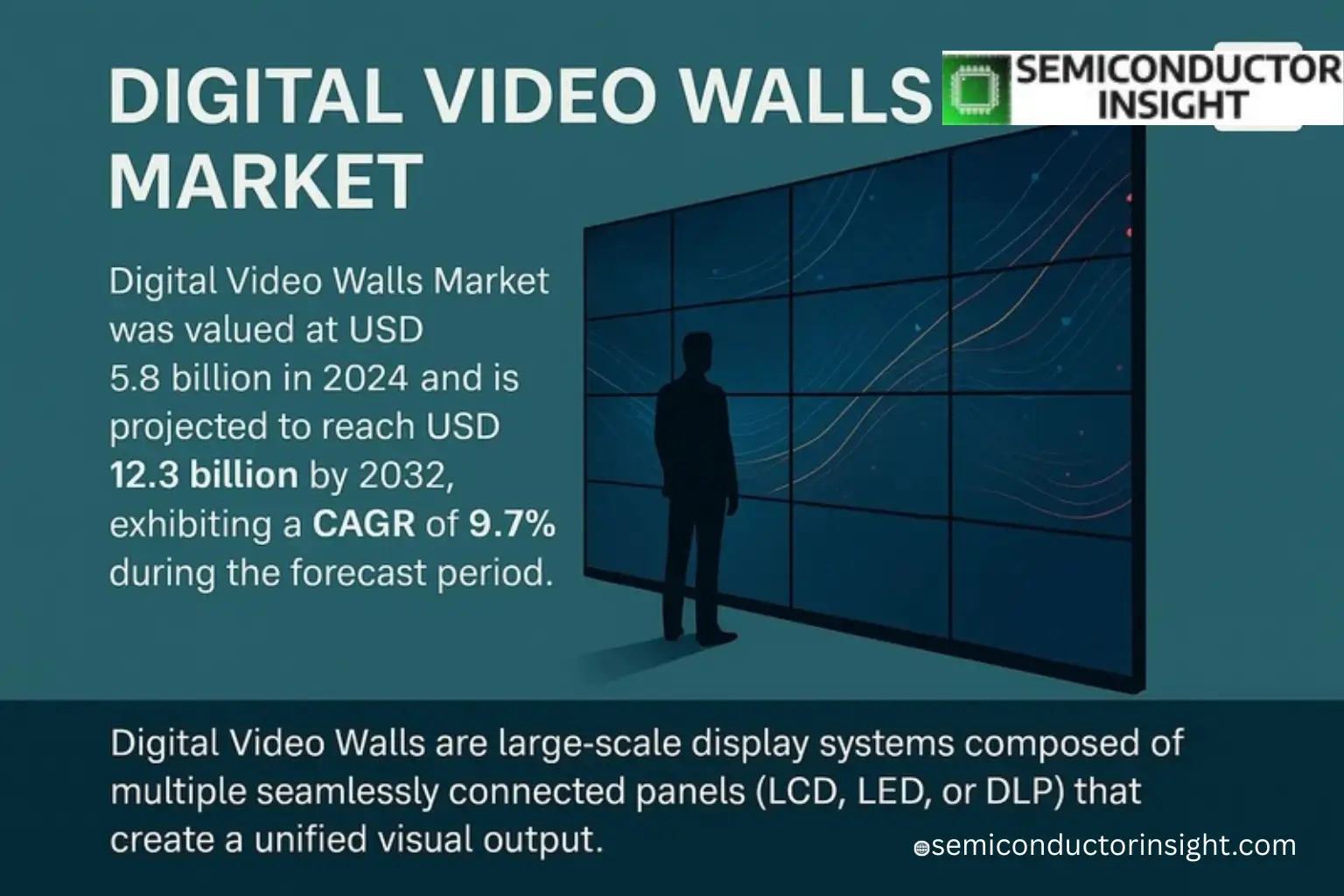
Global Digital Video Walls Market was valued at USD 5.8 billion in 2024 and is projected to reach USD 12.3 billion by 2032, exhibiting a CAGR of 9.7% during the forecast period.
Digital Video Walls are large-scale display systems composed of multiple seamlessly connected panels (LCD, LED, or DLP) that create a unified visual output. These systems integrate advanced controllers and software to process and distribute content across displays, enabling high-resolution, customizable layouts for real-time data visualization. Key applications span control rooms, retail advertising, transportation hubs, and corporate environments where dynamic information sharing is critical.
The market growth is driven by rising demand for immersive advertising displays and smart city infrastructure upgrades. Technological advancements like fine-pitch LED and bezel-free designs enhance viewing experiences, while AI-driven content management systems optimize operational efficiency. Major players such as Samsung Electronics Co., Ltd., LG Electronics Inc., and Barco NV dominate the sector with innovations in modular displays and energy-efficient solutions. For instance, in Q1 2024, NEC Corporation launched a new series of ultra-narrow-bezel LCD video walls targeting the education and enterprise sectors
MARKET DRIVERS
Growing Demand for Immersive Brand Experiences
The Digital Video Walls Market is expanding rapidly due to increasing demand for high-impact visual communication in retail, corporate, and public spaces. Businesses leverage digital video wall solutions to create engaging brand experiences, with over 65% of retailers reporting higher customer engagement through dynamic displays. This trend is particularly strong in sectors prioritizing visual storytelling.
Technological Advancements Driving Adoption
Recent innovations in LED and LCD technologies have enhanced display quality while reducing costs, making digital video walls more accessible. The average brightness of commercial displays has increased by 40% in the past three years, improving visibility in various lighting conditions. Seamless tiling capabilities now allow for unlimited screen size configurations with minimal bezels.
Integration with AI-powered content management systems enables real-time updates and personalized messaging, further boosting deployment across smart cities and transportation hubs.
MARKET CHALLENGES
High Initial Investment and Installation Complexities
Despite declining hardware costs, enterprise-grade digital video wall solutions require significant capital expenditure, with complete installations ranging from USD 50,000 to USD 500,000 depending on size and functionality. This creates barriers for small and medium businesses seeking to implement large-scale displays.
Other Challenges
Content Creation and Maintenance Costs
Ongoing expenses for professional content development and system updates account for approximately 35% of total cost of ownership for digital video wall deployments, requiring specialized technical expertise.
MARKET RESTRAINTS
Limited ROI Clarity for Some Verticals
While retail and hospitality sectors demonstrate clear returns from digital video wall installations, other industries face challenges quantifying direct business impact. Approximately 28% of corporate adopters report difficulty measuring engagement metrics against implementation costs, slowing broader market penetration.
MARKET OPPORTUNITIES
Expansion in Smart City Infrastructure
Municipalities worldwide are investing in digital video wall technology for public information systems, with urban centers allocating 15-20% of smart city budgets to interactive displays. This creates significant growth potential for vendors offering weatherproof and vandal-resistant solutions.
Healthcare Sector Adoption Rising
Hospitals are implementing digital video wall systems for wayfinding, patient education, and emergency communication. The healthcare vertical is projected to grow at 9.1% annually through 2027, driven by the need for real-time information sharing in medical facilities.
Digital Video Walls Market Trends
Rising Demand for High-Resolution Visual Solutions
Global Digital Video Walls Market is experiencing robust growth, projected to reach multimillion-dollar valuation by 2032 with a steady CAGR. This expansion is driven by increasing adoption across government, retail, and transportation sectors, where large-scale, high-resolution displays are essential for effective information dissemination and decision-making. Advanced display technologies like Mini LED and seamless splicing are enhancing visual quality while reducing bezel interference.
Other Trends
Technology Integration and Smart Features
Modern Digital Video Walls now incorporate AI-based image recognition and big data analytics, transforming them into intelligent visualization tools. These systems support real-time data processing, remote management, and multi-screen synchronization, meeting growing demand in smart city projects and security operations. The integration of IoT capabilities allows for predictive maintenance and energy-efficient operations.
Market Expansion Through Vertical Applications
Commercial sectors such as retail and education are increasingly adopting Digital Video Walls for immersive advertising and interactive learning. The healthcare sector utilizes them for surgical visualization and patient monitoring. Emerging applications in control rooms and broadcast studios are driving demand for ultra-narrow bezel displays with 24/7 operational reliability.
Competitive Landscape and Innovation
Leading manufacturers are focusing on product differentiation through advanced features like high brightness, wide color gamut, and modular designs. The market sees intense competition between established players and emerging regional suppliers, particularly in Asia-Pacific where production capabilities are expanding rapidly.
Challenges in Supply Chain and Standardization
Despite growth prospects, the Digital Video Walls Market faces challenges including dependence on specialized components and the need for standardized control protocols. Price pressures from commoditization and increasing customer demands for integrated solutions require manufacturers to balance innovation with cost optimization.
COMPETITIVE LANDSCAPE
Key Industry Players
Global Digital Video Walls Market Dominated by Display Technology Leaders
The Digital Video Walls Market is characterized by strong competition among established display technology providers and specialized video wall manufacturers. Barco and Christie lead the market with their high-end control room solutions, leveraging decades of experience in professional visualization. Samsung and LG Electronics hold significant shares through their vertically integrated display technologies, particularly in the commercial LED segment. Japanese brands like Panasonic, NEC, and Sony maintain strong positions in mission-critical applications with their reliable LCD and DLP solutions.
Emerging players like Absen, Unilumin, and Leyard are gaining traction through competitive LED video wall offerings, especially in the Asia-Pacific region. Daktronics and Planar specialize in large-format outdoor digital signage solutions, while Lighthouse and Eyevis cater to niche markets with custom video wall installations. The competitive landscape also includes Chinese manufacturers such as Dahua and Konka, which are expanding globally with cost-effective alternatives.
List of Key Digital Video Walls Companies Profiled
- Barco
- Christie
- Daktronics
- Lighthouse
- Planar
- Mitsubishi Electric
- Delta Electronics
- Samsung Electronics
- NEC Display Solutions
- Panasonic
- LG Electronics
- Eyevis
- Sharp
- Philips
- DynaScan
Segment Analysis:
| Segment Category | Sub-Segments | Key Insights |
| By Type |
|
LED Segment dominates due to:
|
| By Application |
|
Command & Control Segment shows strongest adoption because:
|
| By End User |
|
Government & Defense Segment leads the market for:
|
| By Installation Type |
|
Fixed Installation Segment remains dominant due to:
|
| By Resolution |
|
4K Resolution Segment shows strongest growth because:
|
Regional Analysis: Digital Video Walls Market
North America
US corporations are increasingly integrating digital video walls in office lobbies, boardrooms, and hospitality areas for brand storytelling and real-time data dashboards. The trend reflects growing workplace digital transformation initiatives focused on employee engagement and client presentations.
Major retail chains across North America are replacing traditional signage with dynamic video walls to enhance customer experiences. These installations serve both advertising and wayfinding purposes, with retail hubs like New York and Toronto witnessing exponential growth in large-format displays.
Airports and transit systems across the region are adopting video walls for passenger information and advertising. Chicago O’Hare and Toronto Pearson airports showcase cutting-edge implementations that combine wayfinding with revenue-generating content displays.
North America’s vibrant ecosystem of display manufacturers, content creators, and software developers accelerates innovation in video wall solutions. Strategic collaborations between Silicon Valley tech firms and Canadian digital media companies are pushing boundaries in interactive display technologies.
Europe
Europe maintains strong growth in the Digital Video Walls Market, particularly in Western European countries with advanced digital infrastructure. The UK and Germany lead in corporate and public sector deployments, while Scandinavian countries excel in sustainable display solutions. European regulations on energy-efficient displays are shaping product development, with manufacturers focusing on low-power consumption video walls. The region shows particular strength in museum and cultural institution installations, where heritage sites leverage video walls for interactive visitor experiences without compromising architectural integrity. Retail adoption grows steadily as physical stores compete with e-commerce through immersive in-store technologies.
Asia-Pacific
The Asia-Pacific Digital Video Walls Market is experiencing rapid growth, driven by urbanization and smart city initiatives across major economies. China dominates regional demand with massive deployments in transportation hubs and commercial centers, while Japan leads in technological innovation with ultra-high-resolution displays. Southeast Asian countries like Singapore and Malaysia show increasing adoption in the hospitality sector, integrating video walls with augmented reality features. India represents an emerging market with growing corporate sector demand, particularly in banking and IT services companies establishing modern office spaces.
Middle East & Africa
The Middle East demonstrates significant Digital Video Walls Market activity, particularly in GCC countries investing in smart city projects and luxury retail environments. Dubai leads with ambitious installations in airports, shopping malls, and government buildings as part of its smart city transformation. Saudi Arabia follows closely with large-scale deployments for the entertainment sector and religious tourism infrastructure. African markets show nascent but promising growth in South Africa and Nigeria, where corporate headquarters and premium retail spaces begin adopting video wall solutions.
South America
South America’s Digital Video Walls Market shows steady growth concentrated in Brazil, Argentina, and Chile. Major applications include retail advertising and corporate communications, with increasing adoption in banking sector branches. The region benefits from decreasing technology costs and growing awareness of digital signage benefits. Brazil leads in large-format installations for sports venues and shopping malls, while Colombia shows potential for growth in the hospitality sector as tourism rebounds post-pandemic.
Report Scope
This market research report provides a comprehensive analysis of the Digital Video Walls Market, covering the forecast period 2025–2032. It offers detailed insights into market dynamics, technological advancements, competitive landscape, and key trends shaping the industry.
Key focus areas of the report include:
- Market Overview: The report begins with an overview outlining its current market scenario, key growth indicators, and industry transformation drivers. It discusses macroeconomic factors, demand–supply balance, technological advancements, and the strategic role of digital video walls across industries such as security monitoring, retail, education, transportation, and smart city infrastructure.
- Market Size & Forecast: Historical data and future projections for revenue, unit shipments, and market value across major regions and segments.
- Segmentation Analysis: Detailed breakdown by product type (LCD, LED, DLP), application (Indoor, Outdoor), and end-user industry to identify high-growth segments.
- Regional Insights: Insights into market performance across North America, Europe, Asia-Pacific, Latin America, and the Middle East & Africa, including country-level analysis.
- Competitive Landscape: Profiles of leading market participants with their product offerings, pricing strategies, and recent developments.
- Technology Trends & Innovation: Assessment of emerging technologies including Mini LED, seamless splicing, AI integration, and intelligent control systems.
- Market Drivers & Restraints: Evaluation of growth drivers and challenges including supply chain constraints and technology monopolies.
- Stakeholder Insights: Strategic opportunities for OEMs, system integrators, and investors in the evolving digital video wall ecosystem.
Primary and secondary research methods are employed, including interviews with industry experts and data from verified sources to ensure accuracy.
FREQUENTLY ASKED QUESTIONS:
What is the current market size of Digital Video Walls Market?
-> Digital Video Walls Market was valued at USD 5.8 billion in 2024 and is projected to reach USD 12.3 billion by 2032, exhibiting a CAGR of 9.7% during the forecast period.
Which key companies operate in Digital Video Walls Market?
-> Key players include Barco, Christie, Daktronics, Lighthouse, Planar, Mitsubishi Electric, Delta, Samsung, NEC, Panasonic, LG, Eyevis, Sharp, Philips, DynaScan, Sony, Toshiba, Vtron, Sansi, Konka, Leyard, Odin, Absen, Dahua, GQY, Unilumin, Changhong, Liantronics, Vewell, Szretop, among others.
What are the key growth drivers?
-> Key growth drivers include smart city initiatives, security system upgrades, demand for commercial visual displays, and technological advancements in Mini LED and intelligent control systems.
Which region dominates the market?
-> Asia is a key growth region, particularly China, Japan, and South Korea, while North America and Europe remain significant markets.
What are the emerging trends?
-> Emerging trends include AI-based image recognition, real-time data visualization, fine-pitch LED technology, and modular video wall designs.

Get Sample Report PDF for Exclusive Insights
Report Sample Includes
- Table of Contents
- List of Tables & Figures
- Charts, Research Methodology, and more...
 Download Sample Report PDF