MARKET INSIGHTS
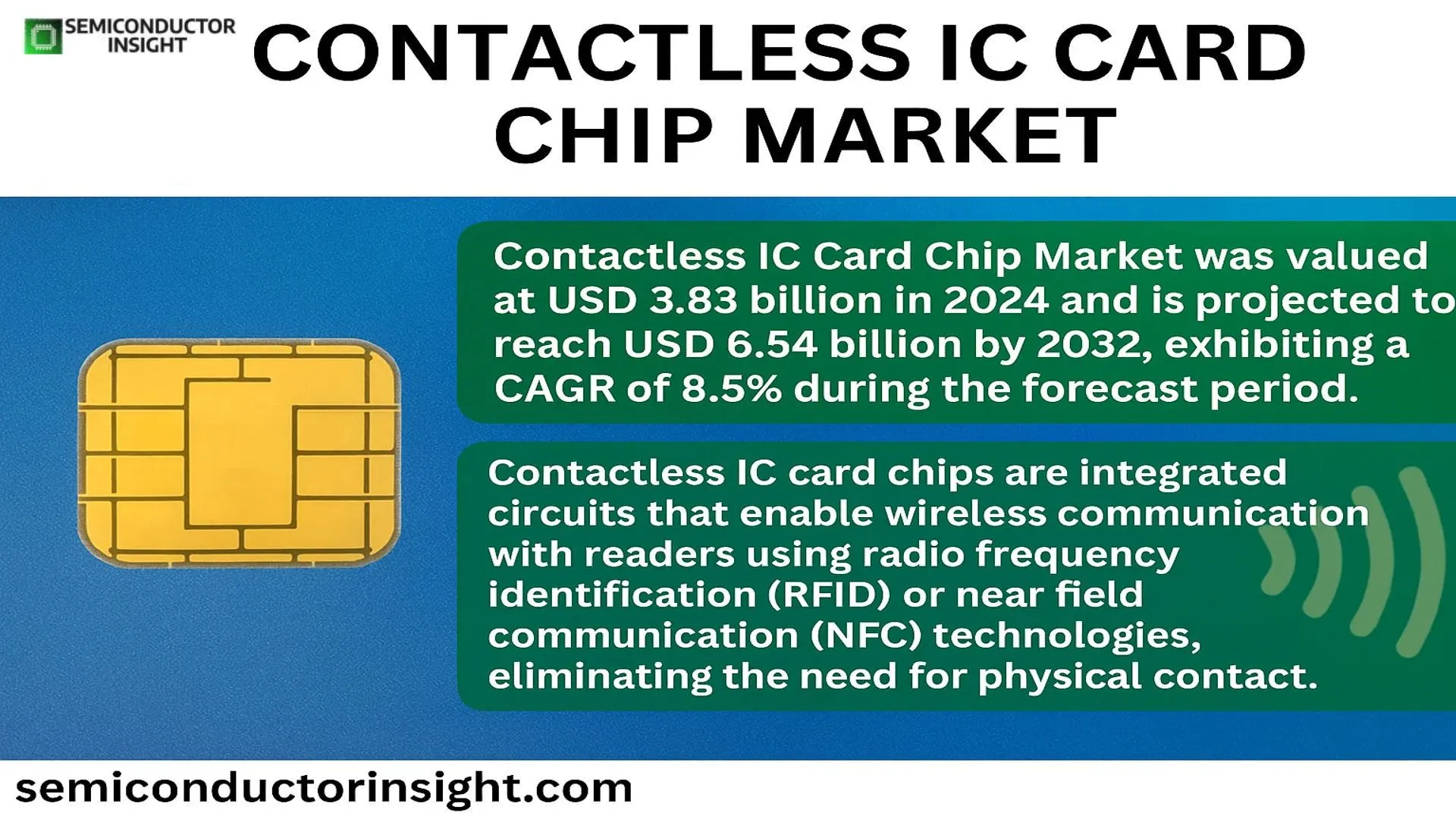
Global Contactless IC Card Chip Market was valued at USD 3.83 billion in 2024 and is projected to reach USD 6.54 billion by 2032, exhibiting a CAGR of 8.5% during the forecast period.
Contactless IC card chips are integrated circuits that enable wireless communication with readers using radio frequency identification (RFID) or near field communication (NFC) technologies, eliminating the need for physical contact. These chips contain an embedded antenna and a microprocessor that handle data transmission, encryption, and authentication processes. They are widely used across payment systems, access control, public transportation, and identity verification systems due to their high security, convenience, and durability.
The market growth is primarily driven by the accelerated adoption of cashless payment systems globally, particularly in emerging economies where governments are promoting digital transactions. The Asia Pacific region leads in shipment volumes, accounting for over 45% of global shipments in 2023, with North America following at approximately 28%. The increasing integration of these chips in government ID cards, transportation cards, and financial cards continues to expand their application scope.
Recent technological advancements have focused on enhancing security features against cloning and unauthorized access. Major manufacturers are incorporating advanced encryption standards and multi-factor authentication directly into the chips. The industry is also witnessing a trend towards multi-application chips that can function across transportation, payment, and access control systems simultaneously.
Key market players include NXP Semiconductors, Infineon Technologies, Texas Instruments, STMicroelectronics, Samsung Semiconductor, and several emerging Chinese manufacturers. The market remains competitive with the top three players holding approximately 44% market share collectively as of 2023.
MARKET DRIVERS
Accelerated Adoption of Digital Payments
The global pivot towards cashless transactions is a primary force propelling the contactless IC card chip market. The convenience, speed, and enhanced hygiene benefits of contactless payments, especially post-pandemic, have driven widespread integration in banking, retail, and public transport systems. Government initiatives promoting financial inclusion and digital economies further bolster this trend.
Expansion in Application Verticals
Beyond payment cards, the demand for contactless IC chips is surging in sectors like secure access control, e-government applications (e-passports, national ID cards), and wearable technology. The need for robust security and seamless user experience in these applications creates a sustained demand for advanced chip technologies.
➤ The global market for contactless payment cards is projected to grow at a CAGR of over 11% in the coming years, directly fueling chip demand.
Furthermore, advancements in semiconductor technology enabling higher data storage capacity, faster processing speeds, and improved security features like encryption are critical drivers. Manufacturers are investing heavily in developing chips that comply with evolving global security standards, such as EMVCo and Common Criteria.
MARKET CHALLENGES
High Initial Investment and Complex Manufacturing
The design and fabrication of contactless IC card chips require significant capital expenditure in specialized semiconductor manufacturing facilities. The complexity of integrating radio frequency (RF) capabilities with secure microcontrollers presents technical hurdles, leading to longer development cycles and higher production costs compared to traditional magnetic stripe technology.
Other Challenges
Security Vulnerabilities and Standards Compliance
Despite advanced encryption, contactless chips are potential targets for sophisticated cyberattacks like skimming and relay attacks. Constantly evolving security threats necessitate continuous R&D investment. Additionally, manufacturers must navigate a complex landscape of regional and international security standards, which can delay product launches and increase compliance costs.
Supply Chain Constraints
The market is susceptible to disruptions in the global semiconductor supply chain. Shortages of raw materials like silicon wafers and fluctuations in component availability can lead to production delays and increased prices, impacting market growth and profitability for card issuers and manufacturers alike.
MARKET RESTRAINTS
Competition from Alternative Payment Technologies
The rising popularity of smartphone-based payment solutions, such as QR codes and mobile wallets, poses a significant restraint to the contactless card chip market. For many consumers, especially in developing economies, these alternatives offer a lower-cost entry point into digital payments, potentially limiting the growth rate of physical contactless card issuance.
Consumer Privacy and Data Security Concerns
Persisting concerns among consumers about the security of their personal and financial data stored on contactless chips can hinder adoption. High-profile data breaches and a lack of awareness about the security features of contactless technology can lead to consumer reluctance, particularly in regions with lower technological literacy.
MARKET OPPORTUNITIES
Emergence of IoT and Smart City Infrastructure
The integration of contactless IC chips into Internet of Things (IoT) devices and smart city applications represents a major growth frontier. These chips are essential for secure identification, access control, and micro-payments in connected environments, from smart homes and offices to intelligent transportation systems, creating vast new addressable markets.
Growth in Emerging Economies
Significant opportunities lie in emerging markets across Asia-Pacific, Latin America, and Africa. Government-led digital identity programs and the rapid modernization of banking and payment infrastructures in these regions are driving massive demand for contactless IC card chips. The lower penetration rate of existing payment cards provides a substantial greenfield opportunity for market expansion.
Development of Multi-Application Chips
There is a growing trend towards single chips that can support multiple applications, such as combining payment, transit access, and loyalty programs on one card. Developing these sophisticated, multi-purpose chips allows manufacturers to offer higher value and capture a larger share of the market by meeting the demand for consolidated and convenient user experiences.
Contactless IC Card Chip Market Trends
Strong Global Market Expansion
The global Contactless IC Card Chip market is on a robust growth trajectory, expanding from a valuation of $3,832 million in 2024 to a projected $6,536 million by 2032. This represents a compound annual growth rate (CAGR) of 8.5% during the forecast period. The market’s strength is driven by the widespread adoption of these chips, which utilize RFID and NFC technology for secure, contactless transactions and authentication in sectors like BFSI, government, and transportation. The increasing need for secure, convenient, and durable solutions for electronic payments and identity verification is a primary driver of this sustained expansion.
Other Trends
Geographic Market Shifts
The Asia Pacific region, closely followed by North America, currently leads in global contactless IC card chip shipments. In 2023, these two regions combined accounted for 70% of the world’s total shipments. A notable trend is the steady increase in the Asia Pacific region’s market share over recent years, primarily fueled by rapid growth in populous developing economies such as China, India, and Indonesia. These emerging markets are expected to be the main engines for future global market growth, with their expanding financial services and public infrastructure projects creating substantial demand.
Industry Consolidation and Business Models
The competitive landscape is characterized by significant consolidation, with the top three global manufacturers holding a 44% market share in 2023. Key players include NXP Semiconductors, Infineon, and STMicroelectronics. The industry operates primarily under two business models: the Integrated Device Manufacturer (IDM) model, used by companies like NXP and Infineon that control the entire production chain, and the Fabless model, adopted by firms like Shanghai Fudan Microelectronics Group, which focus on design and outsource manufacturing. This dynamic influences innovation cycles and market competition.
Broadening Application Spectrum
The demand for contactless IC card chips is being bolstered by their integration into a wide array of applications beyond traditional payment cards. The ongoing digital transformation across industries is generating significant demand in areas such as advanced security systems, IoT-enabled devices, and smart city infrastructure. The diversification into segments like government ID cards, access control, and public transit passes ensures a stable and expanding customer base, supporting the long-term health and development of the entire industry.
COMPETITIVE LANDSCAPE
Key Industry Players
A Consolidated Market Driven by Security and Innovation
The global Contactless IC Card Chip market is characterized by a moderately concentrated competitive landscape dominated by a few major international semiconductor players. NXP Semiconductors, Infineon Technologies, and STMicroelectronics collectively held a significant 44% revenue share of the global market in 2023. These industry titans leverage their extensive R&D capabilities, robust patent portfolios, and global supply chains to provide high-security, high-performance chips that are the standard for applications in payment, government ID, and transportation. The market structure is heavily influenced by the stringent security certifications required for these applications, creating high barriers to entry and favoring established, trusted suppliers with a proven track record. Companies in this space primarily operate under either the Integrated Device Manufacturer (IDM) model, which controls the entire production process, or the Fabless model, which focuses on design and outsources manufacturing.
Beyond the dominant global players, several other companies have carved out significant niches or maintain strong regional positions. This includes suppliers like Texas Instruments and Samsung, which offer broad semiconductor portfolios that include contactless solutions. In the Asia-Pacific region, which is a major growth engine for the market, local champions have emerged. Chinese companies such as Unigroup Guoxin Microelectronics Co., Ltd. (Sino Microelectronics), Shanghai Fudan Microelectronics Group Co., Ltd., Datang Telecom Technology Co.,Ltd., and Giantec Semiconductor Corporation are key suppliers, particularly within China’s vast domestic market for transportation cards, national ID programs, and financial cards. Other notable players like HED and Nations Technologies Inc. also contribute to the market’s diversity, often specializing in specific application segments or technological standards.
List of Key Contactless IC Card Chip Companies Profiled
- NXP Semiconductors
- Infineon Technologies AG
- STMicroelectronics
- Texas Instruments Incorporated
- Samsung Electronics Co., Ltd.
- Unigroup Guoxin Microelectronics Co., Ltd.
- Shanghai Fudan Microelectronics Group Co., Ltd.
- HED
- Datang Telecom Technology Co.,Ltd.
- Nations Technologies Inc.
- Giantec Semiconductor Corporation
- EM Microelectronic (Swatch Group)
- Microchip Technology Inc.
- Inside Secure (Verimatrix)
- INSIDE Contactless
Segment Analysis:
| Segment Category | Sub-Segments | Key Insights |
| By Type |
|
ISO/IEC 14443 A is the dominant standard, prized for its robust security features and extensive global adoption in payment and transit systems. Its interoperability with a vast existing infrastructure of readers and terminals provides a significant competitive advantage, making it the clear market leader. The “Others” category includes evolving standards that cater to niche applications requiring specific communication protocols or enhanced data transfer capabilities, representing areas for future specialization. |
| By Application |
|
Transportation emerges as the leading application, driven by the global push for efficient, cashless fare collection systems in metropolitan areas. The convenience and speed offered for daily commutes create massive, consistent demand. The BFSI sector follows closely, underpinned by the worldwide shift from magnetic strips to more secure EMV contactless payment cards, which is a fundamental driver for chip adoption and replacement cycles in the financial industry. |
| By End User |
|
Individual Consumers constitute the largest end-user segment, as they are the ultimate holders of payment cards, transit passes, and access badges. The demand from this group is inherently massive and driven by widespread personal adoption. However, Enterprises & Organizations represent a highly influential segment, as their decisions to implement access control, employee ID, and payment systems for corporate facilities and services generate substantial bulk procurement orders. |
| By Business Model |
|
Fabless is the predominant business model due to its capital efficiency, allowing companies to focus resources on core competencies like innovative chip design and market expansion while outsourcing manufacturing. The IDM model, while less common, is maintained by a few powerful players who leverage full vertical integration to exert superior control over the entire production process, security protocols, and supply chain, which is a critical advantage for high-security applications. |
| By Security Level |
|
High Security chips lead the market, as they are the fundamental requirement for financial payments (EMV) and secure digital identity credentials, representing the bulk of volume demand. The growth trajectory is strongest for this segment due to ongoing global financial card upgrades. The Specialized/Government Grade segment, while smaller, is critically important, driven by national initiatives for electronic passports, national ID cards, and other secure documents that demand the highest levels of cryptographic protection and tamper resistance. |
Regional Analysis: Contactless IC Card Chip Market
Asia-Pacific
National digital identity and payment programs, particularly in China and India, are massive drivers. Government mandates for secure citizen ID cards and public transit payment systems have created a sustained, high-volume demand for contactless IC chips, embedding the technology into the fabric of daily life.
The region hosts the world’s leading semiconductor foundries and card personalization centers. This proximity from chip fabrication to final card issuance results in significant cost advantages, supply chain resilience, and faster innovation cycles compared to other regions.
A tech-savvy population has rapidly embraced contactless payments for their speed and convenience. The widespread installation of contactless point-of-sale terminals and the integration with popular mobile payment platforms like Alipay and WeChat Pay have solidified consumer reliance on the technology.
Beyond payments, the region is pioneering diverse applications including access control for residential and commercial complexes, toll collection, and healthcare credentials. This expansion into new verticals ensures continuous market growth and reduces reliance on any single application segment.
North America
The North American market is characterized by a mature and highly competitive landscape, primarily driven by the rapid replacement of magnetic stripe cards with more secure EMV contactless chip cards. The United States experienced a significant acceleration following mandates from payment networks, pushing issuers to distribute contactless-enabled credit and debit cards. Consumer preference for tap-and-go payments, especially post-pandemic, has been a key growth factor. The market is also seeing strong uptake in transit systems across major cities, creating a reliable secondary demand stream. While adoption is high, the region’s growth is more evolutionary than revolutionary, focusing on upgrading existing financial infrastructure rather than pioneering large-scale national identity projects seen elsewhere.
Europe
Europe represents a highly developed and standardized market for contactless IC card chips, with near-ubiquitous adoption for retail payments. The region benefited from an early and coordinated migration to EMV standards, establishing a strong foundation. The high limits for contactless transactions without a PIN have made the technology extremely convenient for everyday purchases. A significant dynamic is the integration of contactless technology into multi-application cards that combine banking, public transportation, and local loyalty programs, particularly in Western European countries. Stringent EU regulations on payment security continue to push the envelope for chip technology, fostering an environment of advanced security features and innovation in the sector.
South America
The South American market is in a growth phase, with adoption rates varying significantly between countries. Larger economies like Brazil are leading the charge, driven by banking sector modernization efforts and the expansion of formal financial services to underserved populations. Contactless technology is often deployed as part of a leapfrogging strategy, skipping older payment technologies altogether. Public transportation projects in major metropolitan areas are also becoming key adoption drivers. However, the market faces challenges related to economic volatility and the need for significant investment in terminal infrastructure outside of major urban centers, which can slow the pace of widespread adoption.
Middle East & Africa
The Middle East & Africa region presents a landscape of contrasts. The Gulf Cooperation Council (GCC) countries are highly advanced, with government visions for smart cities and cashless economies driving rapid deployment of contactless chips for payments, national IDs, and access control. In contrast, many African nations are in earlier stages, where the focus is on financial inclusion using more basic technologies. Nonetheless, there is notable growth potential, particularly in North Africa and more developed African economies, where mobile-money-linked cards and public sector initiatives are beginning to incorporate contactless functionality. The region’s growth is closely tied to government-led digital transformation agendas.
Report Scope
This market research report provides a comprehensive analysis of the Contactless IC Card Chip Market , covering the forecast period 2025–2032. It offers detailed insights into market dynamics, technological advancements, competitive landscape, and key trends shaping the industry.
Key focus areas of the report include:
- Market Overview: The report begins with an overview outlining its current market scenario, key growth indicators, and industry transformation drivers. It discusses macroeconomic factors, demand–supply balance, regulatory landscape, and the strategic role of semiconductors in powering advancements across industries such as automotive, telecommunications, consumer electronics, and industrial automation.
- Market Size & Forecast: Historical data and future projections for revenue, unit shipments, and market value across major regions and segments.
- Segmentation Analysis: Detailed breakdown by product type, technology, application, and end-user industry to identify high-growth segments and investment opportunities.
- Regional Insights: Insights into market performance across North America, Europe, Asia-Pacific, Latin America, and the Middle East & Africa, including country-level analysis where relevant.
- Competitive Landscape: Profiles of leading market participants, including their product offerings, R&D focus, manufacturing capacity, pricing strategies, and recent developments such as mergers, acquisitions, and partnerships.
- Technology Trends & Innovation: Assessment of emerging technologies, integration of AI/IoT, semiconductor design trends, fabrication techniques, and evolving industry standards.
- Market Drivers & Restraints: Evaluation of factors driving market growth along with challenges, supply chain constraints, regulatory issues, and market-entry barriers.
- Stakeholder Insights: Insights for component suppliers, OEMs, system integrators, investors, and policymakers regarding the evolving ecosystem and strategic opportunities.
Primary and secondary research methods are employed, including interviews with industry experts, data from verified sources, and real-time market intelligence to ensure the accuracy and reliability of the insights presented.
FREQUENTLY ASKED QUESTIONS:
What is the current market size of Contactless IC Card Chip Market?
-> Global Contactless IC Card Chip Market was valued at USD 3832 million in 2024 and is projected to reach USD 6536 million by 2032, exhibiting a CAGR of 8.5% during the forecast period.
Which key companies operate in Contactless IC Card Chip Market?
-> Key players include NXP Semiconductors, Infineon, Texas Instruments, STMicroelectronics, Samsung, Unigroup Guoxin Microelectronics Co., Ltd., and Shanghai Fudan Microelectronics Group Co., Ltd., among others. The top three global manufacturers accounted for 44% of the market in 2023.
What are the key growth drivers?
-> Key growth drivers include the transformation and upgrading of traditional industries, generating large application demands in financial security, security monitoring, and the Internet of Things. The vast downstream application fields steadily support the continued development of the industry.
Which region dominates the market?
-> Asia Pacific is the dominant market, ranking first in shipments, followed by North America. In 2023, these two regions combined accounted for 70% of global contactless IC card shipments.
What are the emerging trends?
-> Emerging trends include the increasing adoption of RFID and NFC technologies, the proliferation of electronic payment and identity authentication systems, and the strategic importance of populous developing countries like China, India, and Indonesia as main growth engines for the market.

Get Sample Report PDF for Exclusive Insights
Report Sample Includes
- Table of Contents
- List of Tables & Figures
- Charts, Research Methodology, and more...
 Download Sample Report PDF