MARKET INSIGHTS
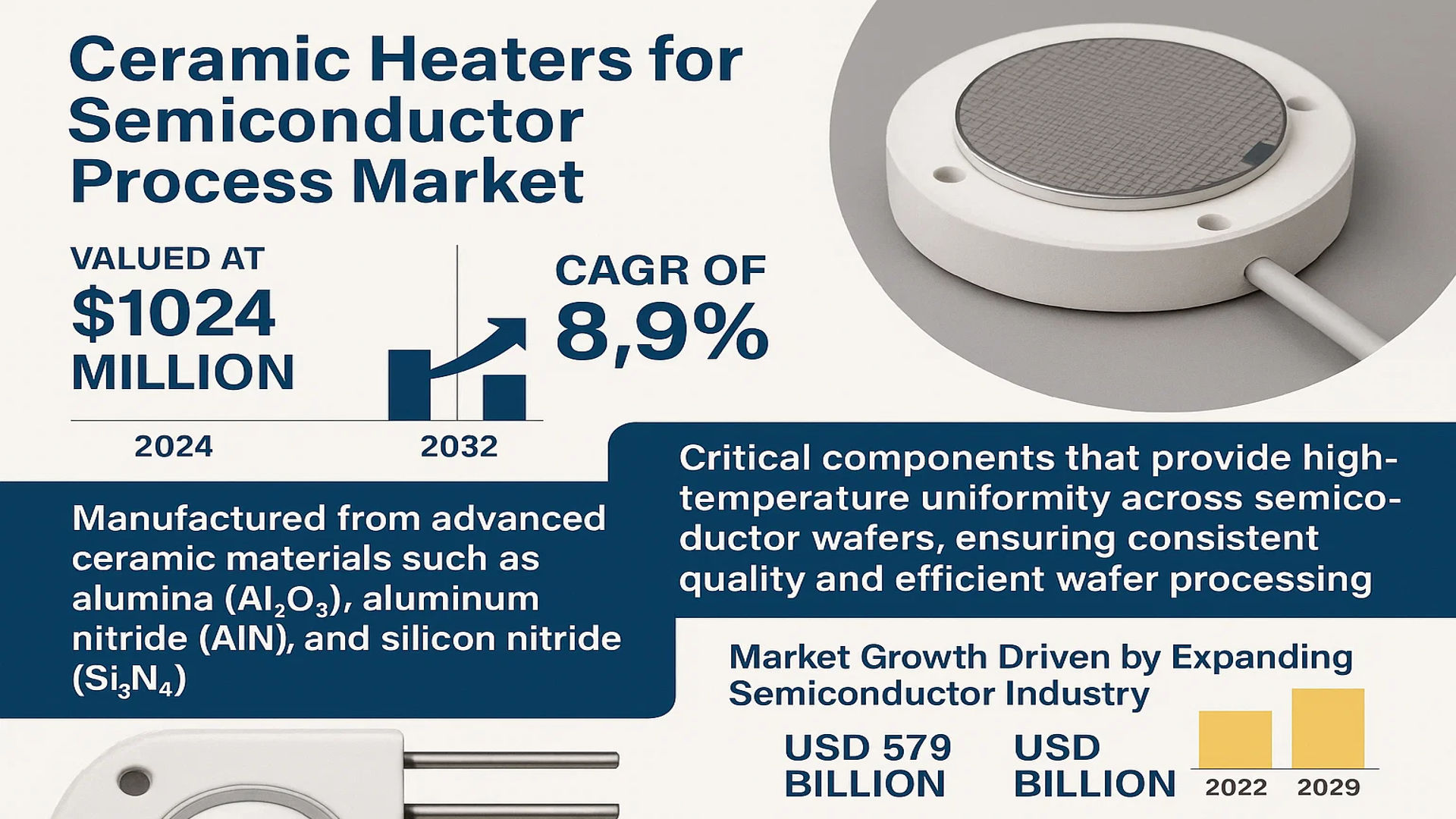
The global Ceramic Heaters for Semiconductor Process Market was valued at 1024 million in 2024 and is projected to reach US$ 1829 million by 2032, at a CAGR of 8.9% during the forecast period.
Ceramic heaters for semiconductor processes are critical components that provide high-temperature uniformity across semiconductor wafers, ensuring consistent quality and efficient wafer processing. These heaters are manufactured from advanced ceramic materials such as alumina (Al2O3), aluminum nitride (AlN), and silicon nitride (Si3N4), which offer excellent thermal conductivity, durability, and resistance to chemical corrosion.
The market growth is driven by the expanding semiconductor industry, which was valued at USD 579 billion in 2022 and is expected to reach USD 790 billion by 2029. While segments like analog ICs and sensors are growing at double-digit rates, the demand for ceramic heaters remains robust due to their critical role in plasma processing, thermal treatment, and wet chemical processes. Leading manufacturers such as Sumitomo Electric, NGK Insulators, and CoorsTek are investing in R&D to enhance heater efficiency, further propelling market expansion.
MARKET DYNAMICS
MARKET DRIVERS
Rising Demand for Advanced Semiconductor Fabrication to Propel Market Growth
The global semiconductor industry’s rapid expansion, projected to reach $790 billion by 2029, is driving unprecedented demand for precision heating solutions in chip manufacturing. Ceramic heaters have become indispensable in semiconductor processes due to their superior thermal uniformity – maintaining temperature variations within ±1°C across 300mm wafers. This level of precision is critical for advanced nodes below 10nm where even minor temperature fluctuations can affect yield rates exceeding 95% in leading fabs. Semiconductor manufacturers are increasingly adopting aluminum nitride (AlN) heaters, which demonstrate 20-30% better thermal conductivity than traditional alumina models, significantly improving process efficiency.
Expansion of 5G and Automotive Semiconductor Production Accelerates Adoption
The proliferation of 5G infrastructure and electric vehicles is creating substantial demand for specialized semiconductors that require precise thermal processing. RF components for 5G base stations and power devices for automotive applications particularly benefit from ceramic heaters’ ability to maintain stable high-temperature environments up to 800°C. With the automotive semiconductor market growing at nearly 15% annually, manufacturers are investing heavily in thermal treatment systems featuring silicon nitride (Si3N4) heaters known for their exceptional thermal shock resistance. Recent industry data shows that over 40% of new semiconductor equipment purchases now incorporate advanced ceramic heating elements to meet these specialized requirements.
Miniaturization Trend in Chip Design Necessitates Higher Precision Heating Solutions
As semiconductor geometries shrink below 7nm, the industry faces mounting challenges in maintaining process consistency. Ceramic heaters address this through their ability to deliver rapid thermal response times under 5 seconds while minimizing thermal gradients. This capability has become particularly valuable in atomic layer deposition (ALD) and plasma-enhanced chemical vapor deposition (PECVD) processes, where temperature uniformity directly impacts film quality. Leading foundries report that upgrading to advanced ceramic heating systems has reduced wafer reject rates by 12-18% in critical front-end processes, justifying the higher initial investment.
➤ For instance, major semiconductor equipment providers have recently introduced ceramic heater models with integrated temperature sensors that achieve real-time temperature control within ±0.5°C, significantly improving yield rates in advanced packaging applications.
MARKET CHALLENGES
High Material and Manufacturing Costs Limit Market Penetration
While ceramic heaters offer superior performance, their adoption faces economic hurdles in price-sensitive markets. Premium aluminum nitride materials can cost 3-5 times more than conventional heating elements, with complex manufacturing processes adding to the expense. The sintering process alone for high-performance AlN heaters requires specialized equipment operating at temperatures exceeding 1800°C, resulting in significant energy consumption. Small and medium-sized semiconductor manufacturers often find these costs prohibitive, particularly for legacy process nodes where cheaper alternatives remain viable.
Other Challenges
Supply Chain Vulnerabilities
The global semiconductor industry’s recent supply chain disruptions have extended to critical heater components. Certain high-purity ceramic materials face lead times exceeding 6 months as demand outpaces production capacity. This creates inventory management challenges for equipment manufacturers who must balance just-in-time delivery with the risk of production stoppages.
Technical Integration Complexities
Retrofitting existing semiconductor tools with advanced ceramic heaters often requires extensive system modifications. The transition from traditional resistance heaters to ceramic alternatives necessitates changes in power delivery systems, control algorithms, and maintenance procedures – creating adoption barriers particularly for older fabrication facilities.
MARKET RESTRAINTS
Material Science Limitations Constrain Performance Enhancements
Despite significant advancements, ceramic heaters still face fundamental material limitations that restrict their application in certain semiconductor processes. Thermal stress cracking remains a persistent issue in rapid thermal processing (RTP) applications where temperature ramps exceed 100°C/second. While silicon carbide-reinforced alumina composites have improved durability, they still demonstrate 15-20% shorter operational lifespans than manufacturer claims in aggressive process environments. These limitations force process engineers to make compromises between thermal performance and equipment longevity in high-throughput production settings.
Technical Workforce Shortage Impacts Implementation Capabilities
The semiconductor industry’s rapid growth has created a critical shortage of engineers skilled in advanced thermal system implementation. Specialists capable of optimizing ceramic heater configurations for specific process requirements remain scarce, with demand for these skills growing at nearly 25% annually. This expertise gap often results in suboptimal heater deployments that fail to achieve their full performance potential, delaying return on investment and discouraging broader adoption.
MARKET OPPORTUNITIES
Emerging Applications in Advanced Packaging Present Growth Potential
The rapid growth of heterogeneous integration and 3D packaging technologies is creating new opportunities for ceramic heater applications. Fan-out wafer-level packaging (FOWLP) and through-silicon via (TSV) processes increasingly require specialized heating solutions capable of maintaining precise thermal profiles across stacked die configurations. Early adopters report that ceramic heaters specifically designed for packaging applications have improved warpage control by 30-40% compared to conventional systems, addressing one of the most critical challenges in advanced packaging.
Development of Next-Generation Composite Materials Opens New Possibilities
Material science breakthroughs in ceramic composites are enabling a new generation of heaters with enhanced performance characteristics. Recent developments in graphene-enhanced ceramics demonstrate 40% higher thermal conductivity than pure aluminum nitride while maintaining excellent electrical insulation properties. These innovations could potentially overcome current limitations in high-power applications and extend the operational temperature range beyond 1000°C, unlocking new semiconductor process capabilities. Early prototypes have shown particular promise in gallium nitride (GaN) and silicon carbide (SiC) device fabrication where conventional heating solutions struggle with temperature stability.
Strategic Collaborations Between Equipment and Materials Providers Accelerate Innovation
The industry is witnessing increasing collaboration between semiconductor equipment manufacturers and advanced ceramics suppliers to develop application-specific heating solutions. These partnerships are yielding integrated systems that optimize both heater design and process parameters for specific fabrication steps. Leading market players have reported that such cooperative developments have reduced time-to-market for new heater solutions by approximately 30% while improving performance consistency across different tool platforms.
CERAMIC HEATERS FOR SEMICONDUCTOR PROCESS MARKET TRENDS
Increasing Demand for High-Temperature Uniformity in Wafer Processing
The semiconductor industry’s shift toward advanced manufacturing techniques is driving the adoption of ceramic heaters with superior thermal uniformity. As wafer sizes continue to increase—from 200mm to 300mm and beyond—the precision requirements for temperature control become more stringent. Modern ceramic heaters now achieve temperature uniformity within ±0.5°C across 300mm wafers, a critical specification for advanced nodes below 10nm. This trend is reinforced by the growing complexity of semiconductor processes such as atomic layer deposition (ALD) and plasma-enhanced chemical vapor deposition (PECVD), where temperature fluctuations directly impact film quality and device performance.
Other Trends
Material Innovation for Enhanced Reliability
Suppliers are increasingly focusing on advanced ceramic materials like aluminum nitride (AlN) and silicon nitride (Si₃N₄) to meet the harsh conditions of semiconductor fabrication. While traditional alumina (Al₂O₃) heaters still dominate cost-sensitive applications, AlN adoption is growing at 12% annually due to its exceptional thermal conductivity (140-180 W/mK) and chemical resistance. This material evolution helps manufacturers address key challenges such as thermal shock resistance during rapid thermal processing (RTP) and contamination risks in high-purity environments. Recent developments in ceramic composites also show promise for extending heater lifespans beyond 50,000 operational hours in continuous production environments.
Integration with Industry 4.0 and Smart Manufacturing
The semiconductor industry’s digital transformation is reshaping ceramic heater design with embedded sensors and IoT connectivity. Modern heaters increasingly incorporate real-time temperature monitoring through distributed resistance temperature detectors (RTDs) and advanced control algorithms. This integration enables predictive maintenance capabilities, reducing unplanned downtime by up to 30% in fab operations. Furthermore, the emergence of machine learning-based thermal management systems allows dynamic adjustment of heating profiles based on process requirements, significantly improving energy efficiency in power-intensive applications like oxidation and diffusion processes.
COMPETITIVE LANDSCAPE
Key Industry Players
Market Leaders Focus on Precision and Innovation to Gain Competitive Edge
The global ceramic heaters for semiconductor process market features a mix of established players and emerging contenders, with competition intensifying due to the rising demand for high-performance semiconductor manufacturing solutions. Sumitomo Electric currently leads the market, leveraging its extensive experience in advanced ceramic materials and a strong foothold in Asia-Pacific, where semiconductor production is booming. The company’s ability to deliver highly uniform thermal solutions has cemented its position as a key supplier for leading foundries.
NGK Insulators and CoorsTek maintain substantial market shares, with their reputation for reliability in high-temperature applications making them preferred partners for semiconductor equipment manufacturers. Their growth is further propelled by continuous R&D investments, particularly in aluminum nitride (AlN) and silicon nitride (Si3N4) based heaters that offer superior thermal conductivity and durability.
Mid-tier players like Mico Ceramics and BACH Resistor Ceramics are gaining traction through specialized offerings, particularly for niche applications such as plasma etching and chemical vapor deposition (CVD) processes. These companies are expanding their global reach through strategic partnerships with regional distributors, aiming to capitalize on the growing semiconductor markets in Southeast Asia and Europe.
Meanwhile, emerging innovators such as BOBOO Hitech and Oasis Materials are disrupting the market with cost-effective, high-efficiency ceramic heater solutions. These players are focusing on scalable production techniques to meet the surging demand from smaller semiconductor fabs and research institutions, further diversifying the competitive landscape.
List of Key Ceramic Heater Companies Profiled
- Sumitomo Electric Industries, Ltd. (Japan)
- NGK Insulators, Ltd. (Japan)
- Mico Ceramics GmbH (Germany)
- BACH Resistor Ceramics GmbH (Germany)
- BOBOO Hitech Co., Ltd. (China)
- Semixicon LLC (U.S.)
- CoorsTek, Inc. (U.S.)
- Oasis Materials, Inc. (U.S.)
- Cactus Materials, Inc. (U.S.)
Segment Analysis:
By Type
Alumina (Al2O3) Dominates the Market Due to its Superior Thermal Conductivity and Cost-Effectiveness
The market is segmented based on type into:
- Alumina (Al2O3)
- Aluminum Nitride (AlN)
- Silicon Nitride (Si3N4)
- Others
By Application
Plasma Process Segment Leads Due to High Adoption in Semiconductor Fabrication
The market is segmented based on application into:
- Plasma Process
- Thermal Treatment
- Wet Chemical Process
By Wafer Size
300mm Wafer Segment Accounts for Major Share Due to Higher Productivity in Semiconductor Manufacturing
The market is segmented based on wafer size into:
- 200mm
- 300mm
- Others
By Heating Element Configuration
Multi-Zone Heating Configurations Gain Traction for Precise Temperature Control
The market is segmented based on heating element configuration into:
- Single-Zone
- Multi-Zone
- Custom Configurations
Regional Analysis: Ceramic Heaters for Semiconductor Process Market
Asia-Pacific
Asia-Pacific dominates the global ceramic heaters for semiconductor process market, accounting for over 55% of revenue share in 2024. The region’s leadership stems from concentrated semiconductor manufacturing ecosystems in Taiwan, South Korea, and China, which collectively produce approximately 70% of the world’s semiconductors. Taiwan Semiconductor Manufacturing Company (TSMC) and Samsung’s aggressive fab expansions, coupled with China’s $150 billion semiconductor self-sufficiency initiative, drive consistent demand for high-precision ceramic heaters. While Alumina (Al2O3) heaters remain prevalent for cost-sensitive applications, manufacturers increasingly adopt Aluminum Nitride (AlN) variants for advanced 3nm and 5nm node processing. The plasma process segment shows particularly strong growth due to proliferating memory and foundry operations across the region.
North America
North America’s semiconductor ceramic heater market growth is propelled by reshoring initiatives and the CHIPS Act’s $52 billion in manufacturing incentives. Intel’s $20 billion Ohio fab project and GlobalFoundries’ capacity expansions in New York create localized demand for thermal treatment and wet chemical process heaters. The region exhibits the highest adoption rate of Silicon Nitride (Si3N4) heaters owing to their superior thermal shock resistance crucial for compound semiconductor production. Sanctions on advanced technology exports to China have inadvertently stimulated domestic ceramic heater development, with companies like CoorsTek investing $200 million in Arizona production facilities. However, higher manufacturing costs compared to Asian suppliers constrain market penetration.
Europe
Europe’s ceramic heater market benefits from strategic focus on automotive and industrial semiconductor applications. Infineon’s €5 billion Dresden fab expansion and STMicroelectronics’ Italian facilities drive steady demand, particularly for Aluminum Nitride heaters used in power device manufacturing. The region sees accelerated adoption of ultra-clean ceramic heaters to meet stringent EU particle contamination standards in MEMS production. While plasma process applications dominate, thermal treatment segments gain traction through collaborative R&D initiatives like the European Chips Act. Market growth remains tempered by energy price volatility and fragmented supply chains across EU nations.
South America
South America represents a nascent but emerging market, with Brazil’s semiconductor packaging operations creating localized demand for basic Alumina heaters. The region suffers from import dependency, with 85% of ceramic heaters sourced from Asian suppliers due to limited local manufacturing capabilities. Government initiatives like Brazil’s PADIS program offer tax incentives for semiconductor inputs, yet infrastructure limitations and inconsistent power quality hinder adoption of advanced heating solutions. Thermal treatment applications for automotive sensors show moderate growth potential, though economic instability restricts large-scale investments.
Middle East & Africa
The MEA region’s ceramic heater market remains in early development stages, with Israel emerging as a notable adopter through its growing fabless semiconductor ecosystem. Countries like Saudi Arabia are investing in preliminary semiconductor infrastructure under Vision 2030 diversification plans, creating opportunities for wet chemical process heaters. The market faces challenges including limited technical expertise and reliance on European and Asian imports. However, the establishment of specialty semiconductor zones in Abu Dhabi and Casablanca indicates long-term potential for targeted ceramic heater adoption in optoelectronics and power management applications.
Report Scope
This market research report provides a comprehensive analysis of the global Ceramic Heaters for Semiconductor Process market, covering the forecast period 2025–2032. It offers detailed insights into market dynamics, technological advancements, competitive landscape, and key trends shaping the industry.
Key focus areas of the report include:
- Market Size & Forecast: Historical data and future projections for revenue, unit shipments, and market value across major regions and segments. The global market was valued at USD 1,024 million in 2024 and is projected to reach USD 1,829 million by 2032, growing at a CAGR of 8.9%.
- Segmentation Analysis: Detailed breakdown by product type (Alumina, Silicon Nitride, Aluminum Nitride, Others), application (Plasma Process, Thermal Treatment, Wet Chemical Process), and end-user industry to identify high-growth segments.
- Regional Outlook: Insights into market performance across North America, Europe, Asia-Pacific, Latin America, and Middle East & Africa, including country-level analysis. Asia-Pacific dominates with over 45% market share in 2024.
- Competitive Landscape: Profiles of leading market participants including Sumitomo Electric, NGK Insulators, CoorsTek, their product portfolios, manufacturing capacities, and recent developments.
- Technology Trends: Assessment of advanced ceramic materials, precision heating technologies, and integration with semiconductor fabrication processes.
- Market Drivers & Restraints: Evaluation of semiconductor industry growth (USD 790 billion by 2029), IoT demand, and supply chain challenges.
- Stakeholder Analysis: Strategic insights for semiconductor equipment manufacturers, material suppliers, and investors.
The report employs primary and secondary research methodologies, including interviews with industry experts and analysis of verified market data from semiconductor manufacturers and ceramic heater suppliers.
FREQUENTLY ASKED QUESTIONS:
What is the current market size of Global Ceramic Heaters for Semiconductor Process Market?
-> Ceramic Heaters for Semiconductor Process Market was valued at 1024 million in 2024 and is projected to reach US$ 1829 million by 2032, at a CAGR of 8.9% during the forecast period.
Which key companies operate in this market?
-> Leading players include Sumitomo Electric, NGK Insulators, CoorsTek, Mico Ceramics, and BOBOO Hitech.
What are the key growth drivers?
-> Primary drivers include semiconductor industry expansion (6% CAGR), advanced node fabrication requirements, and demand for precision thermal processing.
Which region dominates the market?
-> Asia-Pacific holds the largest share (>45%) due to semiconductor manufacturing concentration in China, Taiwan, South Korea and Japan.
What are the emerging trends?
-> Emerging trends include development of ultra-high purity ceramic materials, integration with Industry 4.0 systems, and solutions for advanced packaging applications.

Get Sample Report PDF for Exclusive Insights
Report Sample Includes
- Table of Contents
- List of Tables & Figures
- Charts, Research Methodology, and more...
 Download Sample Report PDF