
MARKET INSIGHTS
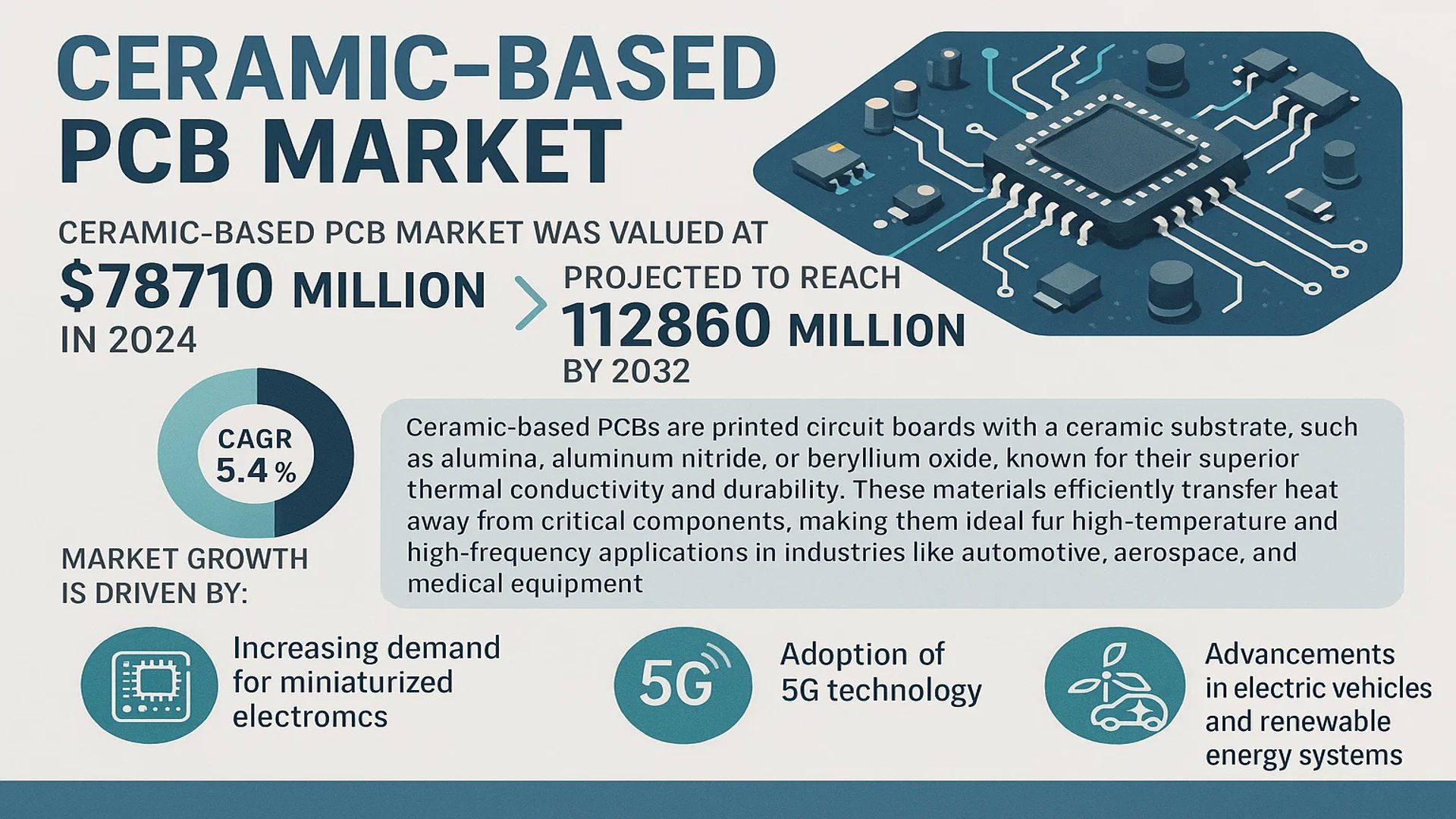
The global Ceramic-based PCB Market was valued at 78710 million in 2024 and is projected to reach US$ 112860 million by 2032, at a CAGR of 5.4% during the forecast period.
Ceramic-based PCBs are printed circuit boards with a ceramic substrate, such as alumina, aluminum nitride, or beryllium oxide, known for their superior thermal conductivity and durability. These materials efficiently transfer heat away from critical components, making them ideal for high-temperature and high-frequency applications in industries like automotive, aerospace, and medical equipment.
The market growth is driven by increasing demand for miniaturized electronics, adoption of 5G technology, and advancements in electric vehicles and renewable energy systems. However, challenges such as high manufacturing costs and material brittleness may restrain expansion. Leading players like Panda PCB, Anaren, and Micro Systems Engineering are investing in R&D to enhance material performance and cost-efficiency, further propelling market opportunities.
MARKET DYNAMICS
MARKET DRIVERS
Expansion of High-Power Electronics Industry Accelerates Adoption of Ceramic PCBs
The global ceramic-based PCB market is experiencing robust growth, primarily driven by the expanding high-power electronics industry. With power electronics applications growing at an annual rate of nearly 8%, the demand for substrates capable of efficient thermal management has intensified. Ceramic PCBs, with their exceptional thermal conductivity properties, are becoming the preferred choice for applications requiring high temperature stability up to 350°C. The automotive sector’s electrification trend, which sees electric vehicle production increasing by approximately 30% year-over-year, further propels demand for ceramic PCB solutions in power modules and battery management systems.
5G Infrastructure Development Creates New Growth Avenues
The rollout of 5G networks worldwide is creating significant opportunities for ceramic PCBs. These advanced circuit boards are critical in 5G base stations, where they handle high-frequency signals while dissipating heat effectively. With global 5G infrastructure investments projected to exceed $500 billion by 2025, the demand for high-performance ceramic substrates is surging. Notably, the millimeter wave frequency bands in 5G require PCBs with low dielectric losses, making aluminum nitride-based ceramic PCBs particularly valuable in RF applications.
Growing Semiconductor Industry Boosts Market Expansion
The semiconductor industry’s continuous technological advancement, particularly in power devices and high-frequency applications, is fueling ceramic PCB demand. The emergence of wide bandgap semiconductors like SiC and GaN, which operate at higher temperatures and frequencies than traditional silicon, creates compatibility requirements that ceramic PCBs are uniquely positioned to satisfy. Global semiconductor capital expenditures reaching record levels underscore the market potential for ceramic substrate solutions.
MARKET RESTRAINTS
High Manufacturing Costs Limit Market Penetration
While ceramic PCBs offer superior performance characteristics, their adoption is constrained by significantly higher production costs compared to conventional FR4 boards. The specialized materials and processing techniques required for ceramic substrates can result in manufacturing costs up to 5-8 times higher than standard PCBs. This cost premium restricts their use to high-value applications where performance justifies the expense, limiting overall market penetration in price-sensitive segments.
Additional Constraints
Fragility and Handling Challenges
The inherent brittleness of ceramic materials presents handling and assembly challenges throughout the production process. This characteristic requires specialized equipment and processing techniques, increasing production complexity and costs. The delicate nature of ceramic boards also impacts yield rates, particularly in high-volume manufacturing environments.
Limited Design Flexibility
Ceramic PCBs offer less design flexibility compared to traditional laminates, with constraints on board thickness and via formation. The stringent material properties that make ceramics ideal for thermal management also impose limitations on certain design parameters, potentially restricting their application in some innovative product designs.
MARKET CHALLENGES
Supply Chain Vulnerabilities Impact Market Stability
The ceramic PCB market faces significant supply chain challenges, particularly for critical raw materials like aluminum nitride and beryllium oxide. Geopolitical tensions and trade restrictions have created volatility in the availability of high-purity ceramic powders, with lead times for certain materials extending beyond six months. This instability presents a major challenge for manufacturers striving to meet the growing demand from automotive and aerospace sectors.
Emerging Challenges
Technical Expertise Shortage
The specialized nature of ceramic PCB manufacturing has created a skills gap in the industry. With fewer than 50 major manufacturers worldwide capable of producing high-quality ceramic substrates, the shortage of experienced engineers and technicians hampers capacity expansion efforts.
Recycling and Environmental Concerns
The environmental impact of ceramic PCB production and disposal presents ongoing challenges. While ceramics are inherently more durable than conventional boards, their end-of-life recycling processes remain complex and costly compared to traditional PCB materials, raising sustainability concerns among environmentally conscious customers.
MARKET OPPORTUNITIES
Emerging Medical Applications Present High-Growth Potential
The medical device industry represents a significant growth opportunity for ceramic PCBs, particularly in implantable devices and advanced diagnostic equipment. The biocompatibility and hermetic sealing properties of certain ceramic materials make them ideal for long-term implantation, with the medical PCB segment expected to grow at a 7.5% CAGR through 2030. Emerging applications in neuromodulation devices and high-resolution imaging systems are creating new demand for specialized ceramic substrates.
Space Exploration and Defense Applications Drive Innovation
Increasing investments in space exploration and defense technologies are creating premium opportunities for ceramic PCB manufacturers. The extreme environmental conditions in aerospace applications require substrates that can withstand temperature fluctuations from -150°C to +500°C while maintaining electrical performance. With global space economy projections exceeding $1 trillion by 2040, ceramic PCBs are well-positioned to benefit from this high-value market segment.
Material Innovation Opens New Application Areas
Ongoing research into advanced ceramic composites and nano-engineered materials is expanding the potential applications for ceramic PCBs. The development of ceramic-polymer hybrids combines the thermal performance of ceramics with the flexibility of polymers, potentially opening new markets in wearable electronics and flexible displays. These material innovations could significantly broaden the addressable market for ceramic-based circuit boards in coming years.
CERAMIC-BASED PCB MARKET TRENDS
Advancements in High-Power Electronics to Propel Ceramic PCB Demand
The global Ceramic-based PCB market is experiencing robust growth, projected to rise from a valuation of $78,710 million in 2024 to $112,860 million by 2032, expanding at a 5.4% CAGR. This surge is driven by the rapid adoption of high-power electronic applications where thermal management is critical. Unlike traditional FR4 substrates, ceramic PCBs—composed of materials like alumina, aluminum nitride, and beryllium oxide—offer superior heat dissipation, minimizing thermal stress in LEDs, power electronics, and RF applications. The increasing integration of AI and 5G infrastructure has further amplified demand, as these technologies require substrates capable of maintaining performance under high-frequency, high-temperature conditions. Emerging innovations, such as multi-layer ceramic boards with embedded passive components, are enhancing miniaturization and efficiency, making them indispensable in next-generation devices.
Other Trends
Automotive Electrification and Aerospace Applications
The shift toward electric vehicles (EVs) and hybrid systems is a significant catalyst for ceramic PCB adoption. With EVs requiring robust power modules and battery management systems, ceramic substrates are preferred for their thermal conductivity (up to 170–230 W/mK for aluminum nitride) and resistance to thermal cycling. Similarly, the aerospace sector leverages ceramic PCBs for avionics and satellite communications, where reliability in extreme environments is non-negotiable. Recent data indicates that ceramic PCBs now account for over 18% of the advanced automotive electronics substrate market, with projections suggesting this share could double by 2030.
Geopolitical Shifts and Supply Chain Diversification
Geopolitical tensions and the push for supply chain resilience are reshaping manufacturing hubs. While China dominates PCB production (contributing 52% of global output), companies in North America and Europe are increasingly investing in localized ceramic PCB facilities to reduce dependencies. This trend is particularly evident in the semiconductor sector, where ceramic substrates are vital for high-performance computing (HPC) and IoT devices. Collaborative R&D initiatives—such as partnerships between material scientists and PCB manufacturers—are accelerating the development of cost-effective ceramic alternatives, like silicon nitride-based boards, to address scalability challenges.
COMPETITIVE LANDSCAPE
Key Industry Players
Innovation and Technological Advancements Drive Market Competition
The global Ceramic-based PCB market is characterized by intense competition with a mix of established players and emerging manufacturers vying for market share. Companies are aggressively investing in R&D to develop advanced ceramic PCB solutions with superior thermal management capabilities, which are critical for high-performance applications including 5G infrastructure, automotive electronics, and aerospace systems.
Panda PCB and Micro-Precision Technologies are currently leading the market, thanks to their extensive product portfolios and strong distribution networks across Asia and North America. These companies have been focusing on expanding production capacities to meet the growing demand for high-frequency ceramic PCBs used in 5G base stations and satellite communication systems.
Meanwhile, Rocket PCB Solution Ltd and Hitech Circuits Co are rapidly gaining traction by specializing in cost-effective aluminum nitride (AlN) and alumina (Al2O3) PCBs for consumer electronics and medical devices. Their ability to provide customized solutions with quick turnaround times gives them a competitive edge in serving mid-sized OEMs.
Industry consolidation is becoming increasingly evident as companies like Millennium Circuits Ltd and Anaren pursue strategic acquisitions to expand their technological capabilities and geographic reach. Recent developments include partnerships with semiconductor manufacturers to co-develop embedded ceramic substrate solutions for power electronics applications.
List of Key Ceramic-based PCB Companies Profiled
- Panda PCB (China)
- PCB Global Pty Ltd (Australia)
- Anaren (U.S.)
- Noritake (Japan)
- Millennium Circuits Ltd (U.S.)
- Micro Systems Engineering (Germany)
- DK-Daleba (France)
- Micro-Precision Technologies (U.S.)
- Oneseine Enterprise (China)
- Hitech Circuits Co (China)
- Super PCB (U.S.)
- Bestpcb (China)
- CERcuits (U.K.)
- Rocket PCB Solution Ltd (China)
- JINRUIXIN (China)
- Venture (Singapore)
Segment Analysis:
By Type
Alumina Segment Dominates the Market Due to Widespread Adoption in High-Temperature Applications
The market is segmented based on type into:
- Alumina
- Subtypes: 96% Alumina, 99% Alumina, and others
- Aluminum Nitride
- Beryllium Oxide
- Others
- Includes silicon carbide and zirconia-based PCBs
By Application
Automotive Segment Leads Due to Rising Demand for High-Performance Electronics in Vehicles
The market is segmented based on application into:
- Automobile
- Includes engine control units, power modules, and LED lighting
- Medical Equipment
- Aerospace
- Semiconductor
- Others
- Includes telecommunications and industrial equipment
By End User
Electronics Manufacturers Lead the Market Due to Continuous Innovations in Consumer Electronics
The market is segmented based on end user into:
- Electronics Manufacturers
- Automotive OEMs
- Medical Device Companies
- Aerospace & Defense Contractors
- Others
- Includes research institutions and industrial equipment manufacturers
Regional Analysis: Ceramic-based PCB Market
Asia-Pacific
The Asia-Pacific region dominates the global Ceramic-based PCB market, accounting for the largest revenue share in 2024. This leadership stems from robust electronics manufacturing ecosystems in China, Japan, South Korea, and Taiwan, where major semiconductor and PCB production facilities are concentrated. China alone contributes over 45% of global PCB output, with ceramic variants gaining traction in high-end applications. The region benefits from strong government support for 5G infrastructure, electric vehicle production, and AI development – all key demand drivers for high-performance ceramic PCBs. However, intensifying competition and pricing pressures pose challenges for manufacturers.
North America
North America represents a high-value market for advanced Ceramic-based PCBs, particularly in aerospace, defense, and medical technology applications. The U.S. leads regional demand with stringent quality requirements and significant R&D investments in next-generation electronics. With defense spending reaching $842 billion in 2023 and growing emphasis on semiconductor independence through initiatives like the CHIPS Act, the region demonstrates strong potential for specialized PCB solutions. Thermal management needs in electric vehicles and 5G infrastructure are creating new opportunities, though high production costs remain a barrier to wider adoption.
Europe
Europe maintains a strong position in the Ceramic-based PCB market, particularly for automotive and industrial applications. German engineering excellence and the region’s leadership in precision manufacturing drive demand for high-reliability ceramic circuit boards. The European Union’s focus on green electronics and circular economy principles is prompting innovation in sustainable ceramic PCB solutions. While growth remains steady, the market faces challenges from energy price volatility and competition from Asian manufacturers. Nonetheless, niche applications in medical devices and renewable energy systems continue to present opportunities.
South America
The South American market for Ceramic-based PCBs is developing gradually, with Brazil and Argentina showing the most activity. Growth is primarily driven by expanding telecommunications infrastructure and increasing automotive electronics production. However, the region faces several obstacles including limited local manufacturing capabilities, reliance on imports, and economic instability that affects investment in high-end electronic components. Some specialty applications in oil/gas and medical equipment are creating pockets of demand, but widespread adoption remains constrained by cost sensitivity.
Middle East & Africa
This region represents an emerging market with untapped potential for Ceramic-based PCBs. Israel and the UAE lead in technology adoption, particularly for defense and telecommunications applications. Growing investments in smart cities and digital infrastructure are creating new opportunities. However, the market remains constrained by limited local electronics manufacturing and dependence on imports. While demand for high-performance PCBs exists in oil/gas and renewable energy sectors, the overall market maturity lags behind other regions due to infrastructure gaps and skilled workforce shortages.
Report Scope
This market research report provides a comprehensive analysis of the global Ceramic-based PCB market, covering the forecast period 2025–2032. It offers detailed insights into market dynamics, technological advancements, competitive landscape, and key trends shaping the industry.
Key focus areas of the report include:
- Market Size & Forecast: Historical data and future projections for revenue, unit shipments, and market value across major regions and segments. The global Ceramic-based PCB market was valued at USD 78,710 million in 2024 and is projected to reach USD 112,860 million by 2032, at a CAGR of 5.4% during the forecast period.
- Segmentation Analysis: Detailed breakdown by product type (Alumina, Aluminum Nitride, Beryllium Oxide, Others), application (Automobile, Medical Equipment, Aerospace, Semiconductor, Others), and end-user industry to identify high-growth segments and investment opportunities.
- Regional Outlook: Insights into market performance across North America, Europe, Asia-Pacific, Latin America, and the Middle East & Africa, including country-level analysis. Asia-Pacific dominates the market with China holding the largest share.
- Competitive Landscape: Profiles of leading market participants including Panda PCB, PCB Global Pty Ltd, Anaren, Noritake, and Millennium Circuits Ltd, among others. Includes analysis of their product offerings, R&D focus, manufacturing capacity, and recent developments.
- Technology Trends & Innovation: Assessment of emerging technologies in ceramic PCB fabrication, integration with AI/5G applications, and advancements in thermal management solutions.
- Market Drivers & Restraints: Evaluation of factors driving market growth (5G deployment, EV adoption, medical device demand) along with challenges (high production costs, supply chain constraints).
- Stakeholder Analysis: Insights for PCB manufacturers, material suppliers, OEMs, and investors regarding strategic opportunities in the evolving ceramic PCB ecosystem.
Primary and secondary research methods are employed, including interviews with industry experts and data from verified sources, to ensure the accuracy and reliability of the insights presented.
FREQUENTLY ASKED QUESTIONS:
What is the current market size of Global Ceramic-based PCB Market?
->Ceramic-based PCB Market was valued at 78710 million in 2024 and is projected to reach US$ 112860 million by 2032, at a CAGR of 5.4% during the forecast period.
Which key companies operate in Global Ceramic-based PCB Market?
-> Key players include Panda PCB, PCB Global Pty Ltd, Anaren, Noritake, Millennium Circuits Ltd, Micro Systems Engineering, and DK-Daleba, among others.
What are the key growth drivers?
-> Key growth drivers include 5G infrastructure development, electric vehicle adoption, medical equipment demand, and aerospace applications requiring high thermal conductivity PCBs.
Which region dominates the market?
-> Asia-Pacific dominates the market, with China accounting for the largest share of ceramic PCB production and consumption.
What are the emerging trends?
-> Emerging trends include miniaturization of PCBs, integration with IoT devices, development of hybrid ceramic substrates, and sustainable manufacturing processes.

Get Sample Report PDF for Exclusive Insights
Report Sample Includes
- Table of Contents
- List of Tables & Figures
- Charts, Research Methodology, and more...
 Download Sample Report PDF


