
MARKET INSIGHTS
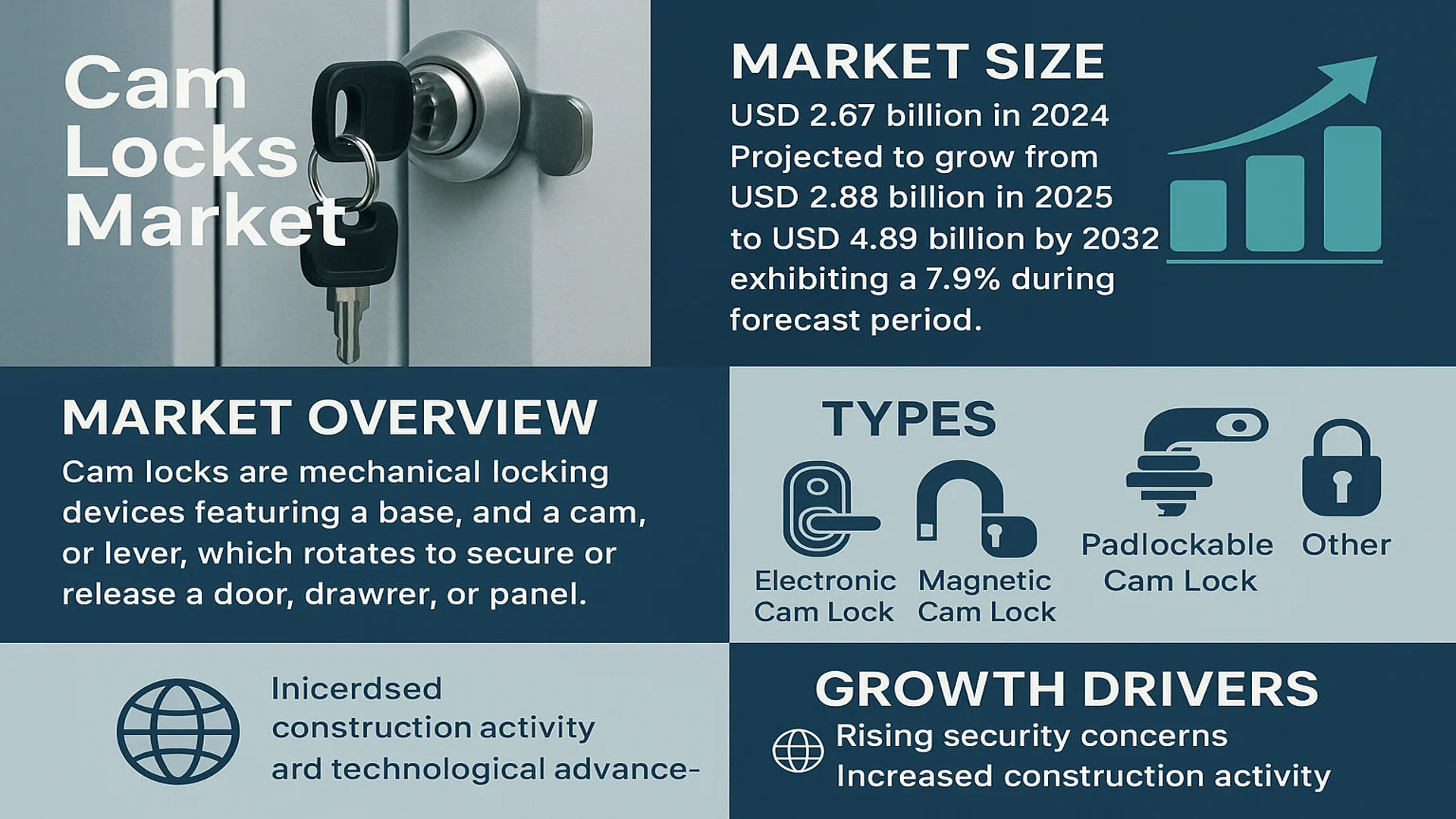
The global Cam Locks Market size was valued at USD 2.67 billion in 2024. The market is projected to grow from USD 2.88 billion in 2025 to USD 4.89 billion by 2032, exhibiting a CAGR of 7.9% during the forecast period.
Cam locks are mechanical locking devices featuring a base and a cam, or lever, which rotates to secure or release a door, drawer, or panel. These locks are integral components in security systems across various sectors, providing a reliable and cost-effective method for access control. The primary types include Electronic Cam Locks, Magnetic Cam Locks, Padlockable Cam Locks, and other specialized variants.
The market is experiencing steady growth driven by rising security concerns globally and increased construction activity in both residential and commercial sectors. Furthermore, technological advancements, such as the integration of electronic access systems, are contributing to market expansion. Key industry players, including ASSA ABLOY, Master Lock (Fortune Brands), and Allegion, are actively expanding their portfolios and geographic presence to capitalize on this demand, with a significant concentration of manufacturing and consumption currently in Europe and North America.
MARKET DYNAMICS
MARKET DRIVERS
Rising Security Concerns and Infrastructure Development to Propel Market Growth
The global cam locks market is experiencing robust growth driven by increasing security concerns across residential, commercial, and industrial sectors. With rising crime rates and growing awareness about property protection, demand for reliable locking mechanisms has surged significantly. The market has witnessed a notable shift toward advanced electronic and magnetic cam locks, which offer enhanced security features compared to traditional mechanical options. Infrastructure development projects worldwide, particularly in emerging economies, are contributing substantially to market expansion. The construction industry’s growth, coupled with stringent building security regulations, mandates the installation of high-quality locking systems, thereby driving cam lock adoption. Furthermore, the post-pandemic emphasis on secure workspaces and the proliferation of smart office concepts have accelerated the integration of sophisticated locking solutions in modern buildings.
Technological Advancements and Smart Lock Integration to Accelerate Adoption
Technological innovation represents a significant driver for the cam locks market, with manufacturers increasingly focusing on developing smart and connected locking solutions. The integration of electronic components, biometric authentication, and wireless connectivity has transformed conventional cam locks into sophisticated security systems. The emergence of Internet of Things (IoT) enabled locking devices allows for remote monitoring, access control management, and real-time security alerts, appealing to both commercial and residential users. The transition toward keyless entry systems and mobile-based access control has created new opportunities for market players to introduce innovative products that cater to evolving consumer preferences. This technological evolution is particularly evident in office environments, where integrated security systems incorporating advanced cam locks are becoming standard practice for facility management.
Growth in Furniture and Cabinetry Industries to Boost Demand
The furniture and cabinetry industries represent substantial end-use segments for cam locks, driving consistent market demand. The global furniture market continues to expand, supported by urbanization, rising disposable incomes, and changing lifestyle preferences. Cam locks are essential components in various furniture applications, including filing cabinets, storage units, desks, and display cases, providing security for valuable contents. The trend toward modular and customizable furniture solutions has further increased the requirement for reliable locking mechanisms. Manufacturers are developing specialized cam locks designed specifically for furniture applications, featuring improved durability, aesthetic appeal, and ease of installation. The growing emphasis on office furniture security, particularly in corporate environments handling sensitive documents, has created sustained demand for high-quality locking solutions.
MARKET RESTRAINTS
Price Sensitivity and Intense Competition to Limit Profit Margins
The cam locks market faces significant challenges due to price sensitivity among consumers and intense competition among manufacturers. The market comprises numerous players offering similar products, leading to price wars and compressed profit margins. Many customers, particularly in price-sensitive regions and segments, prioritize cost over advanced features, forcing manufacturers to balance quality with affordability. The availability of low-cost alternatives, often from emerging manufacturing hubs, creates pricing pressure on established brands. This competitive landscape requires companies to continuously innovate while maintaining cost-effectiveness, which can strain research and development resources. Additionally, the presence of counterfeit and substandard products in certain markets undermines consumer confidence and creates unfair competition for legitimate manufacturers adhering to quality standards and regulatory requirements.
Technical Limitations and Standardization Issues to Hinder Market Expansion
Technical limitations associated with traditional cam lock designs present challenges for market growth. Mechanical cam locks face issues such as wear and tear, susceptibility to picking, and limited functionality compared to modern electronic alternatives. The transition to electronic systems introduces complexities related to power requirements, cybersecurity vulnerabilities, and compatibility with existing infrastructure. Standardization remains a significant concern, with varying specifications across regions and applications creating interoperability challenges. The lack of universal standards for cam lock dimensions, mounting patterns, and security ratings complicates manufacturing processes and limits scalability. Furthermore, the integration of advanced features often requires specialized installation and maintenance expertise, which may not be readily available in all markets, potentially slowing adoption rates.
Supply Chain Disruptions and Raw Material Price Volatility to Impact Manufacturing
The cam locks industry faces operational challenges related to supply chain vulnerabilities and raw material price fluctuations. Manufacturing cam locks requires various materials, including metals, plastics, and electronic components, whose prices are subject to market volatility. Recent global events have highlighted the fragility of international supply chains, causing production delays and increased costs. The industry’s reliance on specific alloys and specialized components makes it susceptible to shortages and price spikes. Additionally, environmental regulations governing material usage and manufacturing processes impose compliance costs that affect overall profitability. These factors collectively create uncertainty in production planning and inventory management, potentially affecting market stability and growth prospects.
MARKET CHALLENGES
Cybersecurity Risks in Electronic Cam Locks to Pose Significant Challenges
The increasing adoption of electronic and smart cam locks introduces cybersecurity challenges that could impede market growth. As these devices become connected to networks and integrated with building management systems, they become potential targets for cyber attacks. Vulnerabilities in software, weak encryption protocols, and inadequate authentication mechanisms can compromise security systems. The consequences of security breaches extend beyond unauthorized access to include data privacy concerns and system-wide vulnerabilities. Manufacturers face the challenge of implementing robust security measures while maintaining user convenience and cost-effectiveness. The rapidly evolving nature of cyber threats requires continuous updates and security patches, creating ongoing maintenance challenges for both manufacturers and end-users.
Other Challenges
Regulatory Compliance and Certification Requirements
Navigating diverse regulatory landscapes across different regions presents substantial challenges for market participants. Cam locks must comply with various security standards, fire safety regulations, and electronic device certifications. The certification process can be time-consuming and costly, particularly for products targeting multiple international markets. Differences in regulatory requirements between countries necessitate product modifications and additional testing, increasing development costs and time-to-market. Furthermore, evolving regulations concerning data privacy and electronic device standards require continuous monitoring and adaptation, adding complexity to product development and distribution strategies.
Skilled Labor Shortage and Technical Expertise Gap
The industry faces challenges related to the availability of skilled professionals for installation, maintenance, and technical support. As cam locks become more technologically advanced, the requirement for specialized knowledge increases. Many regions experience shortages of qualified technicians capable of installing and maintaining electronic and smart locking systems. This skills gap can delay installations, affect system performance, and increase service costs. The retirement of experienced professionals and insufficient training programs exacerbate this challenge, potentially limiting market growth in areas where technical support is inadequate.
MARKET OPPORTUNITIES
Integration with Smart Home and Building Automation Systems to Create New Opportunities
The rapid growth of smart home and building automation markets presents significant opportunities for cam lock manufacturers. The increasing adoption of IoT devices and connected ecosystems creates demand for locking solutions that seamlessly integrate with broader automation systems. Modern consumers and businesses seek unified security solutions that can be controlled and monitored through centralized platforms. This trend enables manufacturers to develop innovative products that offer enhanced functionality, remote management capabilities, and interoperability with other smart devices. The convergence of physical security with digital platforms allows for value-added services such as access analytics, usage reports, and predictive maintenance, creating new revenue streams and differentiation opportunities in a competitive market.
Emerging Markets and Infrastructure Development to Drive Future Growth
Emerging economies represent substantial growth opportunities for the cam locks market, driven by urbanization, infrastructure development, and rising security awareness. Countries across Asia, Latin America, and Africa are experiencing significant construction activity, both in residential and commercial sectors. Government initiatives aimed at improving public infrastructure, combined with private sector investments in real estate development, create sustained demand for security products including cam locks. The growing middle class in these regions increasingly prioritizes home and office security, driving adoption of quality locking solutions. Market players can capitalize on these opportunities by developing products tailored to local requirements, establishing distribution networks, and forming partnerships with regional stakeholders.
Product Innovation and Customization to Enhance Market Positioning
Opportunities exist for manufacturers to differentiate through product innovation and customization strategies. The market shows increasing demand for specialized cam locks designed for specific applications, environments, and user requirements. Customization options including unique keying systems, specialized finishes, and application-specific designs allow manufacturers to target niche segments and command premium pricing. Innovation in materials science, such as the development of corrosion-resistant alloys and durable composites, enables products that perform better in challenging environments. Additionally, the integration of emerging technologies like biometric authentication, energy harvesting mechanisms, and advanced encryption protocols creates opportunities for product differentiation and market leadership. These innovations address evolving customer needs while creating barriers to entry for competitors lacking technological capabilities.
CAM LOCKS MARKET TRENDS
Integration of Smart Technologies and IoT to Emerge as a Dominant Trend
The global Cam Locks market is experiencing a significant transformation driven by the integration of smart technologies and Internet of Things (IoT) capabilities. This evolution is moving beyond traditional mechanical security towards connected, intelligent locking systems. Electronic Cam Locks, which represented approximately 28% of the market share by type in 2024, are at the forefront of this shift. These advanced locks now frequently incorporate features such as remote access control, real-time monitoring, and audit trail logging, providing enhanced security management for both residential and commercial applications. The demand for these integrated systems is particularly strong in the office buildings segment, which accounts for over 40% of the application market. This trend is further accelerated by the rising adoption of building automation systems and the growing need for centralized security management solutions in an increasingly connected world.
Other Trends
Enhanced Security Requirements in Commercial Infrastructure
The escalating need for robust physical security across commercial and public infrastructure is a primary driver for market growth. This trend is particularly evident in office buildings, data centers, and healthcare facilities, where securing cabinets, server racks, and access panels is critical. The market has responded with innovations such as high-security cam locks featuring patented key systems, pick-resistant mechanisms, and reinforced materials. The Asia-Pacific region, led by China and India, is witnessing particularly strong growth in this segment due to rapid infrastructure development and increasing security consciousness. This regional market is projected to grow at a CAGR exceeding 9.5% through 2032, significantly outpacing the global average, driven by massive investments in commercial real estate and industrial development.
Material and Design Innovation for Diverse Applications
Manufacturers are increasingly focusing on material science and ergonomic design to meet the diverse requirements of various end-use sectors. The development of corrosion-resistant alloys and polymers has expanded the application of cam locks into harsh environments, including marine, outdoor, and industrial settings. Furthermore, design innovations are addressing specific needs across different verticals; for instance, the residential sector demands aesthetically pleasing designs that blend with interior decor, while industrial applications require heavy-duty, tamper-proof solutions. This diversification is reflected in the market segmentation, where “Other” application areas beyond residential and office buildings collectively represent a substantial portion of the market. The continuous R&D investment by key players, who collectively hold over 65% of the global market share, is driving these material and design advancements, enabling cam locks to meet increasingly specialized security and functional requirements across global markets.
COMPETITIVE LANDSCAPE
Key Industry Players
Market Leaders Focus on Innovation and Geographic Expansion to Maintain Competitive Edge
The global cam locks market exhibits a semi-consolidated competitive structure, characterized by the presence of several established multinational corporations alongside numerous regional and specialized manufacturers. ASSA ABLOY stands as a dominant force, leveraging its extensive product portfolio, robust distribution network, and strong brand recognition across Europe and North America. The company’s strategic acquisitions and continuous investment in advanced locking technologies, including electronic and smart cam locks, solidify its leading market position.
Master Lock (Fortune Brands) and Allegion plc also command significant market shares. Their growth is largely driven by a deep understanding of diverse application needs—from residential furniture and cabinetry to industrial enclosures and office furniture—and a consistent rollout of innovative, security-enhanced products. These players benefit from strong channel partnerships with distributors and OEMs globally.
Furthermore, these leading companies are actively pursuing growth through geographic expansion into emerging markets in Asia-Pacific and strategic new product launches tailored to evolving security standards. This focus on broadening their global footprint and enhancing their technological offerings is expected to be a primary driver for capturing additional market share throughout the forecast period.
Meanwhile, other significant players like Southco, Inc. and DIRAK GmbH are strengthening their positions through dedicated investments in research and development. Their strategy focuses on creating specialized, high-performance cam locks for niche industrial and electronic applications, often involving strategic partnerships with enclosure manufacturers and technology firms to ensure integrated security solutions.
List of Key Cam Lock Companies Profiled
- ASSA ABLOY (Sweden)
- Master Lock (Fortune Brands) (U.S.)
- Southco, Inc. (U.S.)
- Allegion plc (Ireland)
- The Eastern Company (U.S.)
- WANGTONG LOCKS (China)
- DIRAK GmbH (Germany)
- Litai Metal Products Co., Ltd. (China)
- Capitol Lock Company (U.S.)
- Rittal GmbH & Co. KG (Germany)
Segment Analysis:
By Type
Electronic Cam Locks Segment Dominates the Market Due to Rising Demand for Smart Security Solutions
The market is segmented based on type into:
- Electronic Cam Locks
- Subtypes: Keypad, RFID, and Biometric-enabled locks
- Magnetic Cam Locks
- Padlockable Cam Locks
- Other
- Subtypes: Double-bolt, Tubular, and Mortise cam locks
By Application
Office Buildings Segment Leads Due to High Adoption in Commercial Infrastructure Security
The market is segmented based on application into:
- Residential Use
- Office Buildings
- Others
- Subtypes: Industrial facilities, Healthcare institutions, and Educational campuses
By Material
Stainless Steel Segment Holds Significant Share Owing to Superior Durability and Corrosion Resistance
The market is segmented based on material into:
- Zinc Alloy
- Stainless Steel
- Brass
- Others
- Subtypes: Aluminum and Plastic composite locks
By End-User
Commercial Sector is the Largest End-User Driven by Expanding Corporate and Retail Infrastructure
The market is segmented based on end-user into:
- Residential
- Commercial
- Subtypes: Corporate offices, Retail stores, and Hospitality venues
- Industrial
- Institutional
- Subtypes: Government buildings, Schools, and Hospitals
Regional Analysis: Cam Locks Market
Asia-Pacific
The Asia-Pacific region dominates the global Cam Locks market, accounting for over 40% of total consumption by volume. This leadership is driven by massive manufacturing output, particularly in China, which is the world’s largest producer and exporter of hardware components including cam locks. Rapid urbanization and a booming construction sector, especially in India and Southeast Asian nations like Vietnam and Indonesia, fuel consistent demand for these security products in both residential and commercial applications. While the market is highly price-sensitive, favoring standard mechanical cam locks, there is a noticeable and growing trend toward the adoption of electronic and smart cam lock systems in premium office buildings and high-security facilities, reflecting the region’s increasing technological integration and focus on enhanced security protocols.
North America
North America represents a mature and technologically advanced market for cam locks, characterized by high demand for premium, innovative, and electronic locking solutions. Stringent building codes and a strong emphasis on security and access control in the United States and Canada drive the adoption of advanced cam locks with features like keyless entry, audit trails, and integration with building management systems. The region is a significant hub for research and development, with leading companies like Master Lock and Allegion continuously launching new products. The robust commercial real estate sector and a high rate of office building renovations provide a steady stream of demand for replacement and upgrade cycles, focusing on durability, compliance with ADA standards, and cybersecurity for connected locks.
Europe
Europe is a highly regulated market where quality, certification standards, and environmental directives significantly influence the cam locks industry. The region shows a strong preference for high-security mechanical locks and a rapidly growing segment of electronic access control systems, driven by concerns over data protection and physical security. Markets in Germany, the UK, and the Nordic countries are at the forefront, demanding products that comply with rigorous EU standards and sustainability mandates. The mature manufacturing and industrial sector across the region necessitates reliable locking solutions for machinery, cabinets, and control panels, creating a stable B2B demand. However, market growth is somewhat tempered by economic fluctuations and the high penetration rate of existing security solutions.
South America
The South American cam locks market is in a development phase, experiencing growth tied to industrial expansion and urban infrastructure projects, particularly in Brazil and Argentina. Demand is primarily cost-driven, with a strong preference for basic, durable mechanical cam locks for industrial applications, furniture, and lower-to-mid-tier residential construction. The market faces challenges, including economic volatility, which impacts construction spending, and a less developed distribution network for specialized security products compared to other regions. While the adoption of advanced electronic locks is currently limited to high-end commercial projects in major metropolitan areas, the long-term potential is tied to economic stabilization and increased investment in commercial real estate.
Middle East & Africa
The Middle East & Africa region presents an emerging but fragmented market for cam locks. Growth is concentrated in the Gulf Cooperation Council (GCC) countries, such as the UAE and Saudi Arabia, where massive infrastructure development, smart city initiatives, and a booming hospitality sector drive demand for high-quality locking systems. This includes both robust mechanical locks for harsh environmental conditions and electronic locks for luxury hotels and offices. In contrast, other parts of the region are price-sensitive markets where basic cam locks are used predominantly in industrial and low-cost residential applications. Market expansion is often constrained by geopolitical instability and underdeveloped retail channels, though the long-term outlook remains positive due to ongoing urbanization and economic diversification efforts in key nations.
Report Scope
This market research report provides a comprehensive analysis of the global and regional Cam Locks markets, covering the forecast period 2025–2032. It offers detailed insights into market dynamics, technological advancements, competitive landscape, and key trends shaping the industry.
Key focus areas of the report include:
- Market Size & Forecast: Historical data and future projections for revenue, unit shipments, and market value across major regions and segments.
- Segmentation Analysis: Detailed breakdown by product type, technology, application, and end-user industry to identify high-growth segments and investment opportunities.
- Regional Outlook: Insights into market performance across North America, Europe, Asia-Pacific, Latin America, and the Middle East & Africa, including country-level analysis where relevant.
- Competitive Landscape: Profiles of leading market participants, including their product offerings, R&D focus, manufacturing capacity, pricing strategies, and recent developments such as mergers, acquisitions, and partnerships.
- Technology Trends & Innovation: Assessment of emerging technologies, integration of electronic locking systems, smart access solutions, and evolving industry standards.
- Market Drivers & Restraints: Evaluation of factors driving market growth along with challenges, supply chain constraints, regulatory issues, and market-entry barriers.
- Stakeholder Analysis: Insights for component suppliers, OEMs, system integrators, investors, and policymakers regarding the evolving ecosystem and strategic opportunities.
Primary and secondary research methods are employed, including interviews with industry experts, data from verified sources, and real-time market intelligence to ensure the accuracy and reliability of the insights presented.
FREQUENTLY ASKED QUESTIONS:
What is the current market size of Global Cam Locks Market?
-> Cam Locks Market size was valued at USD 2.67 billion in 2024. The market is projected to grow from USD 2.88 billion in 2025 to USD 4.89 billion by 2032, exhibiting a CAGR of 7.9% during the forecast period.
Which key companies operate in Global Cam Locks Market?
-> Key players include ASSA ABLOY, Master Lock (Fortune Brands), Southco, Allegion, The Eastern, WANGTONG LOCKS, DIRAK, Litai Metal Products, Capitol Lock, and Rittal, among others.
What are the key growth drivers?
-> Key growth drivers include increasing security concerns, rising construction activities, urbanization trends, and demand for advanced electronic locking solutions.
Which region dominates the market?
-> Europe remains a dominant market, while Asia-Pacific is experiencing the fastest growth rate.
What are the emerging trends?
-> Emerging trends include smart cam locks with IoT integration, biometric authentication systems, and sustainable manufacturing practices.

Get Sample Report PDF for Exclusive Insights
Report Sample Includes
- Table of Contents
- List of Tables & Figures
- Charts, Research Methodology, and more...
 Download Sample Report PDF