MARKET INSIGHTS
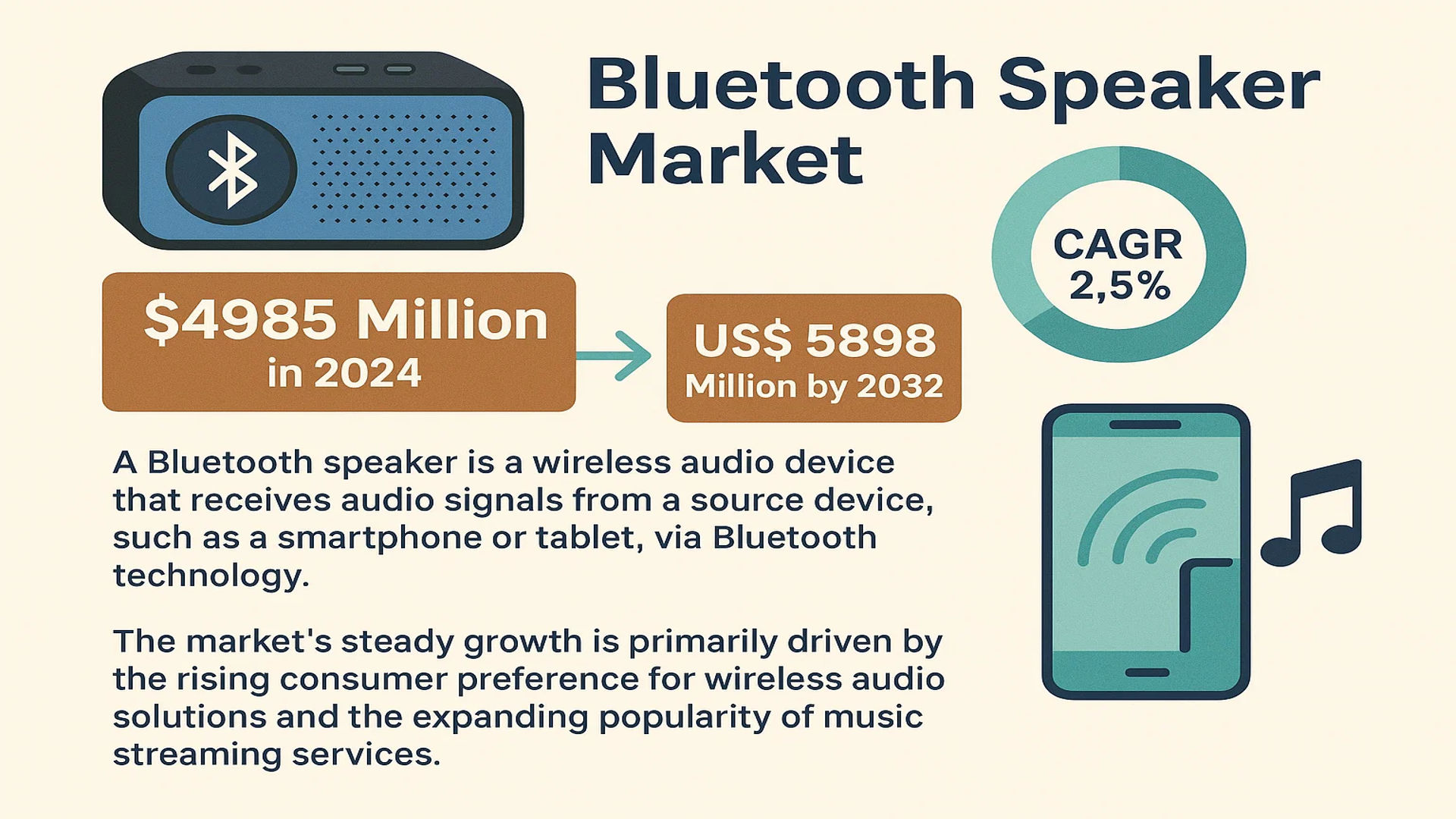
The global Bluetooth Speaker Market was valued at 4985 million in 2024 and is projected to reach US$ 5898 million by 2032, at a CAGR of 2.5% during the forecast period.
A Bluetooth speaker is a wireless audio device that receives audio signals from a source device, such as a smartphone or tablet, via Bluetooth technology. It contains its own built-in amplifier and speakers for playback, eliminating the need for physical cables and offering users significant portability and convenience.
The market’s steady growth is primarily driven by the rising consumer preference for wireless audio solutions and the expanding popularity of music streaming services. However, the market faces headwinds from intense competition and price sensitivity among consumers. Key players like Bose, Sony, JBL (a subsidiary of Samsung Harman), and Anker continue to innovate with features like enhanced battery life, waterproof designs, and smart assistant integration to maintain their competitive positions.
MARKET DYNAMICS
MARKET DRIVERS
Rising Demand for Wireless Audio Solutions to Propel Market Growth
The global shift toward wireless technology continues to accelerate, with Bluetooth speakers emerging as a dominant audio solution across consumer segments. This demand is driven by the convenience of cable-free connectivity, allowing seamless pairing with smartphones, tablets, and laptops. The elimination of physical connections reduces clutter and enhances portability, making Bluetooth speakers ideal for modern lifestyles that prioritize mobility and flexibility. The adoption rate of wireless audio devices has seen consistent growth, supported by advancements in Bluetooth protocols that improve both range and audio fidelity. Furthermore, the integration of multi-device pairing capabilities enables users to switch between sources effortlessly, increasing the utility and appeal of these products in both home and commercial environments.
Growing Popularity of Music Streaming Services to Boost Adoption
The exponential growth of music streaming platforms has fundamentally changed how consumers access and enjoy audio content, creating a robust demand for compatible playback devices like Bluetooth speakers. With over 600 million subscribers globally across major streaming services, there is a continuous need for high-quality, portable audio equipment that can deliver streamed content without compromising on sound quality. Bluetooth speakers serve as an essential bridge between digital streaming libraries and physical listening environments, whether indoors or outdoors. Their ability to provide instant access to vast music catalogs, podcasts, and other audio formats positions them as critical enablers of the streaming ecosystem. This symbiotic relationship ensures sustained market growth as streaming penetration increases worldwide.
Technological Advancements Enhancing Product Capabilities
Continuous innovation in Bluetooth technology and audio engineering has significantly elevated the performance standards of Bluetooth speakers. The introduction of Bluetooth 5.0 and subsequent versions has dramatically improved transmission range, data throughput, and power efficiency, addressing previous limitations related to signal stability and battery consumption. Advanced audio codecs such as aptX, AAC, and LDAC now support higher-resolution audio streaming, narrowing the quality gap between wireless and wired systems. Additionally, manufacturers are incorporating features like waterproofing, shock resistance, and voice assistant integration, expanding the use cases for Bluetooth speakers across diverse environments and user scenarios. These technological enhancements not only improve user satisfaction but also drive replacement cycles and premium product adoption.
MARKET RESTRAINTS
Intense Market Competition Limiting Profit Margins
The Bluetooth speaker market is characterized by extreme fragmentation, with numerous brands competing across various price segments and feature sets. This high level of competition exerts downward pressure on pricing, particularly in the entry-level and mid-range categories, where product differentiation is often minimal. Established audio brands coexist with electronics giants and emerging manufacturers, creating a crowded landscape that challenges profitability. While competition drives innovation and affordability, it also compresses margins and increases the difficulty for new entrants to gain market share. Companies must continuously invest in marketing, distribution, and R&D to maintain visibility and competitiveness, which can strain resources and limit overall market expansion pace.
Consumer Preference for High-Fidelity Audio Systems
Despite significant improvements in wireless audio quality, a segment of audio enthusiasts and professional users continues to prefer traditional wired speaker systems for critical listening applications. This preference stems from the perception that wired connections provide superior signal integrity, dynamic range, and overall audio performance compared to Bluetooth transmission, which involves data compression. The audiophile community, though niche, influences broader market perceptions and can slow adoption among consumers who prioritize audio quality above convenience. Additionally, high-end home theater systems and professional audio equipment continue to dominate the premium audio segment, limiting Bluetooth speakers’ penetration in environments where audio performance is the primary consideration rather than portability or wireless functionality.
Connectivity Reliability Concerns Affecting User Experience
Bluetooth technology, while widely adopted, still faces challenges related to connection stability and interference in certain environments. Users occasionally experience issues such as audio dropouts, pairing difficulties, or reduced range when multiple wireless devices operate simultaneously. These reliability concerns can diminish user confidence and satisfaction, particularly in applications where uninterrupted audio is essential. The performance varies significantly across different device combinations and environmental conditions, creating inconsistency in the user experience. While technological improvements have reduced these issues, they remain a consideration for potential buyers and can influence purchasing decisions, especially in commercial settings or multi-device households where reliable performance is critical.
MARKET CHALLENGES
Battery Life and Performance Consistency Challenges
While battery technology has advanced considerably, achieving optimal balance between audio performance, features, and battery life remains a significant engineering challenge for Bluetooth speaker manufacturers. Consumers expect extended playback time between charges, particularly for portable models used outdoors or during travel. However, power-intensive features like high volume output, enhanced bass response, and always-on voice assistants can substantially reduce operating time. Additionally, battery degradation over time affects long-term product satisfaction, as reduced capacity may necessitate frequent recharging or eventual replacement. Manufacturers must navigate these trade-offs while meeting consumer expectations for both performance and endurance, which requires continuous innovation in power management and battery technology.
Other Challenges
Rapid Technological Obsolescence
The fast pace of technological evolution in wireless audio creates challenges related to product lifecycle management and consumer purchasing patterns. New features, improved codecs, and enhanced connectivity options are frequently introduced, making existing products seem outdated within relatively short timeframes. This rapid innovation cycle can cause consumer hesitation, as buyers may delay purchases in anticipation of upcoming advancements. For manufacturers, it requires constant product development and inventory management to avoid being stuck with obsolete stock. The challenge is particularly acute in the Bluetooth speaker market where technological differentiation is a key competitive factor.
Environmental and Regulatory Compliance
Increasing global focus on environmental sustainability and electronic waste management introduces additional compliance requirements for Bluetooth speaker manufacturers. Regulations concerning battery disposal, energy efficiency, and use of hazardous materials vary across regions and continue to evolve. Meeting these requirements while maintaining cost competitiveness and performance standards presents operational challenges. Additionally, consumer awareness and preference for environmentally responsible products are growing, pressuring manufacturers to adopt more sustainable practices throughout the product lifecycle, from material sourcing to end-of-life recycling.
MARKET OPPORTUNITIES
Integration with Smart Home Ecosystems Creating New Growth Avenues
The expanding smart home market presents significant opportunities for Bluetooth speaker manufacturers to develop products that serve as audio hubs within connected environments. Speakers with built-in voice assistants can function as control centers for other smart devices, providing added value beyond audio playback. This integration allows users to manage lighting, climate control, security systems, and entertainment through voice commands via their Bluetooth speakers. The convergence of audio functionality with home automation creates compelling use cases that justify premium pricing and drive replacement cycles. As smart home adoption continues to grow globally, Bluetooth speakers positioned as central components of these ecosystems stand to benefit from increased demand and higher margins.
Expansion into Emerging Markets Offering Substantial Growth Potential
Emerging economies represent largely untapped markets for Bluetooth speakers, with growing middle-class populations and increasing disposable income driving demand for consumer electronics. As smartphone penetration reaches saturation levels in these regions, complementary devices like Bluetooth speakers naturally follow. The portability and affordability of entry-level models make them accessible to new consumer segments who prioritize mobility and value. Additionally, the limited infrastructure for traditional audio systems in some emerging markets makes wireless solutions particularly appealing. Manufacturers who develop products specifically tailored to the preferences, usage patterns, and price sensitivity of these markets can capture significant growth opportunities not available in more mature markets.
Development of Specialized Applications Opening New Market Segments
Beyond general consumer use, Bluetooth speakers are finding applications in specialized segments that offer growth opportunities. The outdoor and adventure segment demands rugged, weather-resistant models with extended battery life for activities like camping, hiking, and beach outings. The commercial segment includes applications in retail environments, hospitality, and small business settings where portable audio solutions are needed. Educational institutions are adopting Bluetooth speakers for classroom presentations and mobile learning scenarios. Even healthcare facilities utilize them for patient entertainment and relaxation. Each of these specialized applications has unique requirements that allow manufacturers to differentiate their products and command premium pricing, creating valuable niche markets within the broader Bluetooth speaker industry.
BLUETOOTH SPEAKER MARKET TRENDS
Integration with Smart Home Ecosystems to Emerge as a Trend in the Market
The integration of Bluetooth speakers with smart home ecosystems represents a significant trend driving market evolution. Consumers increasingly seek multi-functional devices that serve as both audio output systems and smart home controllers. This convergence has led manufacturers to embed voice assistants like Amazon Alexa and Google Assistant directly into their speaker designs, enabling users to control lighting, thermostats, and other connected devices through voice commands. The convenience of having a centralized audio and control hub appeals particularly to urban households where space optimization is crucial. While this trend enhances product value proposition, it also requires manufacturers to invest significantly in software development and connectivity protocols to ensure seamless interoperability with various smart home platforms.
Other Trends
Sustainability and Eco-Friendly Design
Environmental consciousness is becoming a notable trend in the Bluetooth speaker market, with manufacturers increasingly incorporating recycled materials and energy-efficient components in their products. Companies are responding to consumer demand for sustainable electronics by developing speakers with longer battery life, reduced packaging waste, and modular designs that allow for easier repair and recycling. This shift toward eco-friendly production aligns with broader industry movements and regulatory pressures regarding electronic waste management. While sustainability features sometimes increase production costs, they provide competitive differentiation and appeal to environmentally conscious consumer segments, particularly in developed markets where environmental regulations are more stringent.
Premiumization and Sound Quality Enhancement
The market is witnessing a trend toward premiumization, with manufacturers focusing on enhanced audio quality through advanced acoustic technologies and signal processing. High-resolution audio support, improved driver designs, and sophisticated digital signal processing algorithms are becoming standard features in mid-to-high-end segments. This emphasis on sound quality addresses the growing segment of audiophiles who seek wireless solutions without compromising audio fidelity. Manufacturers are investing in research and development to overcome traditional limitations of Bluetooth audio compression, resulting in products that rival wired systems in certain performance aspects. This trend is particularly evident in the adoption of advanced codecs like LDAC and aptX HD, which provide higher bitrates and improved wireless audio transmission.
Rugged and Outdoor-Focused Designs
There is growing consumer demand for durable, weather-resistant Bluetooth speakers designed for outdoor and adventure use. This trend has led manufacturers to develop products with IP67 and higher ratings for water and dust resistance, reinforced construction, and enhanced battery capacity for extended outdoor use. The popularity of outdoor activities and social gatherings has created a substantial market segment for speakers that can withstand harsh environments while maintaining audio quality. These products often feature additional functionality such as built-in power banks for device charging and enhanced connectivity options, making them appealing to consumers who prioritize portability and durability in their audio devices.
COMPETITIVE LANDSCAPE
Key Industry Players
Companies Strive to Strengthen their Product Portfolio to Sustain Competition
The competitive landscape of the global Bluetooth speaker market is highly fragmented, characterized by numerous established electronics giants, specialized audio brands, and emerging value-focused players. While the market is crowded, Sony Corporation and Bose Corporation are recognized as leading players, primarily due to their strong brand reputation for high-fidelity audio, extensive distribution networks, and continuous innovation in acoustic technology and design.
Apple Inc. and Amazon.com, Inc. also command significant market share, a position bolstered by their deep integration with proprietary ecosystems. Apple’s HomePod mini and Amazon’s Echo line leverage seamless connectivity with their respective smart assistants and services, creating a sticky user experience that drives brand loyalty and repeat purchases.
Furthermore, these leading companies are aggressively pursuing growth through strategic initiatives. Geographical expansion into emerging markets, coupled with frequent new product launches featuring longer battery life, ruggedized designs, and advanced audio codecs like LDAC, are key tactics to capture additional market share.
Meanwhile, companies like Anker Innovations and Xiaomi Corporation are strengthening their global presence by focusing on the value segment. They compete effectively by offering feature-rich products at competitive price points, often through direct-to-consumer online channels. Their growth is fueled by significant investments in marketing and building a reputation for reliability, challenging the dominance of traditional audio brands, particularly among budget-conscious consumers.
List of Key Bluetooth Speaker Companies Profiled
- Sony Corporation (Japan)
- Bose Corporation (U.S.)
- Apple Inc. (U.S.)
- Amazon.com, Inc. (U.S.)
- Samsung Electronics Co., Ltd. (South Korea)
- Harman International Industries, Inc. (U.S.)
- LG Electronics Inc. (South Korea)
- Anker Innovations (China)
- Xiaomi Corporation (China)
- Google LLC (U.S.)
- Yamaha Corporation (Japan)
- Logitech International S.A. (Switzerland)
Segment Analysis:
By Type
Portable Bluetooth Speakers Dominate the Market Due to Rising Demand for Wireless and On-the-Go Audio Solutions
The market is segmented based on type into:
- Portable Bluetooth Speakers
- Subtypes: Ultra-portable/mini speakers, standard portable speakers, and rugged/outdoor speakers
- Fixed Bluetooth Speakers
- Subtypes: Soundbars, multi-room audio systems, and stationary home audio speakers
By Application
Home Use Segment Leads Due to Increased Integration with Smart Home Ecosystems and Consumer Entertainment Preferences
The market is segmented based on application into:
- Home Use
- Commercial
- Subtypes: Retail and hospitality, corporate and office environments, and public events
By Price Range
Mid-Range Segment Holds Significant Share Due to Balanced Features and Consumer Affordability
The market is segmented based on price range into:
- Budget/Economy
- Mid-Range
- Premium/High-End
By Distribution Channel
Online Retail Segment is Growing Rapidly Due to E-commerce Expansion and Consumer Preference for Convenient Shopping
The market is segmented based on distribution channel into:
- Online Retail
- Offline Retail
- Subtypes: Electronics specialty stores, department stores, and brand exclusive outlets
Regional Analysis: Bluetooth Speaker Market
Asia-Pacific
The Asia-Pacific region dominates the global Bluetooth speaker market, accounting for over 40% of global volume consumption according to industry estimates. This leadership position is driven by massive manufacturing capabilities, particularly in China, which produces approximately 70% of the world’s Bluetooth speakers. The region benefits from strong domestic demand fueled by rising disposable incomes, rapid urbanization, and the world’s largest smartphone user base. Countries like China, India, and Southeast Asian nations show particularly strong growth, with China’s market alone valued at approximately $1.8 billion in 2024. Local brands such as Xiaomi, Huawei, and Anker have gained significant market share through competitive pricing and innovative features, while international brands maintain strong presence through strategic partnerships and localized marketing. The region’s e-commerce infrastructure, particularly advanced in China and South Korea, facilitates easy access to a wide range of products, further accelerating market growth.
North America
North America represents one of the most mature and high-value Bluetooth speaker markets, characterized by strong consumer spending power and technological adoption. The United States accounts for approximately 85% of the regional market, with consumers showing preference for premium brands and advanced features. Market research indicates that over 60% of U.S. households own at least one Bluetooth speaker, with smart speaker integration being a key purchasing driver. The region shows strong demand for waterproof and rugged speakers suitable for outdoor activities, reflecting the active lifestyle of consumers. Major retailers like Best Buy, Amazon, and Walmart dominate distribution channels, while brands like Bose, Sonos, and JBL maintain strong market positions through continuous innovation and brand loyalty. The market is relatively saturated but maintains steady growth through replacement cycles and technological upgrades.
Europe
Europe represents a sophisticated Bluetooth speaker market with distinct consumer preferences across different countries. Western European nations, particularly Germany, the UK, and France, show strong demand for high-quality audio products with premium price points. The region has seen significant growth in smart home integration, with approximately 35% of Bluetooth speakers sold in 2024 featuring voice assistant compatibility. Environmental regulations and consumer awareness drive demand for energy-efficient and sustainably manufactured products. Eastern European markets are growing rapidly but remain price-sensitive, creating opportunities for mid-range and budget-friendly options. The European market is characterized by strict compliance requirements, including CE marking and RoHS directives, which influence product development and market entry strategies for manufacturers.
South America
The South American Bluetooth speaker market is experiencing gradual growth, though it faces challenges related to economic volatility and import dependencies. Brazil represents the largest market in the region, accounting for nearly 40% of regional sales, followed by Argentina and Chile. Price sensitivity is a significant factor, with consumers preferring entry-level and mid-range products. The market shows potential for growth due to increasing smartphone penetration and growing middle-class population. However, currency fluctuations and import restrictions in some countries create challenges for international brands. Local manufacturers have emerged to cater to specific market needs, though international brands still dominate the premium segment. E-commerce is growing but remains less developed than in other regions, with physical retail maintaining importance.
Middle East & Africa
The Middle East & Africa region represents an emerging market with significant growth potential, though development varies considerably across countries. Gulf Cooperation Council (GCC) countries, particularly the UAE and Saudi Arabia, show stronger adoption rates due to higher disposable incomes and developed retail infrastructure. These markets favor premium products and branded items, with consumers showing preference for internationally recognized brands. In contrast, African markets are more price-sensitive and focused on entry-level products. The region faces challenges including limited distribution networks in some areas and varying import regulations. However, increasing smartphone penetration and growing youth population present substantial opportunities for market expansion. Tourism and hospitality sectors also contribute to commercial demand in key tourist destinations.
Report Scope
This market research report provides a comprehensive analysis of the global and regional Bluetooth Speaker markets, covering the forecast period 2025–2032. It offers detailed insights into market dynamics, technological advancements, competitive landscape, and key trends shaping the industry.
Key focus areas of the report include:
- Market Size & Forecast: Historical data and future projections for revenue, unit shipments, and market value across major regions and segments.
- Segmentation Analysis: Detailed breakdown by product type, technology, application, and end-user industry to identify high-growth segments and investment opportunities.
- Regional Outlook: Insights into market performance across North America, Europe, Asia-Pacific, Latin America, and the Middle East & Africa, including country-level analysis where relevant.
- Competitive Landscape: Profiles of leading market participants, including their product offerings, R&D focus, manufacturing capacity, pricing strategies, and recent developments such as mergers, acquisitions, and partnerships.
- Technology Trends & Innovation: Assessment of emerging technologies, integration of AI/IoT, semiconductor design trends, fabrication techniques, and evolving industry standards.
- Market Drivers & Restraints: Evaluation of factors driving market growth along with challenges, supply chain constraints, regulatory issues, and market-entry barriers.
- Stakeholder Analysis: Insights for component suppliers, OEMs, system integrators, investors, and policymakers regarding the evolving ecosystem and strategic opportunities.
Primary and secondary research methods are employed, including interviews with industry experts, data from verified sources, and real-time market intelligence to ensure the accuracy and reliability of the insights presented.
FREQUENTLY ASKED QUESTIONS:
What is the current market size of Global Bluetooth Speaker Market?
-> Bluetooth Speaker Market was valued at 4985 million in 2024 and is projected to reach US$ 5898 million by 2032, at a CAGR of 2.5% during the forecast period.
Which key companies operate in Global Bluetooth Speaker Market?
-> Key players include Samsung, Sony, Bose, Apple, Amazon, Google, LG, and Anker, among others.
What are the key growth drivers?
-> Key growth drivers include rising demand for wireless audio solutions, growing popularity of streaming services, and integration with smart home systems.
Which region dominates the market?
-> Asia-Pacific is the fastest-growing region, while North America remains a dominant market.
What are the emerging trends?
-> Emerging trends include advanced audio codecs, improved battery technology, and voice assistant integration.

Get Sample Report PDF for Exclusive Insights
Report Sample Includes
- Table of Contents
- List of Tables & Figures
- Charts, Research Methodology, and more...