Market Insights
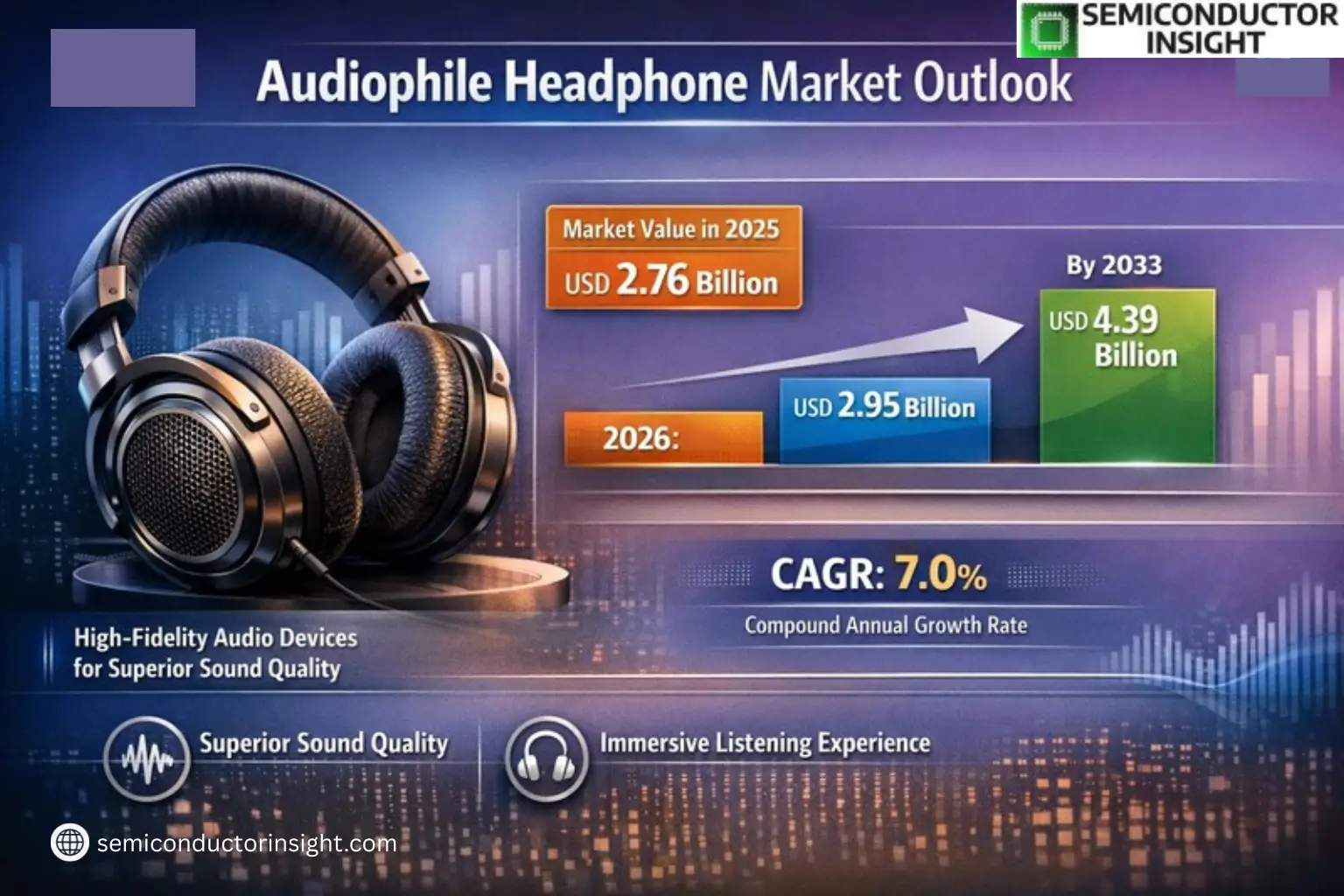
Global Audiophile Headphone Market was valued at USD 2.76 billion in 2025. The market is projected to grow from USD 2.95 billion in 2026 to USD 4.39 billion by 2033, exhibiting a CAGR of 7.0% during the forecast period.
Audiophile headphones are high-fidelity audio devices designed for discerning listeners who prioritize superior sound quality, clarity, and immersive listening experiences. These headphones utilize advanced acoustic engineering, premium materials, and precision drivers to deliver accurate frequency response with minimal distortion. Key product categories include open-back, closed-back, and in-ear monitors (IEMs), catering to different listening environments and preferences.
The market growth is driven by increasing consumer demand for premium audio experiences, technological advancements in driver design (such as planar magnetic and electrostatic technologies), and the rising popularity of high-resolution audio formats. Additionally, the proliferation of streaming services offering lossless audio has expanded the addressable market. Leading brands like Sennheiser, Bose, and Sony dominate the competitive landscape through continuous innovation exemplified by Sony’s 2023 launch of hybrid driver IEMs combining dynamic and balanced armature technologies.
MARKET DRIVERS
Growing Demand for Premium Audio Experiences
Audiophile Headphone Market is witnessing robust growth due to increasing consumer preference for high-fidelity audio. With over 65% of music enthusiasts prioritizing sound quality, manufacturers are investing in advanced driver technologies and noise cancellation features. The rise of lossless audio streaming services has further propelled demand for premium headphones.
Technological Advancements in Audio Engineering
Breakthroughs in planar magnetic and electrostatic driver technologies have significantly enhanced audio reproduction capabilities. Wireless audiophile headphones now deliver near-wired quality, with latency reduced to under 20ms in flagship models. The integration of AI-powered sound customization is creating new value propositions for discerning buyers.
Emerging hybrid driver designs combining dynamic and balanced armature technologies are setting new benchmarks in soundstage accuracy and frequency response.
MARKET CHALLENGES
High Production Costs and Pricing Pressure
Premium materials like beryllium drivers and hand-crafted components drive manufacturing costs upward, with flagship models requiring specialized assembly. This creates pricing challenges in competitive markets, particularly against mass-market alternatives offering diminishing quality gaps.
Other Challenges
Consumer Education Gap
Many potential buyers lack technical knowledge to appreciate nuanced audio differences, making premium pricing justification difficult. Demonstration limitations in digital retail environments further compound this challenge.
MARKET RESTRAINTS
Economic Sensitivity of Luxury Audio Segment
Audiophile Headphone Market remains vulnerable to macroeconomic fluctuations, with discretionary spending cuts directly impacting sales. During economic downturns, consumers often postpone upgrades to premium audio equipment, preferring more affordable alternatives.
MARKET OPPORTUNITIES
Expansion into Emerging Audiophile Demographics
Younger demographics are showing increased interest in high-quality audio, with 42% of new audiophile headphone buyers aged under 35. Manufacturers are developing entry-level premium models with scalable sound profiles to capture this growing segment while maintaining brand prestige.
Audiophile Headphone Market () Trends
Steady Market Growth Driven by Premium Audio Demand
Global Audiophile Headphone Market is projected to grow from USD 2.75 billion in 2025 to USD 4.38 billion by 2033, exhibiting a 7.0% CAGR. This growth reflects rising consumer demand for high-fidelity audio experiences and increasing disposable incomes among audio enthusiasts. Wired headphones dominate the market with 95% share, primarily due to their superior sound quality and reliability compared to wireless alternatives.
Other Trends
Dominance of Key Manufacturers
Four manufacturers – Beats, Harman, Sennheiser, and Bose – collectively control over 70% of the Audiophile Headphone Market. These brands leverage their reputation for premium sound engineering and continuous technological innovations to maintain market leadership.
Shifting Consumer Demographics
The 18-34 age group represents the largest consumer segment for audiophile headphones, followed by those above 34 years. Younger consumers are increasingly investing in high-quality audio equipment for both entertainment and professional use, driving market expansion in this demographic.
Regional Market Developments
North America and Europe currently lead in Audiophile Headphone adoption, while Asia-Pacific shows the fastest growth potential due to expanding middle-class populations and increasing audio enthusiasts in countries like China, Japan, and South Korea.
Technological Advancements
Manufacturers are investing heavily in advanced driver technologies, noise cancellation, and improved materials to enhance sound reproduction. While wireless options currently represent a small segment, they are expected to gain traction with improving audio codecs and connectivity options.
COMPETITIVE LANDSCAPE
Key Industry Players
Four dominant manufacturers control over 70% of the global Audiophile Headphone Market
Audiophile Headphone Market is characterized by strong brand loyalty and technological innovation, with Beats (Apple), Harman (Samsung), Sennheiser, and Bose collectively commanding over 70% market share. These leaders differentiate through premium acoustic engineering, noise cancellation technologies, and robust distribution networks. The market remains wired-dominant (95% share), though wireless adoption is accelerating among younger demographics (18-34 age group).
Niche specialists like Audeze and HiFiMan cater to ultra-high-end segments with planar magnetic drivers, while Audio-Technica and Beyerdynamic serve professional studio markets. Japanese manufacturers (Sony, Pioneer) maintain strong footholds in Asian markets, leveraging local supply chains. Emerging brands like OPPO and Etymotic Research compete through specialized driver technologies and ergonomic designs.
List of Key Audiophile Headphone Companies Profiled
- Beats by Dre (Apple)
- Harman International (Samsung)
- Bose Corporation
- Sennheiser Electronic
- Audio-Technica
- Sony Corporation
- Beyerdynamic GmbH
- Grado Labs
- Philips Audio
- Shure Incorporated
- Pioneer Corporation
- Audeze LLC
- Etymotic Research
- HiFiMan Electronics
- OPPO Digital
Segment Analysis:
| Segment Category | Sub-Segments | Key Insights |
| By Type |
|
Wired Headphones dominate the market due to superior sound fidelity preferred by audiophiles.
|
| By Application |
|
Music Enthusiasts represent the largest user base for audiophile headphones.
|
| By End User |
|
Consumer Enthusiasts drive market innovation and premium product development.
|
| By Driver Technology |
|
Dynamic Drivers remain most prevalent due to balanced performance characteristics.
|
| By Price Tier |
|
Mid-Range segment shows strongest growth potential as price-performance sweet spot.
|
Regional Analysis: Global Audiophile Headphone Market
The North American market exhibits disproportionate strength in the USD 500+ price bracket, with audiophiles preferring open-back designs and lossless audio formats. Manufacturers strategically launch flagship models with tour demos across major US cities before global release.
Dedicated audio stores offering listening rooms and equipment pairing consultations thrive from California to Massachusetts. These premium retail experiences facilitate direct comparisons between electrostatic, dynamic, and planar magnetic headphone technologies.
Recording professionals and mastering engineers in Nashville, Los Angeles, and Atlanta drive demand for neutral-sounding studio reference models. This professional validation significantly influences consumer purchasing decisions across price segments.
Early adoption of high-resolution streaming services like Tidal pairs with North American consumers’ preference for wired, high-impedance headphones capable of revealing subtle audio nuances unavailable in compressed formats.
Europe
Europe maintains strong audiophile traditions particularly in Germany, UK, and France, where discerning buyers prioritize acoustic accuracy over aesthetic appeal. The region hosts several internationally renowned audio shows where manufacturers showcase upcoming headphone technologies. German engineering and British sound signatures continue influencing global headphone tuning philosophies. Urban consumers demonstrate growing interest in hybrid driver technologies, while audiophile communities actively discuss technical specifications on dedicated European forums.
Asia-Pacific
Japan and South Korea emerge as technology innovation hubs, with consumers valuing miniature high-performance drivers and noise isolation capabilities. The region displays unique preference patterns, favoring detailed yet non-fatiguing sound profiles. Portable audiophile setups gain traction among commuters in megacities, driving innovation in closed-back designs. Southeast Asian markets show accelerating growth with increasing exposure to high-fidelity audio through specialized import channels.
South America
Brazilian audiophiles demonstrate growing sophistication, with niche demand for high-end headphones centered in São Paulo. Economic volatility creates distinct market dynamics where durable, repairable designs gain preference. The region shows strong potential for manufacturers offering balanced price-to-performance ratios, with enthusiasts carefully researching technical specifications before purchases.
Middle East & Africa
Premium audio enjoys growing status symbol value in Gulf countries, with luxury-finish headphones gaining popularity. South Africa develops sustainable audiophile communities centered in Johannesburg and Cape Town, where enthusiasts organize regular listening sessions. Regional preferences lean toward warmer sound signatures that complement traditional musical styles.
Report Scope
This market research report provides a comprehensive analysis of the Audiophile Headphone Market , covering the forecast period 2025–2033. It offers detailed insights into market dynamics, technological advancements, competitive landscape, and key trends shaping the industry.
Key focus areas of the report include:
- Market Overview: The report begins with an overview outlining its current market scenario, key growth indicators, and industry transformation drivers. It discusses macroeconomic factors, demand-supply balance, regulatory landscape, and the strategic role of audiophile headphones in enhancing audio experiences across industries such as consumer electronics, entertainment, and professional audio applications.
- Market Size & Forecast: Historical data and future projections for revenue, unit shipments, and market value across major regions and segments.
- Segmentation Analysis: Detailed breakdown by product type, technology, application, and end-user industry to identify high-growth segments and investment opportunities.
- Regional Insights: Insights into market performance across North America, Europe, Asia-Pacific, Latin America, and the Middle East & Africa, including country-level analysis where relevant.
- Competitive Landscape: Profiles of leading market participants, including their product offerings, R&D focus, manufacturing capacity, pricing strategies, and recent developments such as mergers, acquisitions, and partnerships.
- Technology Trends & Innovation: Assessment of emerging technologies, integration of advanced audio codecs, noise-cancellation features, and evolving industry standards.
- Market Drivers & Restraints: Evaluation of factors driving market growth along with challenges, supply chain constraints, regulatory issues, and market-entry barriers.
- Stakeholder Insights: Insights for component suppliers, OEMs, system integrators, investors, and policymakers regarding the evolving ecosystem and strategic opportunities.
Primary and secondary research methods are employed, including interviews with industry experts, data from verified sources, and real-time market intelligence to ensure the accuracy and reliability of the insights presented.
FREQUENTLY ASKED QUESTIONS:
What is the current market size of Audiophile Headphone Market?
-> Audiophile Headphone Market was valued at USD 2.76 billion in 2025. The market is projected to grow from USD 2.95 billion in 2026 to USD 4.39 billion by 2033, exhibiting a CAGR of 7.0% during the forecast period.
What is the growth rate of the Audiophile Headphone Market?
-> The market is projected to grow at a CAGR of 7.0% during the forecast period 2025-2033.
Which key companies operate in Audiophile Headphone Market?
-> Key players include Beats, Harman, Sennheiser, Bose, Audio-Technica, Sony, Beyerdynamic, Grado, Philips, and Shure, among others. The top four manufacturers hold over 70% market share.
Which product segment dominates the market?
-> Wired Headphones dominate with 95% market share, while Wireless Headphones are a smaller segment.
Which age group represents the largest application segment?
-> The 18-34 age group is the largest application segment, followed by Above 34 and Below 18.

Get Sample Report PDF for Exclusive Insights
Report Sample Includes
- Table of Contents
- List of Tables & Figures
- Charts, Research Methodology, and more...
 Download Sample Report PDF