MARKET INSIGHTS
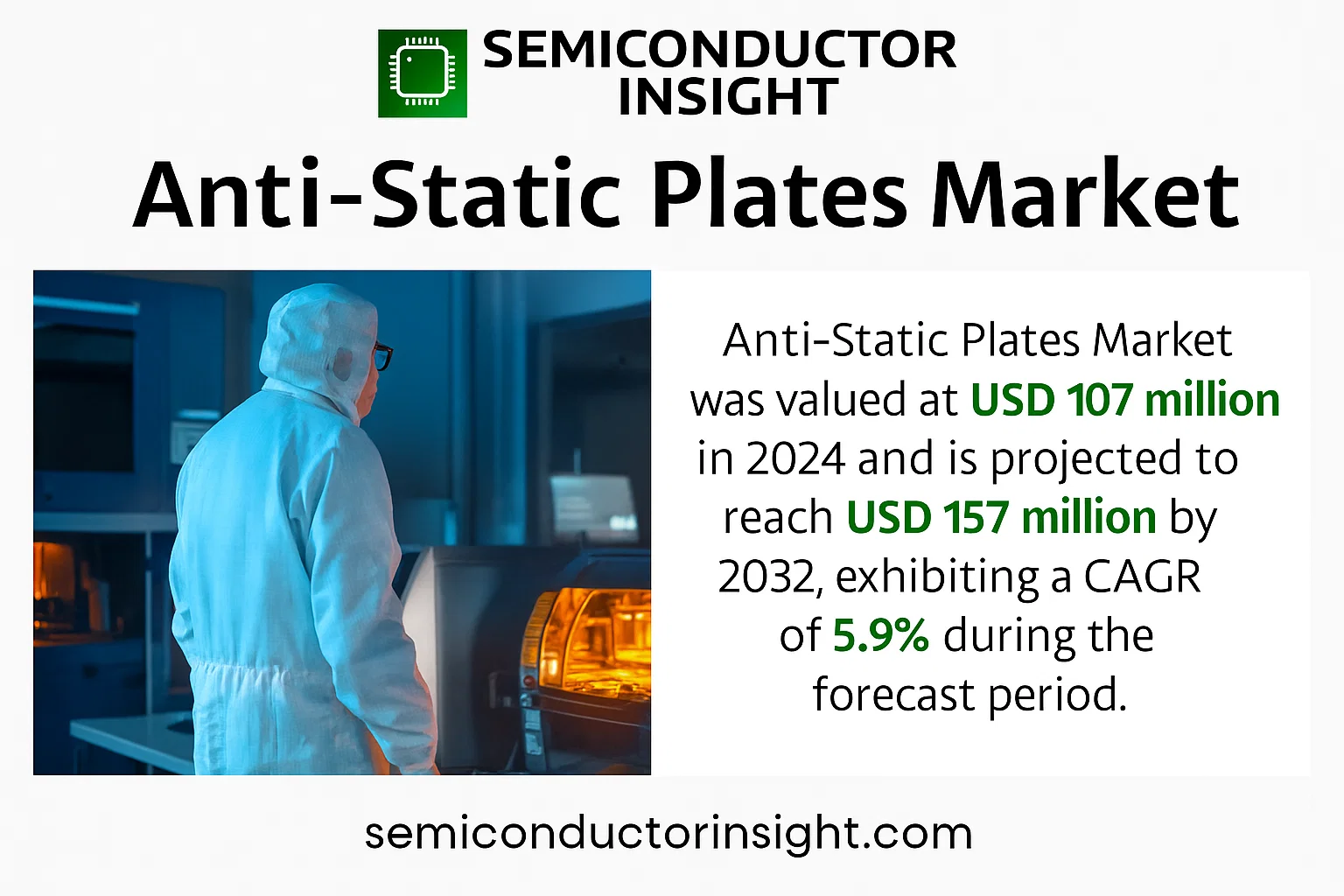
Global Anti-Static Plates Market was valued at USD 107 million in 2024 and is projected to reach USD 157 million by 2032, exhibiting a CAGR of 5.9% during the forecast period. Anti-Static Plates are specialized flooring solutions designed to prevent the buildup of static electricity by maintaining adequate moisture content, making them essential in environments where electrostatic discharge (ESD) could damage sensitive equipment.
These products find primary applications in semiconductor manufacturing facilities, laboratories, and electronics assembly plants where controlling static electricity is critical for operational safety and product integrity. The Asia-Pacific region, particularly China, holds the largest market share, accounting for over 38% of global consumption, followed by North America and Europe with approximately 27% and 22% respectively.
Market growth is primarily driven by the expanding electronics industry, stringent workplace safety regulations, and increasing automation across manufacturing sectors. The latest industry analysis indicates PVC-based anti-static plates hold the largest material segment (over 37% share), while semiconductor applications account for approximately 50% of total revenue. Recent developments include Mitsubishi Chemical’s partnership with a major semiconductor manufacturer to develop enhanced static-dissipative flooring systems in 2024.
Industry experts attribute the steady growth to increasing electronics production, rising workplace safety standards, and technological advancements in polymer-based static control solutions. However, supply chain disruptions and raw material price volatility remain key challenges for manufacturers in this sector.
MARKET DRIVERS
Expansion of the Electronics Manufacturing Sector
The global proliferation of consumer electronics, telecommunications equipment, and automotive electronics is a primary driver for the anti-static plates market. These plates are essential for protecting sensitive electronic components from electrostatic discharge (ESD) during manufacturing, assembly, and handling processes. As demand for smartphones, IoT devices, and advanced automotive systems grows, so does the need for reliable ESD protection solutions. The miniaturization of components further increases their vulnerability, making anti-static measures non-negotiable.
Stringent Industrial Safety and Quality Standards
Increasingly strict international standards and regulations governing workplace safety and product quality are compelling manufacturers to adopt advanced ESD control measures. Organizations such as the Electrostatic Discharge Association (ESDA) and international standards like IEC 61340 provide frameworks that mandate the use of ESD-safe materials, including anti-static plates. Compliance is not just about avoiding product damage; it is crucial for preventing costly recalls and ensuring end-user safety in critical applications like medical devices and aerospace.
➤ The global market for ESD-safe packaging, which includes anti-static plates, is projected to witness steady growth, driven by the electronics industry’s relentless innovation and quality demands.
Furthermore, the rise of automation and smart factories within Industry 4.0 initiatives is creating new demand. Automated assembly lines and robotic systems require work surfaces and fixtures made from materials that prevent static buildup to ensure operational reliability and protect high-value equipment.
MARKET CHALLENGES
High Cost of Advanced Materials
A significant challenge facing the market is the relatively high cost of advanced composite materials used to manufacture high-performance anti-static plates. While standard conductive materials like carbon-loaded polymers are common, plates requiring superior durability, chemical resistance, or specific resistivity levels often incorporate more expensive materials, increasing the overall cost for end-users. This can be a barrier for small and medium-sized enterprises (SMEs) looking to upgrade their ESD protection.
Other Challenges
Performance Limitations in Extreme Environments
Maintaining consistent anti-static properties across a wide range of temperatures and humidity levels can be difficult. Some materials may see their resistivity change under extreme conditions, potentially compromising their protective function and limiting their application in harsh industrial or outdoor settings.
Need for Regular Maintenance and Testing
Anti-static plates are not a “set-and-forget” solution. They require regular cleaning with specific agents and periodic testing to ensure their surface resistance remains within the safe range. This ongoing maintenance represents an additional operational cost and requires trained personnel, which can be a challenge for some facilities.
MARKET RESTRAINTS
Availability of Lower-Cost Alternatives
The growth of the anti-static plates market is restrained by the availability and use of lower-cost alternative ESD control methods. Many facilities, particularly in cost-sensitive regions, may opt for anti-static mats, sprays, or waxes instead of investing in dedicated anti-static plates for workstations. While these alternatives may offer a basic level of protection, they can be less durable and require more frequent replacement or reapplication, but their lower initial cost presents a competitive challenge.
Economic Volatility Impacting Capital Expenditure
Global economic uncertainty and fluctuations in the manufacturing sector can lead to reduced capital expenditure on equipment and infrastructure upgrades. During economic downturns, investments in specialized ESD-safe furniture like anti-static plates are often deferred or canceled as companies prioritize essential operational costs, temporarily restraining market growth.
MARKET OPPORTUNITIES
Growth in Emerging Economies
The rapid industrialization and expansion of the electronics manufacturing base in emerging economies across Asia-Pacific, Latin America, and Eastern Europe present a significant growth opportunity. As these regions develop their high-tech manufacturing capabilities, the adoption of international quality standards will drive the demand for compliant ESD control products, including anti-static plates.
Development of Multi-Functional and Sustainable Materials
There is a growing opportunity for innovation in material science to develop anti-static plates that offer additional functionalities, such as antimicrobial properties for cleanrooms or enhanced durability for heavy-duty applications. Furthermore, the increasing focus on sustainability creates a demand for plates made from recycled or bio-based materials that maintain high ESD performance, opening new market segments.
Adoption in New Industry Verticals
Beyond traditional electronics, new applications are emerging in sectors such as pharmaceuticals, biotechnology, and semiconductor research labs, where controlling particulate contamination and static is critical. The penetration of anti-static plates into these high-value, stringent-compliance industries represents a promising avenue for market expansion.
Anti-Static Plates Market Trends
Sustained Market Expansion Driven by Electronics Manufacturing
The global Anti-Static Plates market is on a steady growth trajectory, valued at US$ 107 million in 2024 and projected to expand to US$ 157 million by 2032, reflecting a robust compound annual growth rate (CAGR) of 5.9% during the forecast period. This sustained expansion is primarily fueled by the escalating demands of the global electronics and semiconductor industries. Anti-static plates are critical for preventing the buildup of static electricity, which can cause irreparable damage to sensitive electronic components during manufacturing, handling, and assembly processes. The increasing production of consumer electronics, automotive electronics, and advanced computing systems continues to drive demand for reliable static control solutions.
Other Trends
Dominance of PVC Plates and Semiconductor Application
In terms of material type, PVC-based anti-static plates are the dominant segment, commanding more than 37% of the global market share. This preference is attributed to PVC’s excellent anti-static properties, durability, and cost-effectiveness. From an application standpoint, the semiconductor industry is the largest consumer of these plates, accounting for approximately 50% of the market. The relentless miniaturization of semiconductor components and the high sensitivity of fabrication processes to electrostatic discharge (ESD) underpin this significant demand. Other key applications include LCD manufacturing and various industrial settings where static control is paramount.
Asia-Pacific as the Global Consumption Hub
Regionally, the market is heavily concentrated in Asia, with China Taiwan being the largest consumption region, accounting for approximately 38% of global demand. This is closely followed by Mainland China. The dominance of this region is a direct result of its position as the world’s primary hub for electronics manufacturing and assembly. The competitive landscape features key global manufacturers such as Mitsubishi Chemical, Sekisui, Sumitomo Bakelite, Takiron, and MEC Industries. Market dynamics are influenced by technological advancements in polymer science aimed at enhancing the durability and conductivity of plates, alongside a growing emphasis on stringent ESD safety standards across global supply chains.
COMPETITIVE LANDSCAPE
Key Industry Players
A Market Led by Established Chemical and Materials Giants
The global Anti-Static Plates market is characterized by a strong presence of major Japanese chemical corporations that dominate the competitive landscape. Mitsubishi Chemical stands as a leading player, leveraging its extensive expertise in polymer science to produce high-performance PVC, PMMA, and PC-based plates. This market leadership is reinforced by other key Japanese manufacturers like Sekisui, Sumitomo Bakelite, and Takiron, which collectively command significant global market share. The market structure is moderately consolidated, with the top five companies holding a substantial portion of the global revenue. Competition is largely based on product quality, material innovation tailored for sensitive applications like semiconductors, and global supply chain capabilities, with China and Taiwan being the dominant consumption regions.
Beyond the market leaders, a tier of specialized and regional players occupies significant niches. Companies such as MEC Industries, DECORON, Garland, and GRIFFEN compete by offering specialized formulations and focusing on specific end-use industries or geographical markets. These companies often innovate in areas like custom-sized plates, specific surface resistivity ranges, or plates designed for applications beyond semiconductors, such as in cleanrooms for electronics manufacturing or specialized packaging. This competitive dynamic drives continuous improvement in product performance and cost-effectiveness across the market.
List of Key Anti-Static Plates Companies Profiled
- Mitsubishi Chemical
- Sekisui
- Sumitomo Bakelite
- Takiron
- MEC Industries
- DECORON
- Garland
- GRIFFEN
- Klockner Pentaplast
- Riken Technos
- Avery Dennison
- Premier Anti Static
- PPG Industries
- Saint-Gobain
- 3M
Segment Analysis:
| Segment Category | Sub-Segments | Key Insights |
| By Type |
|
PVC Plate is the dominant segment, favored for its exceptional balance of cost-effectiveness and reliable static dissipation properties. The material’s inherent moisture retention capability makes it highly effective for preventing electrostatic discharge across a wide range of environmental conditions. PMMA and PC plates offer superior clarity and mechanical durability, making them preferred for applications where visual inspection or higher impact resistance is critical, particularly in specialized electronics manufacturing settings. |
| By Application |
|
Semiconductor represents the leading application segment, driven by the extreme sensitivity of microelectronic components to electrostatic discharge damage. The manufacturing and handling processes for semiconductors necessitate a pristine, static-free environment to ensure high product yields and reliability. The LD (Laser Diode) application also demonstrates significant demand, as these sensitive optoelectronic devices require robust protection during assembly and packaging. The “Others” category includes growing usage in pharmaceutical manufacturing and automotive electronics, where static control is becoming increasingly critical for process integrity. |
| By End User |
|
Electronics Manufacturing is the predominant end-user segment, leveraging anti-static plates for safeguarding sensitive components across production lines, assembly stations, and packaging areas. The stringent requirements for electrostatic discharge protection in this sector create a continuous and high-volume demand. The Chemical & Pharmaceutical industry utilizes these plates to prevent static-induced ignition risks in flammable environments and to avoid contamination. Automotive and Aerospace & Defense sectors are increasingly adopting these materials for manufacturing sophisticated electronic control units and avionics, where reliability is paramount. |
| By Material Property |
|
Dissipative Plates are the leading category, offering controlled and safe dissipation of static charges, which is ideal for most electronics applications to prevent rapid discharge events that can damage components. These plates provide a stable and predictable path for static electricity to ground. Conductive plates are used in more specialized scenarios requiring rapid charge removal, while anti-static coated plates offer a cost-effective solution for applications where the base material properties need enhancement for temporary or less demanding static control requirements. |
| By Distribution Channel |
|
Direct Sales (OEM) channels dominate the market, as large-volume manufacturers of electronics and semiconductors typically establish long-term supply agreements directly with plate producers to ensure consistent quality, technical support, and just-in-time delivery. This channel fosters strong partnerships and custom product development. Distributors and wholesalers play a vital role in serving small and medium-sized enterprises requiring flexibility and smaller order quantities. The online retail channel is experiencing growth, catering to niche applications, prototyping needs, and the procurement requirements of research and development laboratories. |
Regional Analysis: Anti-Static Plates Market
Asia-Pacific
The unparalleled concentration of electronics manufacturing, from consumer gadgets to high-end semiconductors, provides a foundational and continuous demand stream for anti-static plates. This manufacturing density creates a self-reinforcing cycle of innovation and procurement, making the region the central hub for supply and demand.
A mature and highly integrated supply chain for raw materials and component manufacturing allows for cost-effective production of anti-static plates. This logistical advantage enables regional manufacturers to offer competitive pricing while maintaining quality, attracting global OEMs and strengthening the local market.
Increasingly strict enforcement of international ESD safety standards by both multinational corporations and local governments is driving the replacement of non-compliant materials. This regulatory push ensures a steady, quality-driven upgrade cycle for anti-static work surfaces and plates within manufacturing plants.
The region is a hotbed for research and development in advanced materials. Local companies are actively developing next-generation anti-static plates with enhanced durability, conductivity, and compatibility with newer, more sensitive electronic components, maintaining a technological edge in the market.
North America
North America represents a mature yet steadily growing market for anti-static plates, characterized by high-value, advanced manufacturing. The region’s strength lies in its sophisticated electronics sectors, including aerospace, defense, medical devices, and specialized semiconductor fabrication. Demand is driven by a strong emphasis on product quality and reliability, where even minor ESD events can lead to significant financial losses. The market is supported by well-established safety protocols and a high level of end-user awareness regarding ESD protection. While manufacturing volume may be lower than in Asia-Pacific, the requirements for premium, high-performance anti-static plates are pronounced. The presence of major technology companies and a robust regulatory framework ensures consistent, quality-driven demand.
Europe
The European market for anti-static plates is defined by its stringent regulatory landscape and a strong industrial base in automotive electronics, industrial automation, and high-tech manufacturing. Countries like Germany, France, and the UK are key contributors. The market growth is heavily influenced by the region’s commitment to workplace safety standards and environmental regulations, which mandate the use of certified ESD protective equipment. The automotive industry’s shift towards electric vehicles and advanced driver-assistance systems is creating new demand for specialized anti-static solutions. European manufacturers often focus on high-quality, durable plates that meet rigorous EU standards, catering to a customer base that prioritizes long-term reliability and compliance over initial cost.
South America
The South American market for anti-static plates is a developing landscape with growth potential linked to the gradual expansion of its local electronics assembly and industrial sectors. Brazil and Mexico are the primary markets, driven by investments in automotive and appliance manufacturing. Demand is primarily cost-sensitive, with a preference for reliable, mid-range products. Market growth is somewhat constrained by economic volatility and a less mature ESD protection culture compared to more developed regions. However, as multinational companies establish manufacturing facilities, they bring with them stricter ESD control requirements, which is gradually elevating market standards and driving adoption among local suppliers seeking to qualify for global supply chains.
Middle East & Africa
The Middle East & Africa region presents a niche but emerging market for anti-static plates. Growth is primarily concentrated in specific sectors such as telecommunications infrastructure rollout, data center construction, and oil & gas instrumentation, particularly in Gulf Cooperation Council countries and South Africa. The market is characterized by project-based demand rather than continuous manufacturing needs. Awareness of ESD protection is growing but is not yet universally implemented. The market consists largely of imports, with demand driven by international projects and the specifications of global technology providers operating in the region. Long-term growth is tied to industrial diversification efforts and the development of local technology hubs.
Report Scope
This market research report provides a comprehensive analysis of the Anti-Static Plates Market , covering the forecast period 2025–2032. It offers detailed insights into market dynamics, technological advancements, competitive landscape, and key trends shaping the industry.
Key focus areas of the report include:
- Market Overview: The report begins with an overview outlining its current market scenario, key growth indicators, and industry transformation drivers. It discusses macroeconomic factors, demand–supply balance, regulatory landscape, and the strategic role of anti-static plates in preventing static electricity buildup across industries such as semiconductor, LD, and other applications.
- Market Size & Forecast: Historical data and future projections for revenue, unit shipments, and market value across major regions and segments.
- Segmentation Analysis: Detailed breakdown by product type, technology, application, and end-user industry to identify high-growth segments and investment opportunities.
- Regional Insights: Insights into market performance across North America, Europe, Asia-Pacific, Latin America, and the Middle East & Africa, including country-level analysis where relevant.
- Competitive Landscape: Profiles of leading market participants, including their product offerings, R&D focus, manufacturing capacity, pricing strategies, and recent developments such as mergers, acquisitions, and partnerships.
- Technology Trends & Innovation: Assessment of emerging technologies, integration of advanced materials, fabrication techniques, and evolving industry standards.
- Market Drivers & Restraints: Evaluation of factors driving market growth along with challenges, supply chain constraints, regulatory issues, and market-entry barriers.
- Stakeholder Insights: Insights for component suppliers, OEMs, system integrators, investors, and policymakers regarding the evolving ecosystem and strategic opportunities.
Primary and secondary research methods are employed, including interviews with industry experts, data from verified sources, and real-time market intelligence to ensure the accuracy and reliability of the insights presented.
FREQUENTLY ASKED QUESTIONS:
What is the current market size of Anti-Static Plates Market?
-> Anti-Static Plates Market was valued at USD 107 million in 2024 and is projected to reach USD 157 million by 2032, exhibiting a CAGR of 5.9% during the forecast period.
Which key companies operate in Anti-Static Plates Market?
-> Key players include Mitsubishi Chemical, Sekisui, Sumitomo Bakelite, Takiron, MEC Industries, DECORON, Garland, and GRIFFEN, among others.
What are the key growth drivers?
-> Key growth drivers include the essential function of preventing static electricity buildup, rising demand from the semiconductor industry, and the need to protect sensitive electronic components.
Which region dominates the market?
-> China Taiwan is the largest consumption region, accounting for approximately 38% of the global market, followed by China.
What are the emerging trends?
-> Emerging trends include the dominance of PVC plates as the largest product segment and the significant market share held by the semiconductor application.

Get Sample Report PDF for Exclusive Insights
Report Sample Includes
- Table of Contents
- List of Tables & Figures
- Charts, Research Methodology, and more...