Aircraft Ignition System Market Insights
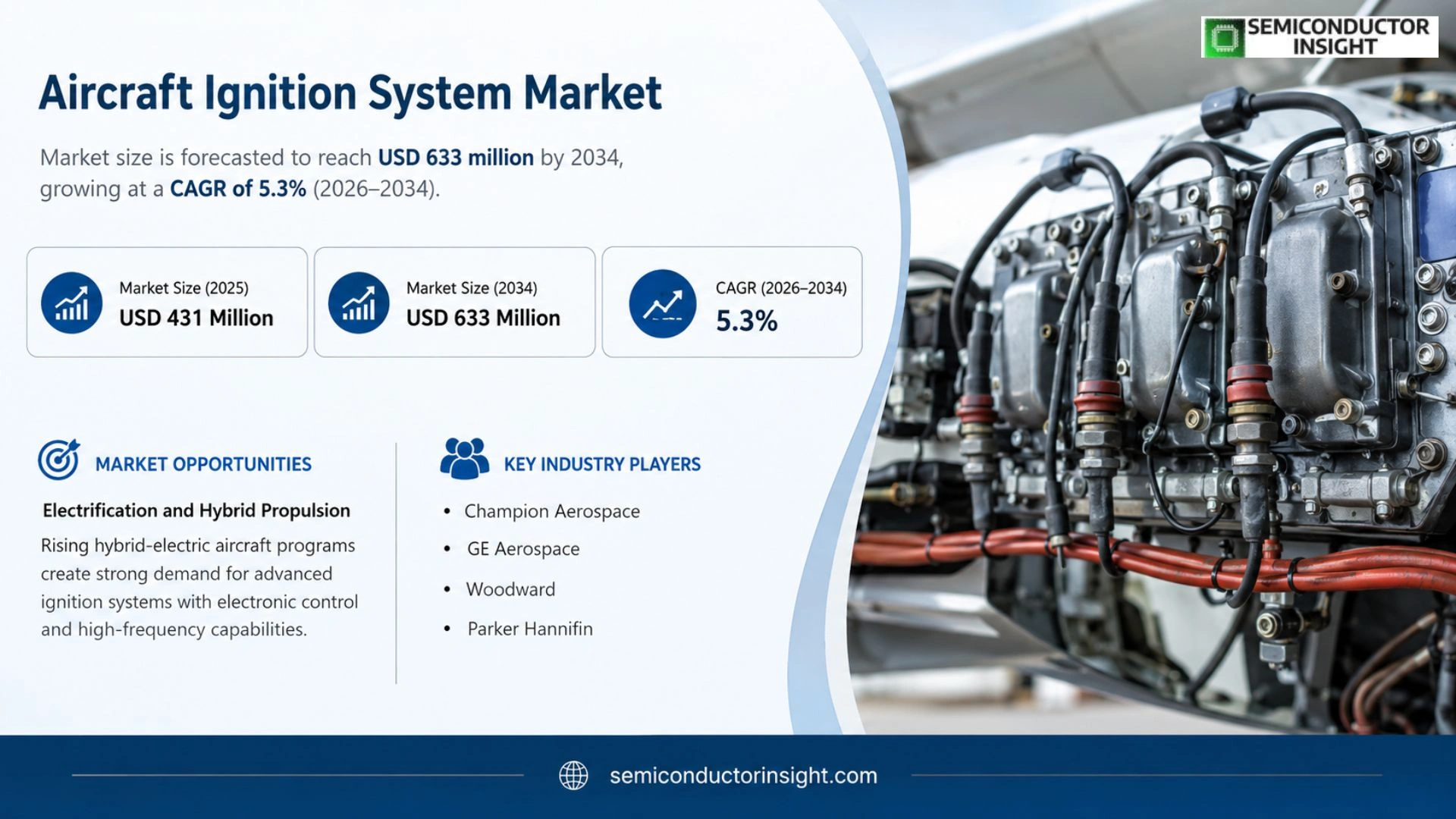
Global Aircraft Ignition System market size was valued at USD 448 million in 2025 and is forecasted to reach USD 633 million by 2032, showing a CAGR of 5.3% during the forecast period.
Aircraft ignition systems are dedicated engine components that generate, transmit and discharge ignition energy for engine start, in‑flight relight and combustion stability. The scope includes magnetos, spark plugs, ignition harnesses, ignition leads and electronic ignition systems for piston‑engine aircraft, together with exciters, igniter plugs and ignition cables for turbine engines and auxiliary power units.
Key specifications such as ignition energy, discharge frequency, temperature rating and EMI resistance are engineered for high‑vibration, high‑temperature aerospace environments. Primary applications span commercial airliners, regional jets, business aircraft, general‑aviation planes, helicopters, APUs and emerging UAV platforms.
MARKET DRIVERS
Integration of Digital Engine Controls
The shift toward full‑authority digital engine control (FADEC) architectures creates a direct need for more precise, electronically‑managed ignition circuits. OEMs are redesigning power‑train suites to embed ignition modules that can be monitored in real time, allowing airlines to extract marginal fuel savings while preserving engine life. This technical alignment accelerates procurement cycles for Aircraft Ignition System Market.
Higher Reliability Demands from Commercial Fleets
Legacy spark‑plug assemblies are increasingly viewed as a liability in high‑dispatch environments. Operators now prioritize ignition units that can survive extreme temperature gradients and vibration without degradation. The resulting emphasis on mean‑time‑between‑failures (MTBF) drives manufacturers to introduce ceramic‑based electrodes and redundant ignition channels, feeding steady revenue streams.
➤ “An ignition system that cuts unscheduled maintenance by 30 % reshapes the economics of airline operations.”
Collectively, these forces lift Aircraft Ignition System Market beyond modest growth, prompting suppliers to allocate greater R&D capital toward solid‑state designs that satisfy both regulatory scrutiny and airline cost‑control imperatives.
MARKET CHALLENGES
Legacy Component Obsolescence
Many airframes still rely on ignition hardware introduced in the 1990s, for which original manufacturers have ceased production. Finding qualified spare parts forces airlines into costly “one‑off” contracts, while certification agencies demand proof of continued airworthiness. This mismatch hampers the ability of newer suppliers to secure long‑term contracts in a market still dominated by legacy inventories.
Other Challenges
Supply Chain Bottlenecks
The specialized alloys and high‑temperature ceramics used in modern ignition modules depend on a limited pool of Tier‑2 vendors. Recent geopolitical disruptions and raw‑material price volatility have lengthened lead times, making it harder for manufacturers to meet OEM delivery windows without inflating pricing.
MARKET RESTRAINTS
Certification Bottlenecks
Achieving supplemental type certificates (STC) for upgraded ignition solutions often exceeds twelve months, a timeline that deters airlines from adopting incremental innovations. The intensive documentation and testing requirements raise upfront costs, limiting the pool of financially capable buyers.
Cost Sensitivity in New‑Aircraft Programs
Airframe manufacturers operate under tight price caps imposed by airline purchasing committees. Even marginal cost increases in the ignition subsystem can jeopardize a program’s overall budget, prompting some developers to retain proven, albeit less efficient, legacy designs.
MARKET OPPORTUNITIES
Electrification and Hybrid Propulsion
Emerging hybrid‑electric propulsion concepts require ignition systems capable of both spark initiation and precise electronic control across wider power bands. Suppliers that can integrate solid‑state switches and high‑frequency drivers stand to capture early‑stage contracts as manufacturers certify the next generation of greener aircraft.
Aftermarket Retrofit Services
Airlines operating aging fleets are exploring retrofit programs that replace outdated ignition units with modern, low‑maintenance alternatives. This retrofit wave offers a recurring revenue stream for niche players who can certify conversion kits while demonstrating a clear return on investment for operators.
Aircraft Ignition System Market Trends
Aftermarket Replacement as the Core Growth Driver
The installed base of piston and turbine engines creates a predictable flow of spare‑parts demand. Because certification of ignition components is tied to engine overhaul cycles, airlines and MRO providers align inventory purchases with scheduled maintenance events. This alignment translates into a steady order book for magnetos, spark plugs, ignition leads and related harnesses. Suppliers that have established traceable after‑sale support benefit from repeat business, while newcomers face a steep entry barrier due to the need for airworthiness approval. The net effect is a market that leans heavily on replacement volumes rather than new‑aircraft fitments, cushioning the segment from macro‑economic swings.
Other Trends
Electronic Ignition Penetration in General Aviation
Solid‑state ignition controllers are gaining traction among private‑pilot fleets and experimental aircraft builders. The primary appeal lies in higher spark energy efficiency, reduced maintenance intervals and modest fuel‑burn improvements. Operators appreciate the ability to diagnose faults electronically, which shortens aircraft downtime. However, the transition remains measured because retrofit costs must be justified against the limited operational savings of small platforms, and certification pathways for electronic kits are still evolving.
Supply‑Chain Concentration and Certification Stringency
Only a handful of global firms,Champion Aerospace, GE Aerospace (Unison), Woodward and Parker‑Meggitt,control the bulk of turbine‑engine ignition production, while niche players such as Tempest and SureFly address the piston‑engine retrofit market. This concentration reinforces the importance of long‑term supplier relationships; any disruption in super‑alloy or iridium sourcing quickly propagates to delivery schedules. Moreover, the necessity for platform‑specific qualification forces manufacturers to maintain dedicated engineering teams, which raises the cost of entry and limits price competition.
COMPETITIVE LANDSCAPE
Key Industry Players
Aircraft Ignition System Market – Competitive Overview
In 2025 Aircraft Ignition System arena is dominated by a handful of multinational manufacturers whose product portfolios span magnetos, electronic ignition controllers, and turbine‑engine exciters. Champion Aerospace, operating under the TransDigm umbrella, leverages its deep heritage in magneto design to command a sizable share of OEM installations for both piston‑engine airliners and military trainers. GE Aerospace’s Unison Industries complements this dominance with high‑performance electronic ignition kits that satisfy stringent FAA and EASA certification requirements, allowing the group to secure long‑term contracts with major airframe builders. Woodward, a legacy supplier of power‑train components, has expanded its ignition offerings through targeted acquisitions, integrating solid‑state igniters into its turbine‑engine line and reinforcing its position in the APU segment. Parker Hannifin, via its Meggitt acquisition, supplies a comprehensive suite of ignition leads and harnesses, benefitting from a robust aftermarket network that delivers consistent revenue despite modest new‑engine growth. Collectively these firms form a vertically integrated supply chain, controlling critical upstream materials such as iridium alloys while maintaining close collaboration with engine OEMs to align product development with evolving safety standards.
Beyond the core quartet, a diverse set of specialists enriches the competitive fabric. Tempest Aero Group and SureFly Electronic Ignition concentrate on retrofit solutions for legacy general‑aviation piston engines, capitalising on the fleet‑wide need for improved spark‑plug efficiency and reduced maintenance intervals. Electroair and Hartzell Engine Tech’s E‑MAG division focus on niche turbine‑engine igniters, often supplied to regional jet programs and defence platforms where weight savings and rapid start capability are paramount. In the Chinese market, AVIC’s aerospace subsystem arm supplies domestically produced ignition exciters, benefitting from state‑backed procurement policies but facing export‑control hurdles. PBS Aerospace and Light Speed Engineering target the unmanned‑aerial‑vehicle segment, offering compact solid‑state igniters that meet stringent EMI constraints. EFII (FlyEFII) and The G3i Group operate largely as design‑consultancy outfits, partnering with OEMs to certify bespoke ignition modules for emerging electric‑propulsion hybrids. The presence of these niche players injects innovation pressure on incumbents, prompting accelerated development of solid‑state and integrated ignition architectures while preserving a steady aftermarket flow driven by the high‑utilisation cycles of commercial and military fleets.
List of Key Aircraft Ignition System Companies Profiled
- Champion Aerospace
- GE Aerospace
- Woodward
- Parker Hannifin
- Tempest Aero Group
- SureFly Electronic Ignition
- Electroair
- Hartzell Engine Tech
- AVIC Aerospace Systems
- PBS Aerospace
- Light Speed Engineering
- EFII (FlyEFII)
Segment Analysis:
| Segment Category | Sub-Segments | Key Insights |
| By Type |
|
Magneto Ignition Systems remain the dominant technology for piston‑engine aircraft due to their proven reliability and inherent redundancy.
Electronic Ignition Systems are gaining traction in general aviation and experimental platforms where efficiency and diagnostic capability are valued.
|
| By Application |
|
Fixed‑Wing Commercial Aircraft prioritize robust, certifiable solutions that can survive high‑altitude, low‑pressure environments.
Rotary‑Wing Helicopters require ignition components that tolerate rapid temperature fluctuations and higher vibration spectra.
|
| By End User |
|
Commercial Airlines & OEMs drive the bulk of volume through new‑aircraft installations and rigorous aftermarket programs.
Military & Defense Operators demand rugged, redundant ignition solutions for mission‑critical platforms.
|
| By Technology Evolution |
|
Solid‑State Ignition represents the forward‑looking trajectory of the market, promising fewer moving parts and enhanced fault detection.
Hybrid Magneto‑Electronic solutions are emerging as interim options, blending proven magneto reliability with electronic diagnostics.
|
| By Service & Aftermarket |
|
Aftermarket Replacement Packs constitute a stable revenue pillar, driven by engine overhaul cycles and regulatory compliance checks.
Retrofit Upgrade Services are gaining momentum in the general‑aviation and light‑sport sectors where owners seek efficiency gains.
|
Regional Analysis: Aircraft Ignition System Market
North America
Federal agencies enforce stringent certification processes that shape design choices. Manufacturers adapt by embedding diagnostic capabilities directly into ignition modules, thereby meeting heightened safety expectations while preserving performance envelopes.
Digital engine control units coexist with next‑generation ignition hardware, enabling fine‑grained spark timing. This synergy supports lower emissions targets without sacrificing thrust, prompting OEMs to prioritize integrated solutions.
A dense network of component suppliers reduces lead times for critical parts. Close collaboration between silicon wafer producers and ignition system integrators accelerates the rollout of high‑reliability variants.
Major aircraft manufacturers are consolidating ignition subsystem contracts to streamline engineering effort. This approach generates economies of scale while fostering deeper co‑development of proprietary spark technologies.
Europe
European manufacturers benefit from a collaborative research environment, especially through joint ventures that target fuel‑efficiency mandates across the continent. Certification frameworks in Europe emphasize lifecycle durability, encouraging suppliers to embed self‑diagnosing features that pre‑empt failures. Airline operators, confronting tighter emission caps, view upgraded ignition systems as a cost‑effective lever to improve fuel burn. Consequently, original equipment makers are aligning product roadmaps with sustainability goals, positioning ignition upgrades as integral to fleet renewal strategies.
Asia‑Pacific
The Asia‑Pacific region displays a fast‑moving commercial aviation market, driven by expanding route networks and burgeoning low‑cost carrier fleets. While cost considerations dominate procurement, there is a growing appreciation for ignition solutions that minimize maintenance intervals. Local OEMs are increasingly partnering with North American firms to license advanced ignition designs, accelerating technology transfer. Government incentives for domestic aerospace development further stimulate investment in ignition component capabilities, suggesting a gradual shift toward higher‑value offerings.
South America
In South America, aircraft operators prioritize reliability amid challenging operating environments, such as high‑altitude airports and tropical climates. Ignition systems that can withstand temperature extremes and dust ingress are therefore highly valued. Regional airlines are extending the service life of existing fleets through targeted retrofit programs, creating a niche demand for robust, aftermarket ignition modules. Suppliers that combine durability with reasonably priced support packages gain competitive advantage in this market.
Middle East & Africa
The Middle East & Africa region experiences a dichotomy of ultra‑modern fleet expansions in affluent Gulf states and aging aircraft in emerging African markets. For the former, cutting‑edge ignition technology aligns with ambitions to showcase technologically advanced air transport hubs. In contrast, African operators focus on reliability and straightforward maintenance, favoring ignition solutions with proven field performance. This split drives a diversified product mix, encouraging manufacturers to offer both high‑performance and cost‑effective variants to meet regional expectations.
Report Scope
This market research report provides a comprehensive analysis of the Aircraft Ignition System Market , covering the forecast period 2026–2034. It offers detailed insights into market dynamics, technological advancements, competitive landscape, and key trends shaping the industry.
Key focus areas of the report include:
- Market Overview: The report begins with an overview outlining its current market scenario, key growth indicators, and industry transformation drivers. It discusses macroeconomic factors, demand–supply balance, regulatory landscape, and the strategic role of semiconductors in powering advancements across industries such as automotive, telecommunications, consumer electronics, and industrial automation.
- Market Size & Forecast: Historical data and future projections for revenue, unit shipments, and market value across major regions and segments.
- Segmentation Analysis: Detailed breakdown by product type, technology, application, and end-user industry to identify high-growth segments and investment opportunities.
- Regional Insights: Insights into market performance across North America, Europe, Asia-Pacific, Latin America, and the Middle East & Africa, including country-level analysis where relevant.
- Competitive Landscape: Profiles of leading market participants, including their product offerings, R&D focus, manufacturing capacity, pricing strategies, and recent developments such as mergers, acquisitions, and partnerships.
- Technology Trends & Innovation: Assessment of emerging technologies, integration of AI/IoT, semiconductor design trends, fabrication techniques, and evolving industry standards.
- Market Drivers & Restraints: Evaluation of factors driving market growth along with challenges, supply chain constraints, regulatory issues, and market-entry barriers.
- Stakeholder Insights: Insights for component suppliers, OEMs, system integrators, investors, and policymakers regarding the evolving ecosystem and strategic opportunities.
Primary and secondary research methods are employed, including interviews with industry experts, data from verified sources, and real-time market intelligence to ensure the accuracy and reliability of the insights presented.
FREQUENTLY ASKED QUESTIONS:
What is the current market size of Aircraft Ignition System Market?
-> Aircraft Ignition System market is forecasted to reach USD 633 million by 2034, showing a CAGR of 5.3% during the forecast period.
Which key companies operate in Aircraft Ignition System Market?
-> Key players include Champion Aerospace (TransDigm), GE Aerospace (Unison Industries), Woodward, Parker Hannifin (Meggitt), Tempest Aero Group, SureFly Electronic Ignition, AVIC, Electroair, Hartzell Engine Tech (E-MAG), Continental, PBS Aerospace, Light Speed Engineering, EFII (FlyEFII), The G3i Group.
What are the key growth drivers?
-> Key growth drivers include replacement demand from the installed fleet, OEM fitment on new aircraft, retrofit upgrades in general aviation, military platform requirements, and the shift toward electronic and solid‑state ignition solutions offering higher efficiency and lower maintenance.
Which region dominates the market?
-> North America holds the largest share due to a strong base of commercial and military aircraft operators, major OEMs, and a concentration of leading ignition system suppliers.
What are the emerging trends?
-> Emerging trends include increased adoption of electronic ignition systems in general aviation, solid‑state and electrified ignition designs, longer service‑life components, and higher system integration to meet stringent airworthiness and reliability standards.

Get Sample Report PDF for Exclusive Insights
Report Sample Includes
- Table of Contents
- List of Tables & Figures
- Charts, Research Methodology, and more...
 Download Sample Report PDF