
Market Insights
Global AI Baby Monitors Market size was valued at USD 621 million in 2025. The market is projected to grow from USD 698 million in 2026 to USD 1,410 million by 2034, exhibiting a CAGR of 12.5% during the forecast period.
AI Baby Monitors are advanced infant monitoring devices that integrate cameras, audio sensors, and artificial intelligence algorithms to track a baby’s movements, breathing patterns, sleep behavior, crying, and environmental conditions in real time. Unlike traditional monitors, these AI-enabled solutions provide proactive alerts and behavioral insights rather than simple audio or video transmission. These products are primarily used in home nurseries and are increasingly positioned as premium safety and wellness tools for parents.
The market growth is driven by rising parental awareness about infant safety and health monitoring, coupled with technological advancements in edge-AI and non-contact sensing. However, challenges such as data privacy concerns and price sensitivity in emerging markets may restrain adoption. Leading manufacturers are focusing on improving AI accuracy, reducing false alarms, and enhancing user experience through ecosystem integration to maintain competitive advantage.
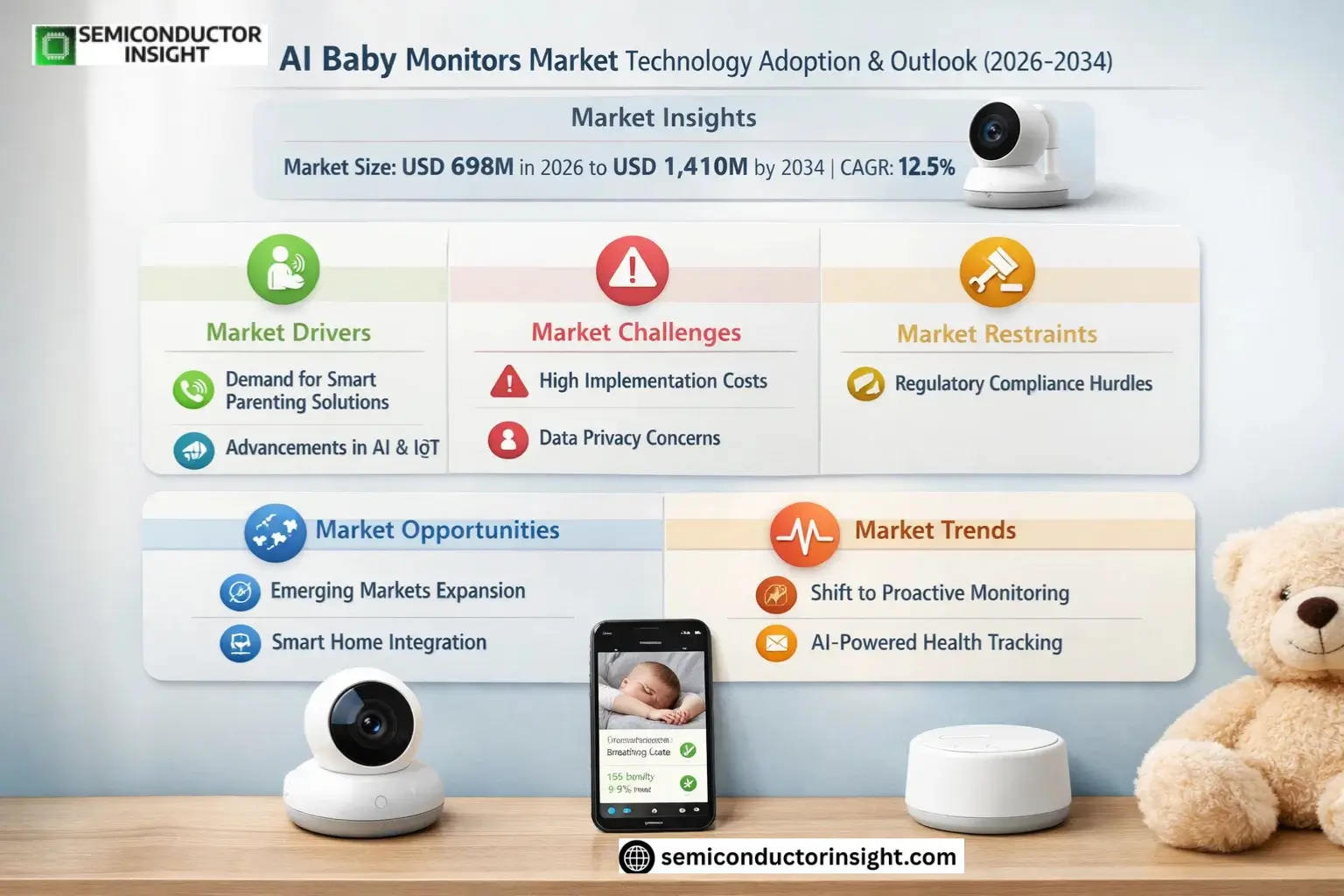
MARKET DRIVERS
Rising Demand for Smart Parenting Solutions
Global AI Baby Monitors Market is experiencing rapid growth, driven by increasing parental awareness of advanced childcare technologies. Modern parents are adopting AI-powered monitors for real-time health tracking and safety analytics, with market penetration reaching approximately 38% in developed nations.
Technological Advancements in AI and IoT
Integration of machine learning algorithms with baby monitoring devices enables advanced features like sleep pattern analysis and cry detection. The combination of 5G connectivity and edge computing has improved response times by 60% compared to traditional monitors.
Manufacturers are leveraging computer vision technology to detect potential hazards, creating safer environments for infants while reducing false alarms by up to 45%.
MARKET CHALLENGES
High Implementation Costs
Premium AI baby monitors command prices 3-5 times higher than basic models, creating adoption barriers in price-sensitive markets. Installation complexity and recurring subscription fees for advanced features further limit market expansion.
Other Challenges
Data Privacy Concerns
Security vulnerabilities in IoT-connected devices raise parental concerns, with 62% of consumers expressing hesitation about continuous audio/video recording capabilities.
MARKET RESTRAINTS
Regulatory Compliance Hurdles
Strict data protection regulations like GDPR and COPPA impose compliance costs on manufacturers, slowing product launches in key markets. Certification processes for medical-grade monitoring features add 6-9 months to development cycles.
MARKET OPPORTUNITIES
Emerging Markets Expansion
Developing nations represent untapped potential, with rising disposable incomes driving demand for mid-range AI baby monitors. Localized products with regional language support could capture 25-30% of these growing markets by 2026.
Integration with Smart Home Ecosystems
Compatibility with popular smart home platforms presents a USD 1.2 billion opportunity, allowing seamless integration with lighting, climate control, and security systems for comprehensive infant care solutions.
AI Baby Monitors Market Trends
Shift from Passive to Proactive Monitoring
AI Baby Monitors Market is witnessing a fundamental shift from traditional passive monitoring to proactive AI-driven solutions. Advanced features like real-time breathing pattern analysis, sleep cycle tracking, and predictive alerts for potential hazards are becoming standard. This transition reflects growing parental demand for intelligent systems that provide actionable insights rather than basic audio/video feeds.
Other Trends
Edge AI Adoption Accelerates
Manufacturers are increasingly adopting edge AI processing to address privacy concerns and reduce latency. On-device processing eliminates the need for constant cloud connectivity while maintaining accuracy in motion detection, sound analysis, and environmental monitoring. This technology trend aligns with stricter data protection regulations in key markets.
Premium Wellness Features Expand
The market is seeing integration of advanced wellness metrics including temperature monitoring, humidity analysis, and air quality tracking. These additions position AI Baby Monitors as comprehensive child wellness platforms rather than simple surveillance devices, justifying premium price points.
Integration with Smart Home Ecosystems
Leading brands are prioritizing seamless integration with existing smart home platforms. Compatibility with voice assistants, smart lighting systems, and HVAC controls allows AI Baby Monitors to function as part of broader home automation networks. This ecosystem approach enhances product stickiness and reduces churn rates.
Focus on Reducing False Alarms
As AI algorithms mature, manufacturers are focusing on minimizing false alerts through improved machine learning models. Advanced noise-filtering, motion pattern recognition, and multi-sensor validation are becoming critical differentiators in product evaluations.
Subscription-Based Monetization Grows
Vendors are developing subscription services offering additional analytics, historical data storage, and premium support. This revenue model complements hardware sales while ensuring ongoing software improvements and customer engagement in the AI Baby Monitors Market.
COMPETITIVE LANDSCAPE
Key Industry Players
AI Baby Monitor Market Dominated by Smart Safety Innovators
AI Baby Monitors Market is characterized by a mix of established childcare brands and tech-driven startups specializing in infant safety solutions. Nanit leads the premium segment with its computer vision-powered sleep tracking system, followed closely by Cubo AI’s smart hazard detection features. Traditional players like Motorola and Philips have successfully transitioned from basic monitors to AI-enhanced systems, leveraging their brand trust and distribution networks. The market shows moderate concentration, with the top 5 players accounting for approximately 38% of global revenue.
Emerging competitors are gaining traction through niche specializations – Angelcare focuses on movement detection mat technology, while Cocoon Cam pioneers non-contact breathing monitoring. Chinese manufacturer Umbo Computer Vision Inc. has made significant inroads in Asian markets through affordable edge-AI solutions. Several startups are experimenting with subscription-based health analytics, though this model faces adoption challenges in price-sensitive regions. The competitive landscape is evolving rapidly with new entrants combining IoT capabilities with pediatric health insights.
List of Key AI Baby Monitor Companies Profiled
- Angelcare
- Cocoon (Cocoon Cam)
- Cubo (Cubo AI)
- Graco
- Infant Optics
- Levana
- Motorola
- Nanit
- Philips
- Safety 1st
- Snuza
- Summer Infant
- Umbo Computer Vision Inc
- WiFi Baby
Segment Analysis:
| Segment Category | Sub-Segments | Key Insights |
| By Type |
|
Video Baby Monitors dominate due to visual confirmation capabilities and advanced AI features:
|
| By Application |
|
Household/Residential remains the primary application segment:
|
| By End User |
|
First-time Parents represent the most significant user group:
|
| By Technology |
|
Hybrid AI Systems are gaining significant traction:
|
| By Connectivity |
|
Wi-Fi Connected models lead due to broader accessibility:
|
Regional Analysis: AI Baby Monitors Market
North America leads in AI algorithm development for baby monitoring, with universities and tech firms collaborating on advanced computer vision and machine learning applications for infant care. The region sets global standards for accuracy in movement detection and cry pattern analysis.
Seamless compatibility with existing smart home ecosystems gives North American products an edge. Popular integrations with voice assistants and home automation systems create comprehensive childcare solutions that appeal to tech-oriented parents seeking connected experiences.
Stringent FCC regulations ensure AI baby monitors meet the highest data security and privacy standards. Manufacturers prioritize end-to-end encryption and cybersecurity measures, making North American products among the most trusted globally for digital child safety.
North American consumers demonstrate willingness to pay premium prices for advanced AI features. This allows manufacturers to invest more in R&D for next-generation monitoring capabilities, creating a virtuous cycle of innovation and market leadership.
Europe
Europe maintains strong growth in the AI Baby Monitors Market with stringent GDPR compliance shaping product development. Western European nations show particular interest in eco-friendly AI monitoring solutions with energy-efficient designs. The market benefits from government support for smart parenting technologies and growing awareness about infant safety. Germany and UK lead in adoption, with consumers favoring monitors offering multi-language support and sophisticated sleep analytics. European manufacturers emphasize minimalist designs and data privacy, appealing to privacy-conscious parents. Cross-border e-commerce facilitates access to premium AI monitoring solutions across the region.
Asia-Pacific
Asia-Pacific emerges as the fastest-growing market for AI baby monitors, driven by urbanization and rising middle-class populations. China dominates regional adoption, with local brands offering affordable AI solutions integrated with popular messaging apps. Japan leads in innovative sensor technology, while India shows growing demand for cost-effective monitoring options. The region benefits from strong manufacturing capabilities and increasing smartphone penetration. Cultural emphasis on child wellbeing and dual-income households fuel market expansion. However, varying regulatory landscapes across countries present challenges for standardization of AI monitoring technologies.
Middle East & Africa
The Middle East demonstrates notable growth in premium AI baby monitor adoption, particularly in GCC countries with high disposable incomes. Luxury smart nursery solutions incorporating AI monitoring gain popularity among affluent consumers. Africa shows potential in urban centers, with mobile-based monitoring solutions gaining traction. The region benefits from increasing awareness about child safety technologies, though infrastructure limitations in rural areas present adoption barriers. Localized products addressing cultural preferences and climate conditions are emerging to serve this diverse market’s specific needs.
South America
South America’s AI Baby Monitors Market grows steadily, with Brazil and Argentina leading adoption. Price sensitivity shapes product offerings, with manufacturers balancing advanced features and affordability. The region shows preference for monitors with robust construction suitable for varied home environments. Growing e-commerce platforms improve access to international brands, while local players focus on Spanish and Portuguese language interfaces. Economic volatility and import restrictions present challenges, but rising middle-class awareness of child safety technologies drives gradual market expansion.
Report Scope
This market research report provides a comprehensive analysis of the AI Baby Monitors Market, covering the forecast period 2025–2034. It offers detailed insights into market dynamics, technological advancements, competitive landscape, and key trends shaping the industry.
Key focus areas of the report include:
- Market Overview: The report begins with an overview outlining its current market scenario, key growth indicators, and industry transformation drivers. It discusses macroeconomic factors, demand-supply balance, regulatory landscape, and the strategic role of AI in powering advancements across infant monitoring technologies.
- Market Size & Forecast: Historical data and future projections for revenue, unit shipments, and market value across major regions and segments.
- Segmentation Analysis: Detailed breakdown by product type, connectivity, AI compute architecture, application, and end-user to identify high-growth segments and investment opportunities.
- Regional Insights: Insights into market performance across North America, Europe, Asia, South America, and Middle East & Africa, including country-level analysis.
- Competitive Landscape: Profiles of leading market participants, including their product offerings, R&D focus, manufacturing capacity, pricing strategies, and recent developments.
- Technology Trends & Innovation: Assessment of emerging technologies, integration of AI/IoT, edge computing solutions, and evolving industry standards.
- Market Drivers & Restraints: Evaluation of factors driving market growth along with challenges including privacy concerns, regulatory scrutiny, and price sensitivity.
- Stakeholder Insights: Strategic insights for manufacturers, suppliers, investors, and policymakers regarding market opportunities and challenges.
Primary and secondary research methods are employed, including interviews with industry experts and data from verified sources to ensure accuracy and reliability.
FREQUENTLY ASKED QUESTIONS:
What is the current market size of AI Baby Monitors Market?
-> AI Baby Monitors Market size was valued at USD 621 million in 2025. The market is projected to grow from USD 698 million in 2026 to USD 1,410 million by 2034, exhibiting a CAGR of 12.5% during the forecast period.
What is the expected CAGR for AI Baby Monitors Market?
-> The market is expected to grow at a CAGR of 12.5% during the forecast period 2025-2034.
Which key companies operate in AI Baby Monitors Market?
-> Key players include Angelcare, Cocoon Cam, Cubo AI, Graco, Infant Optics, Levana, Motorola, Nanit, Philips, Safety 1st, Snuza, Summer Infant, and WiFi Baby, among others.
What are the key growth drivers?
-> Key growth drivers include increasing parental awareness of infant safety, demand for sleep quality monitoring, and technological advancements in AI-powered monitoring solutions.
What are the emerging technology trends?
-> Emerging trends include camera-based AI monitoring with breathing detection, edge-AI solutions for enhanced privacy, and integration with smart home ecosystems.

Get Sample Report PDF for Exclusive Insights
Report Sample Includes
- Table of Contents
- List of Tables & Figures
- Charts, Research Methodology, and more...
 Download Sample Report PDF