

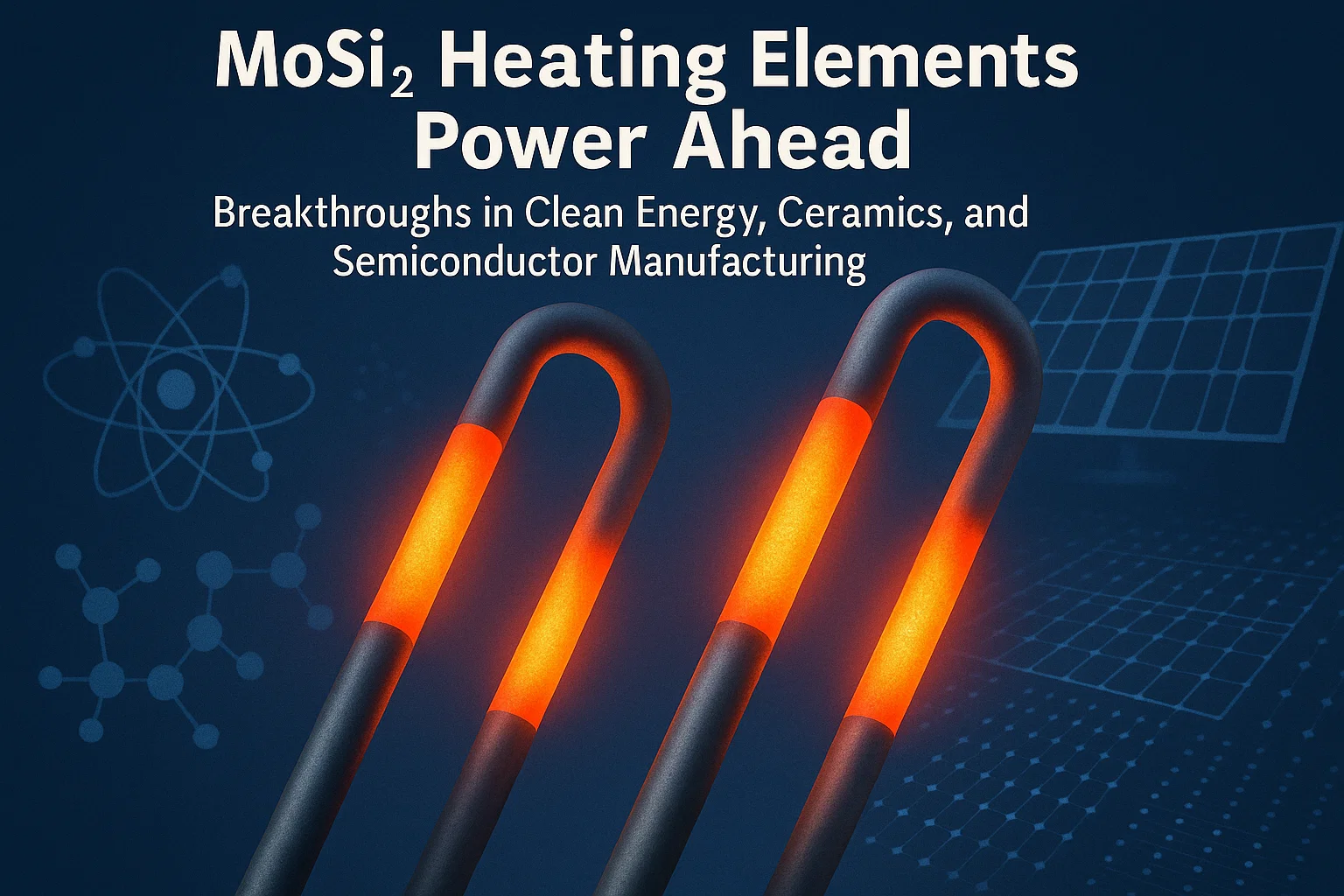
MoSi₂ Heating Elements Power Ahead: Breakthroughs in Clean Energy, Ceramics, and Semiconductor Manufacturing
In the quiet yet critical world of high-temperature materials, one compound is steadily shaping industries as diverse as electronics, ceramics, aerospace, and renewable energy. That compound is molybdenum disilicide (MoSi₂), a silicide-based ceramic material prized for its ability to withstand extreme temperatures without oxidizing or degrading. Heating elements made of MoSi₂ are increasingly being recognized not just as niche tools for furnaces and kilns but as core enablers of next-generation manufacturing and clean technologies.
The global molybdenum disilicide heating element market, valued at USD 125 million in 2024, is projected to reach USD 184 million by 2032, expanding at a CAGR of 5.6%. While the numbers themselves indicate steady growth, the underlying story is far richer: advances in ceramics, clean energy transitions, supply chain shifts, and materials research are all converging to make MoSi₂ heating elements more vital than ever.
Access Your Free Sample Report- Molybdenum Disilicide Heating Element Market
What Makes MoSi₂ Heating Elements Special?
Before diving into the latest industry news, it’s worth revisiting why MoSi₂ heating elements matter.
- Extreme Temperature Tolerance: MoSi₂ elements can operate above 1800°C (3272°F), making them indispensable in high-heat environments like ceramic sintering and semiconductor fabrication.
- Oxidation Resistance: Unlike many metals, MoSi₂ forms a protective layer of silicon dioxide when exposed to oxygen at high temperatures, preventing degradation.
- Energy Efficiency: Their ability to heat quickly and maintain stable temperatures translates into lower energy consumption in industrial processes.
- Longevity: Advances in coatings and design are extending their life span, reducing downtime and replacement costs.
These attributes make them attractive across multiple industries from traditional steelmaking to cutting-edge solid oxide fuel cells.
Recent Developments in the MoSi₂ Heating Element Industry
1. Rising Demand from the Advanced Ceramics Sector
The ceramics sector has long relied on MoSi₂ heating elements for firing advanced ceramics used in electronics, aerospace, and biomedical devices. What’s new is the scale and precision required.
- Electronics miniaturization demands furnaces capable of maintaining highly consistent, ultra-high temperatures, something MoSi₂ excels at.
- Aerospace turbine components require sintering processes at 1700–1800°C, where MoSi₂ elements outperform conventional metallic elements.
- Bioceramics for implants are also driving demand, as sintering advanced bio-ceramics requires stable, oxygen-resistant heating.
In this sector, MoSi₂ is no longer a “supporting player.” It is increasingly seen as the backbone of future ceramic manufacturing.
2. Clean Energy Manufacturing Integration
The clean energy transition is perhaps the most exciting arena for MoSi₂ heating elements.
- Solar cell production: MoSi₂ is critical in high-temperature diffusion furnaces for silicon wafers. As demand for solar panels surges worldwide, so too does the need for robust heating solutions.
- Hydrogen economy: Solid oxide electrolysis cells (SOECs), which split water into hydrogen and oxygen at high temperatures, require reliable heating elements. MoSi₂ is increasingly being adopted because of its ability to handle both heat and oxidative conditions.
- Battery innovation: Advanced cathode and anode materials often require sintering at extreme temperatures. MoSi₂ enables precise control of these processes, accelerating the shift to next-generation storage solutions.
In many ways, MoSi₂ heating elements are silent enablers of green technologies, ensuring that materials used in renewable energy are produced with efficiency and reliability.
Download Sample Report PDF- Molybdenum Disilicide Heating Element Market
3. Expansion of Production in China and India
Asia remains the epicenter of MoSi₂ production, and recent reports highlight a surge in manufacturing capacity, particularly in China and India.
- China has increased exports of MoSi₂ elements as part of its broader advanced materials push, supplying global industries from steel to semiconductors.
- India, investing heavily in ceramics and metallurgy, is expanding furnace infrastructure, which in turn drives local demand for MoSi₂ elements.
These expansions aren’t just about meeting domestic needs. They signal a shift in global supply dominance toward Asia, raising both opportunities and vulnerabilities for Western manufacturers dependent on imports.
4. Advances in Durability and Efficiency
Research is ongoing to enhance MoSi₂ performance. Key innovations include:
- Nano-coatings that further reduce oxidation and extend element lifespan by up to 30%.
- Hybrid composites, combining MoSi₂ with other ceramics, offering improved resistance to thermal shock.
- Additive manufacturing (3D printing), which allows the production of customized MoSi₂ elements with intricate geometries for specialized furnaces.
These advancements are particularly relevant for industries requiring continuous operations, where downtime is costly. A longer-lasting heating element translates into significant operational savings.
5. Supply Chain and Critical Minerals Policy
MoSi₂ heating elements rely on molybdenum, a mineral classified as “critical” by the U.S. and EU due to its strategic role in defense, energy, and advanced technologies.
- Supply disruptions from geopolitical tensions to mining restrictions could affect both the cost and availability of MoSi₂.
- Policymakers are considering incentives for domestic molybdenum production, which could reshape the industry’s raw material sourcing.
- Companies may also look to recycling and circular economy strategies to secure supply of molybdenum.
The stability of MoSi₂ supply will increasingly depend on how well the industry navigates these global policy shifts.
Market Outlook: 2024–2032
The projected growth from USD 125 million in 2024 to USD 184 million by 2032 reflects a combination of steady industrial demand and new applications.
- Ceramics and Glass will remain the largest application segment, but semiconductors and renewable energy are poised to grow fastest.
- Asia-Pacific will dominate production and consumption, while North America and Europe will focus on R&D and advanced applications.
- CAGR of 5.6% suggests stable growth rather than explosive expansion, but given the specialized nature of this industry, even modest growth represents significant opportunities.
Click Here To Download Full Sample Report- Molybdenum Disilicide Heating Element Market
Strategic Insights for Stakeholders
- Manufacturers: Investing in R&D to improve durability and energy efficiency of MoSi₂ elements will be key to staying competitive.
- Policymakers: Supporting critical mineral supply chains and encouraging recycling will ensure resilience.
- End-users: Industries adopting clean energy technologies should assess the total cost of ownership longer-lasting, efficient MoSi₂ elements may offset higher upfront costs.
- Investors: With growing reliance on high-temperature materials in semiconductors, ceramics, and renewables, MoSi₂ represents a niche but strategic investment opportunity.
From research labs experimenting with nano-coatings to Asian manufacturers ramping up production, the story of MoSi₂ is one of quiet but profound transformation. The projected growth of the market from USD 125 million in 2024 to USD 184 million in 2032 underscores not just incremental change, but a recognition that MoSi₂ is increasingly indispensable to the technologies shaping the future.

Comments (0)